E-Paper



Debina Bonnerjee on bidding farewell to the Goddess: Dashami feels like saying goodbye to someone who has come home after a whole year
Ahead of Vijaydashmi (on October 20), actor Debina Bonnerjee opens up about the emotions of bidding farewell to Maa Durga on the tenth day of Navratri

 Prefer HTon Google


As the festivities of Durga Puja nearing to culminate, for actor Debina Bonnerjee, Dashami is a day of a ‘huge emotional transition, a balance between the heartache of saying goodbye to the Goddess’ and the quiet joy of anticipation for the year ahead.
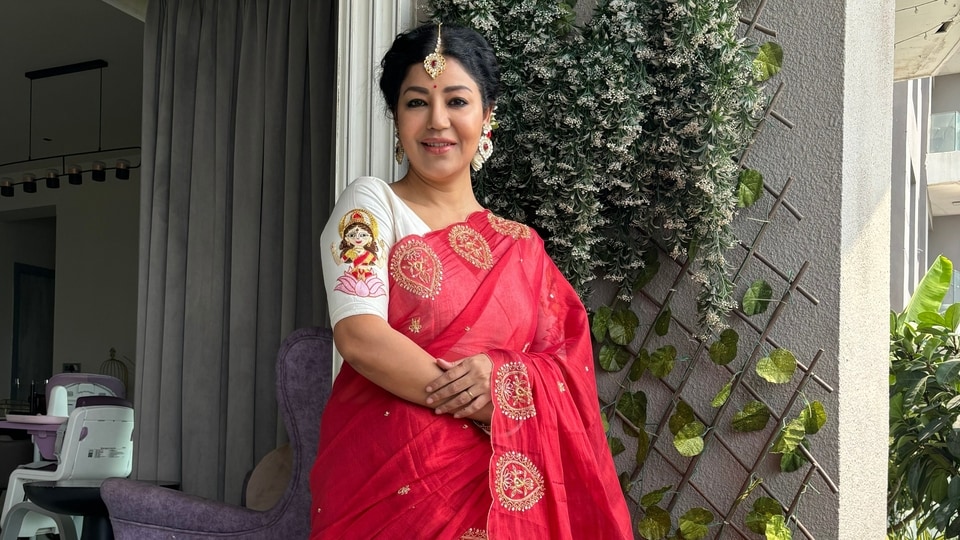
“For me, Dashami feels like saying goodbye to someone who has come home after a whole year,” Debina shares. “You get so used to the dhaak, the gatherings, and the excitement of getting ready every morning, and suddenly, everything goes quiet. I let myself feel that sadness.” Yet, it is the timeless sentiment passed down through generations that anchors her: “Aschhe bochhor abar hobe (It will happen again next year). It is the beautiful thought that reminds us we will make these memories all over again.”
If there is one moment that defines this transition from melancholy to celebration, it is the Sindoor Khela, “For me that first pinch of vermilion is deeply personal, it feels like a little prayer for my family’s well-being, for togetherness, and for Maa’s blessings,” she explains. But the solemnity quickly gives way to camaraderie. “Then, the laughter takes over and everyone is putting sindoor on everyone! That’s what makes the moment so beautiful. You’re emotional about the goodbye, but the women around you turn it into a celebration.”
After a week defined by grand feasts and intense fasting, Debina finds refuge in the simple pleasures. “While festive spreads are delightful, I would happily come home to simple dal-bhaat, aloo bhaja, and a little mishti,” she says. “There’s something so comforting about a familiar Bengali meal. You can enjoy the grandest spread, but sometimes, it’s that simple plate of food that makes you feel completely at home,” she adds.
As a mother the actor keeps the narrative simple for her young daughters, focusing on the cyclical nature of the festival. “I want them to enjoy our traditions without feeling that everything ends with the celebration. The stories, the Bengali songs, and spending time with their grandmother can continue at home,” she notes. “More than remembering every ritual, I hope they remember how loved and connected they felt.”
"As the festive lights dim, Debina is turning her attention to an exciting professional pivot. 'Stepping into the role of a producer alongside my husband, (actor Gurmeet Choudhary), is a big step,' she says. The film, Tum Mere Ho, represents a personal and professional leap for us. As his wife, I know how much he puts into his work; as a producer, I’ve also had to look at what the whole film needs. We’re learning a lot together!'"
Despite the demands of production, acting remains special, “I’m open to any role that excites me and feels worth committing to. There’s a lot taking shape, but I want to give each thing the attention it deserves.”