
 E-Paper



Pheromone maxxing explained: Why are young men skipping showers to attract dates?
From skipping showers and deodorant to rewearing sweaty clothes, pheromone maxxing is the latest bizarre dating trend on TikTok. Here's all you need to know!

 Prefer HTon Google


Pheromone maxxing is putting a rather unusual spin on the internet’s obsession with self-improvement. The social-media trend encourages some young men to skip showers, avoid deodorant and preserve their natural body odour, based on the belief that doing so can increase attraction.
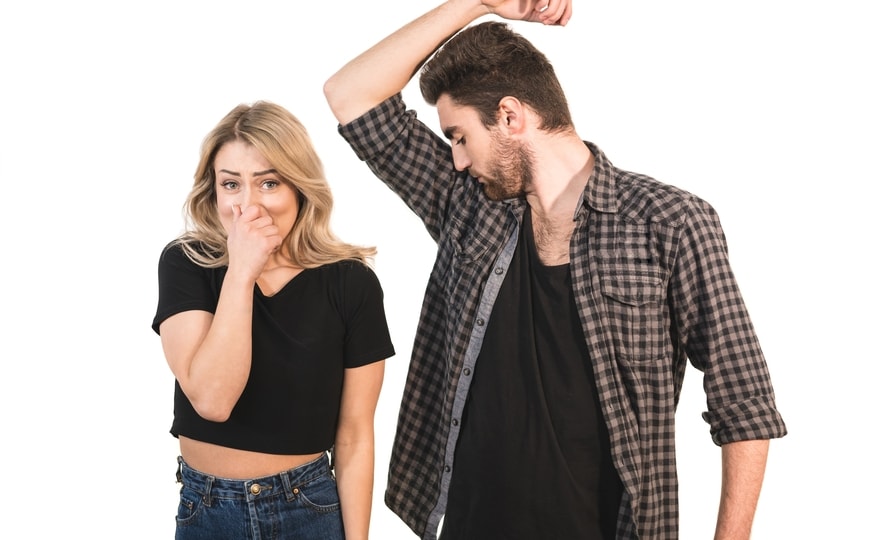
The trend is part of the wider “maxxing” culture, which includes online communities built around attempts to optimise appearance, attractiveness and other aspects of the self. Parents describe pheromone maxxing as an offshoot of this broader culture, alongside trends such as looksmaxxing and smellmaxxing.
What is pheromone maxxing?
According to recent coverage by VICE, pheromone maxxing involves the belief that allowing natural body odour to build up can help a person release more pheromones and become more attractive. Some versions involve skipping showers and deodorant, while more extreme posts encourage wearing unwashed clothes.
The trend has also been associated with claims about drinking urine to increase pheromone production. Forbes reported on the practice in August, while Adelaide Now described urine-drinking as one of the more extreme claims circulating around pheromone maxxing.
Where did pheromone maxxing come from?
Recent reporting traces the trend to TikTok in 2024, where creator @fluffdumpster, identified by Adelaide Now as Isaac, posted about being called “stinky” and framed his lack of showering around the idea of pheromones. One of his videos reportedly reached 2.3 million views.
The trend has since been associated with a mix of serious-looking advice, jokes and deliberately extreme content. Parents noted that much of the online conversation appears to be mocking the practice, while also reporting that some young viewers seem to be taking it seriously. The publication said it remains unclear whether @fluffdumpster genuinely believes in the practice or is using rage bait to generate reactions.
Why is pheromone maxxing trending now?
The trend has resurfaced strongly on social media in 2026, with recent TikTok content again focusing on young men deliberately avoiding showers and deodorant in the belief that their natural scent will improve their dating prospects. YourTango, for instance, reported in May on a TikTok account in which a teenage boy had gone 10 days without showering and described himself as “pheromone maxxing”.
The content has also become increasingly extreme. Adelaide Now reported that videos linked to @fluffdumpster include claims about not showering for months, refusing to wash clothes and drinking urine to enhance pheromones. The publication also noted that the videos can verge on satire, making it difficult to determine how much of the trend is genuine belief and how much is deliberately provocative content.
Do human pheromones actually exist?
This is where the internet theory gets considerably less certain.
A 2025 review published in Physiology & Behavior examined research into androstadienone, a steroid compound frequently investigated as a possible human pheromone. Authors Junyi Gan, Yin Wu, Xue Lei and Chengyang Han titled their review “Is androstadienone a human male pheromone? More research is needed”. Their conclusion, as reflected in the title and review, is that further research is required before androstadienone can be established as a human male pheromone.
A 2026 review in Frontiers in Psychology similarly examined research on olfactory stimuli and social cognition. Its review of studies involving proposed human pheromones found that results vary by compound and experimental context; for example, it cites research suggesting that Hedione did not produce behavioural effects consistent with a potent human pheromone in one setting.
So, while researchers continue to investigate whether human body odour and particular chemical compounds can influence social perception, the evidence does not establish a human sex pheromone that reliably triggers sexual attraction. VICE, in its August 2026 report on pheromone maxxing, likewise described the evidence for a human sex pheromone as unproven.
Can natural body odour influence attraction?
There is a distinction between body odour influencing perception and a proven pheromone triggering attraction.
VICE notes that researchers have found evidence that human scent can affect attraction, while stressing that this has not established the existence of a definitive human sex pheromone.
The 2025 Physiology & Behavior review by Gan and colleagues specifically calls for more research into androstadienone rather than treating it as an established human pheromone.
That means the leap made by pheromone-maxxing posts, from “humans respond to smells” to “not showering will make you sexually attractive”, is not supported by the research cited above.
Why are experts pushing back?
Dr Tim Moss, health content manager at Healthy Male, told Adelaide Now that the underlying idea behind pheromone maxxing has “no scientific merit” and said there are no known human pheromones. Moss also said studies examining the relationship between body odour and attractiveness have not produced consistent or reproducible results.
Moss further argued that looksmaxxing-style trends can appeal to young men's insecurities by presenting the possibility of a controllable shortcut to greater attractiveness.
Sexologist Lauren Muratore, also quoted by Adelaide Now, criticised the trend for reducing attraction to a supposed chemical shortcut rather than recognising the more complicated factors involved in human relationships.
The bottom line
Pheromone maxxing may sound like a new dating science, but the research does not currently support its central promise. The 2025 Physiology & Behavior review says more research is needed to establish whether androstadienone qualifies as a human male pheromone, while a 2026 review in Frontiers in Psychology reports mixed findings across studies of proposed human pheromones.
So, for now, “natural musk” remains an internet theory, not a proven attraction hack.


