
 E-Paper



201-year-old letter that redefined Indian education
Recalling Raja Rammohun Roy’s contributions when Goddess Saraswati is being invoked on Basant Panchmi.

 Prefer HTon Google


On 11 December 1823 Raja Rammohun Roy wrote to Governor-General in India Lord Amherst, he made a passionate plea for Western educational system to be established, with English to be the medium of instruction. The 201-year-old letter not only reveals the depth of concern for the future of his country but is a milestone in history when Indian education is redefined.
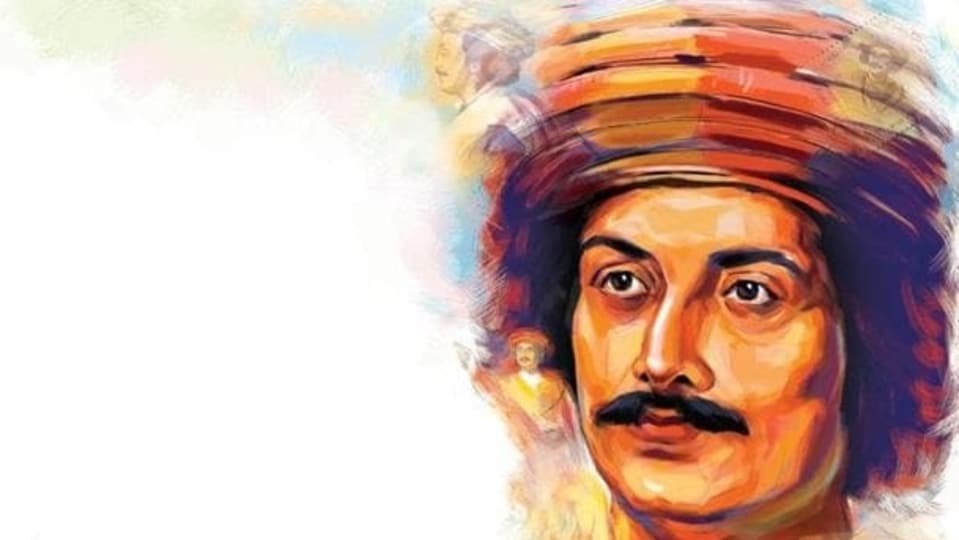
His letter to Lord Amherst is lengthy, dripping with respect and acknowledged the Enlightened principles which were guiding the “establishment of a new Sangscrit School in Calcutta which evinces the laudable desire of Government to improve the Natives of India through education.” He termed it a blessing for which the Natives must ever be grateful.
“When this Seminary of learning was proposed, we understood that the Government in England had ordered a considerable sum of money to be annually devoted to the instruction of its Indian Subjects. We were filled with sanguine hopes that this sum would be laid out in employing European Gentlemen of talents and education to instruct the natives of India in Mathematics, Natural Philosophy, Chemistry, Anatomy, and other useful Sciences, which the Nations of Europe have carried to a degree of perfection that has raised them above the inhabitants of other parts of the world,” he pleaded.
Since 1817, Raja Rammohun Roy’s dream to establish English-medium high schools and give Indian students the advantage of modern education on par with European students, had become a reality. He inaugurated several English-medium high schools, to begin with the Hindu College (later became the prestigious Presidency College) was established in 1817.
In this historic letter, Roy demonstrated remarkable ability to sugar-coat his pleas without ruffling feathers of the British establishment. He wrote, “While we looked forward with pleasing hope to the dawn of knowledge thus promised to the rising generation, our hearts were filled with mingled feeling of delight and gratitude; we already offer up thanks to Providence for inspiring the most generous and enlightened of the Nations of the West with the glorious ambitions of planting in Asia the Arts and Sciences of modern Europe.”
Also read: Raja Rammohan Roy: The Maker of Modern India
He directed his ire towards the formation of the “Sanskrit School under Hindu Pundits to impart such knowledge as is already current in India. This seminary (similar in character to those which existed in Europe before the time of Lord Bacon) can only be expected to load the minds of youth with grammatical niceties and metaphysical distinctions of little or no practicable use to the possessors or to society. The pupils will there acquire what was known 2000 years ago, with the addition of vain and empty subtleties since produced by speculative men, such as is already commonly taught in all parts of India.”
Raja Rammohun Roy was not belittling the contribution of Sanskrit as a language nor the significance of its ancient texts, he was appealing to the highest levels of government for modern, Western education which could qualitatively change the lives of every Indian, said Raju Mansukhani, former deputy curator of Pradhanmantri Sangrahalaya who researched extensively on the ‘makers of modern India’ for the New Delhi-based Museum.
Narrated in every history book for secondary students is Rammohun Roy’s achievement to be the first to bring about a synthesis between the religions of the East and the West. This was made possible because of his vast knowledge of universal history. His deep reading of Sanskrit, Latin, Greek, Hebrew, Arabian and Persian texts gave him the ability to understand the core principles while removing the deadwood of the past.
“Rammohun Roy is a pioneer in the genesis of nationalism in India,” said Prithwindra Mukherjee, whose work – ‘The Intellectual Roots of India’s Freedom Struggle’ – gives pride of place to Roy as a nationalist. He traces the contributions of generations of thinkers-social activists-writers-educationists beginning with Raja Rammohun Roy, Maharishi Rajnarain Basu, Swami Dayanand Saraswati, Bankimchandra Chatterjee, Bal Gangadhar Tilak, Gurudev Rabindranath Tagore, Swami Vivekananda, and going up to Mahatma Gandhi. Each of them optimized on the spiritual and intellectual legacies of one another; in other words, they stood on each other’s shoulders.
Also read: India-Taliban thaw on Afghanistan: What really is happening?
On the one hand Raja Rammohun Roy worked to endow the country with a system of Western education; on the other, he undertook translation of several basic Sanskrit texts into Bengali and English, for the use of the common man. His grasp of knowledge sources from across the world, his awareness of the significance of justice, security for individuals, and society, makes him truly modern and democratic, said Mansukhani. His faith in Indian culture, ancient knowledge was unshakeable; his belief in the great currents of modernism was equally strong and profound as revealed in the letter of 11 December 1823.
Prithwindra Mukherjee’s work provides numbers: Whereas in 1828 the number of students in the English classes in the high schools established by Raja Rammohun Roy was hardly more than 1,400, by 1836 there were 6000 students in the metropolis of Calcutta. Moreover, educators like David Hare, Henry Vivian Derozio, D.L. Richardson, Alexander Duff became an elite generation, in conformity with Rammohun’s wishes. Men of great culture and means (such as Dwarkanath Tagore), unconditionally supported multiple reform projects that Rammohun Roy proposed.
According to Sri Aurobindo, the sage of Pondicherry, Indian people owe a triple impetus to the Renaissance initiated by Raja Rammohun Roy: (a) awakening the critical and intellectual faculty that was temporarily eclipsed; (b) transmitting the desire of a new creation; (c) orienting India’s new awareness towards new conditions, new ideals, the imperious necessity to understand, assimilate and conquer them. These swords acquire greater meaning on a day when Goddess Saraswati is being invoked during Basant Panchami.


