
 E-Paper



22 monitoring stations log ‘severe’ AQI in Delhi: Most to least polluted areas listed
Delhi AQI: The monitoring station of NSIT Dwarka recorded the best AQI at 198, which falls in the ‘moderate’ category, on Sunday morning.

 Prefer HTon Google


The air quality in the national capital remained in the ‘very poor’ category on Sunday morning, with the overall Air Quality Index (AQI) recorded at 391, according to the Central Pollution Control Board (CPCB).
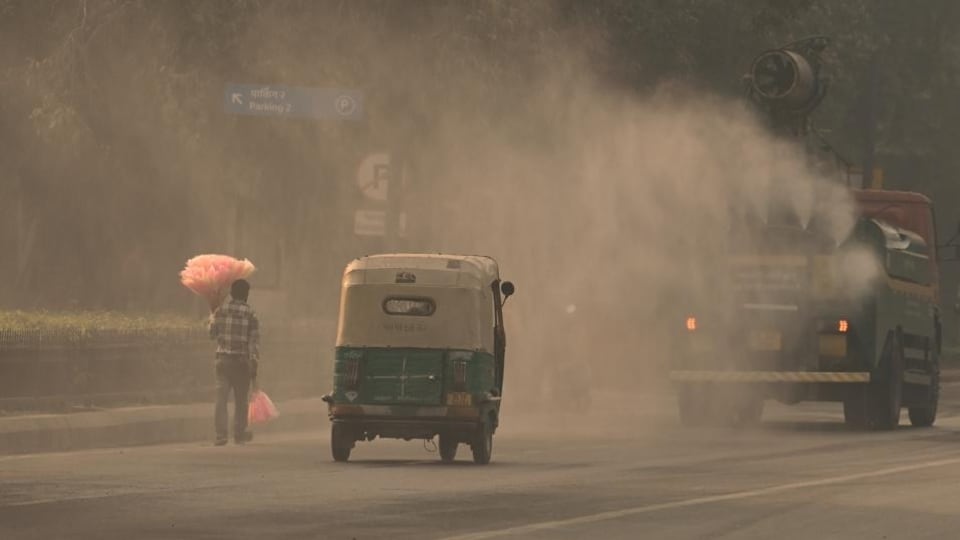
Meanwhile, data from the CPCB’s Sameer app showed that 22 monitoring stations reported air quality in the ‘severe’ range, while 12 stations recorded ‘very poor’ air quality with readings above 300, as on 10:05 am on Sunday.
Since Diwali, the AQI across Delhi and the National Capital Region (NCR) has hovered in the ‘poor’ and ‘very poor’ ranges, even as Stage II of the Graded Response Action Plan (GRAP) remains in effect. However, authorities have held back on implementing GRAP Stage III, which involves stricter curbs.
Best AQI in Delhi
The monitoring station of NSIT Dwarka recorded the best AQI at 198, which falls in the ‘moderate’ category, the only location in Delhi to report an Air Quality Index below 200 on Sunday morning.
Other relatively better readings included IHBAS, Dilshad Garden (263) and Lodhi Road (307), both of which fell in the ‘poor’ range.
Delhi areas with most toxic air
The worst AQI in Delhi was reported from Bawana (438), followed by Jahangirpuri (436), Rohini (435), Wazirpur (430), Mundka (428), and Burari Crossing (428).
Other areas in the ‘severe’ category included Nehru Nagar (425), Patparganj (424), RK Puram (423), Vivek Vihar (423), ITO (421), Narela (418), and CRRI Mathura Road (416).
In several other localities such as Punjabi Bagh (415), Ashok Vihar (415), Sonia Vihar (415), Alipur (414), Anand Vihar (410), Dr Karni Singh Shooting Range (406), Chandni Chowk (405), Okhla Phase-2 (404), and Sirifort (403), the AQI remained well above 400.
Complete AQI list: From worst to best
| Rank | Area | AQI | Category |
|---|---|---|---|
| 1 | Bawana | 438 | Severe |
| 2 | Jahangirpuri | 436 | Severe |
| 3 | Rohini | 435 | Severe |
| 4 | Wazirpur | 430 | Severe |
| 5 | Mundka | 428 | Severe |
| 6 | Burari Crossing | 428 | Severe |
| 7 | Nehru Nagar | 425 | Severe |
| 8 | Patparganj | 424 | Severe |
| 9 | RK Puram | 423 | Severe |
| 10 | Vivek Vihar | 423 | Severe |
| 11 | ITO | 421 | Severe |
| 12 | Narela | 418 | Severe |
| 13 | CRRI Mathura Road | 416 | Severe |
| 14 | Punjabi Bagh | 415 | Severe |
| 15 | Ashok Vihar | 415 | Severe |
| 16 | Sonia Vihar | 415 | Severe |
| 17 | Alipur | 414 | Severe |
| 18 | Anand Vihar | 410 | Severe |
| 19 | Dr. Karni Singh Shooting Range | 406 | Severe |
| 20 | Chandni Chowk | 405 | Severe |
| 21 | Okhla Phase-2 | 404 | Severe |
| 22 | Sirifort | 403 | Severe |
| 23 | North Campus (DU) | 399 | Very Poor |
| 24 | Jawaharlal Nehru Stadium | 391 | Very Poor |
| 25 | Mandir Marg | 390 | Very Poor |
| 26 | Dwarka Sector-8 | 388 | Very Poor |
| 27 | Pusa (DPCC) | 380 | Very Poor |
| 28 | Pusa (IMD) | 380 | Very Poor |
| 29 | Lodhi Road (IMD) | 376 | Very Poor |
| 30 | Sri Aurobindo Marg | 371 | Very Poor |
| 31 | Aya Nagar | 366 | Very Poor |
| 32 | IGI Airport (T3) | 360 | Very Poor |
| 33 | Shadipur | 359 | Very Poor |
| 34 | Najafgarh | 357 | Very Poor |
| 35 | Lodhi Road (IITM) | 307 | Poor |
| 36 | DTU | 317 | Poor |
| 37 | IHBAS, Dilshad Garden | 263 | Poor |
| 38 | NSIT Dwarka | 198 | Moderate |
Areas with ‘very poor’ air quality
Among the localities recording ‘very poor’ air, North Campus (399), Jawaharlal Nehru Stadium (391), Mandir Marg (390), Dwarka Sector-8 (388), Pusa (380), Lodhi Road (IMD) (376), Sri Aurobindo Marg (371), Aya Nagar (366), Shadipur (359), Najafgarh (357), and IGI Airport (360) were among the most affected.
According to CPCB data, Noida and Ghaziabad recorded their poorest October air quality in five years. Noida’s average AQI for October 2025 was 236, compared with 205, 202, 211, and 181 in the previous four years.
Ghaziabad, too, showed a similar trend, averaging 227 this October — higher than its past four-year range of 194 to 224.


