E-Paper



9 years of talks, 2 nations, one deal: India, Pakistan signed Indus Waters Treaty on this day in 1960
India put the Indus Waters Treaty in abeyance after the April 2025 terror attack in Pahalgam, Jammu and Kashmir, which claimed 26 lives.

 Prefer HTon Google


On this day in 1960, ink met paper to seal the Indus Waters Treaty (IWT), which was signed by India and Pakistan with the World Bank and its then-president, Eugene Black, playing the role of a mediator in the nine years of negotiations.
Former US President Dwight Eisenhower hailed it as "one bright spot... in a very depressing world picture."
However, India put the water-sharing framework in abeyance after the April 2025 terror attack in Pahalgam, Jammu and Kashmir, which claimed 26 lives.
Also Read | Pact born out of Partition: The Indus Waters Treaty, why India rejects The Hague tribunal & its ruling
Indus Waters Treaty - World Bank's role as mediator
Following the 1947 partition, the Indus Basin river system, supporting millions of people, was abruptly cleaved between India and Pakistan. As the negotiations between the two countries went on for years, Eugene Black approached the leaders of both nations, offering mediation and other services, according to the World Bank.
India and Pakistan signed the treaty, with then Prime Minister Jawaharlal Nehru representing India and President Field Marshal Mohammad Ayub Khan for Pakistan.
Inaugural meetings were held in the US on May 6, 1952, and over the next eight years, negotiations continued on various aspects. The result was the signing of the Indus Waters Treaty on September 19, 1960, it added.
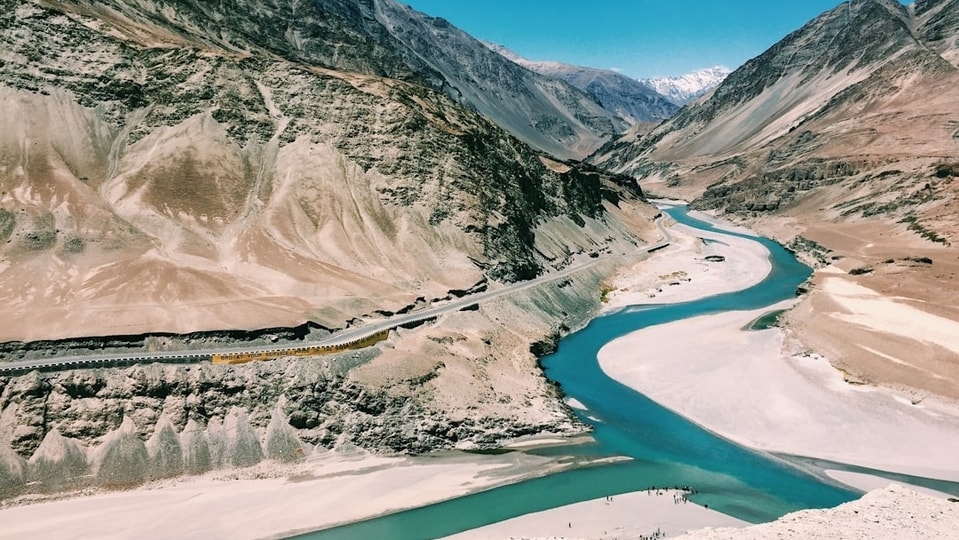
The Indus is the westernmost river system in the subcontinent, according to the Central Water Commission's Indus Basin Organisation. Its tributaries include: Jhelum, Chenab, Ravi, Beas and Satluj.
The blueprint of Indus Waters Treaty
The World Bank notes that under the framework, to which the World Bank is a co-signatory, the river system was divided:
The eastern rivers (Ravi, Beas, Sutlej): Allocated to India.
The western rivers (Indus, Jhelum, Chenab): Allocated to Pakistan.
Access to rivers: The eastern rivers were allocated for India's unrestricted use, while the western rivers were allocated for Pakistan's unrestricted use, subject to specified rights and obligations, as HT reported earlier. Neither country is completely restricted from using the rivers allocated to the other.
Role of World Bank:
As a signatory to the Treaty, the role of the World Bank is limited and procedural, it added.
Its role related to "differences" and "disputes" is limited to the designation of individuals to carry out certain duties in the context of Neutral Expert or Court of Arbitration proceedings.
Also Read | President Murmu on Indus Water Treaty suspension: ‘Decisive step in interest of nation, farmers’
Islamabad, in 2016, asked the World Bank to set up an ad hoc Court of Arbitration to look into two hydroelectric power projects, Kishenganga and Ratle.
India countered by demanding the appointment of a Neutral Expert.
Notably, the Treaty does not empower the Bank to choose which procedure takes precedence. Here's what happened after that:
- Then-World Bank Group President Jim Yong Kim declared a pause in December 2016.
- In March 2022, the World Bank decided to resume the process of appointing a Neutral Expert and a Chairman for the Court of Arbitration.
- In November 2022, the World Bank held two separate hand-over meetings with the Neutral Expert and the Chairman of the Court of Arbitration.
Also Read | India rejects Court of Arbitration's Indus Waters Treaty award: ‘Illegally constituted, has no jurisdiction’
What happened to the Indus Waters Treaty?
Following the Pahalgam terror attack, India placed the Indus Waters Treaty in abeyance as part of a series of actions against Islamabad.
New Delhi linked the attack to terror networks operating out of Pakistan.
India on August 31 rejected the Permanent Court of Arbitration's order setting aside its decision to suspend the Indus Waters Treaty with Pakistan, saying the "illegally-constituted" body has no jurisdiction to comment on New Delhi's sovereign decisions.
The ministry of external affairs (MEA), in a statement, said India's decision to hold the IWT in abeyance remains in force.
"Today, the illegally constituted so-called Court of Arbitration (CoA) has issued what it termed as an award concerning Interim Measures and Status of the Indus Waters Treaty," it said.
"This so called Court was constituted by the World Bank in patent breach of the terms of the Treaty and India categorically rejects its so-called award, just as it has firmly rejected all prior pronouncements by this illegally constituted body," the MEA added.
“This so-called Court of Arbitration has no jurisdiction whatsoever to pronounce on India’s sovereign decisions. Its pronouncements, now or in the future, will have no effect on India’s actions in connection with the projects being undertaken by India,” the ministry continued.
India has stepped up work on several hydropower projects in Jammu and Kashmir, which Pakistan had opposed under the provisions of the 1960 agreement.