E-Paper



Pact born out of Partition: The Indus Waters Treaty, why India rejects The Hague tribunal & its ruling
India says the 'so-called' Court of Arbitration has no standing. A guide to beginnings of the treaty and how India and Pakistan got here.

 Prefer HTon Google


India on Monday rejected a ruling by a five-member Court of Arbitration in The Hague that ordered it to uphold the 1960 Indus Waters Treaty (IWT) with Pakistan. New Delhi called the tribunal "illegally constituted" and reiterating that the pact will remain "in abeyance".
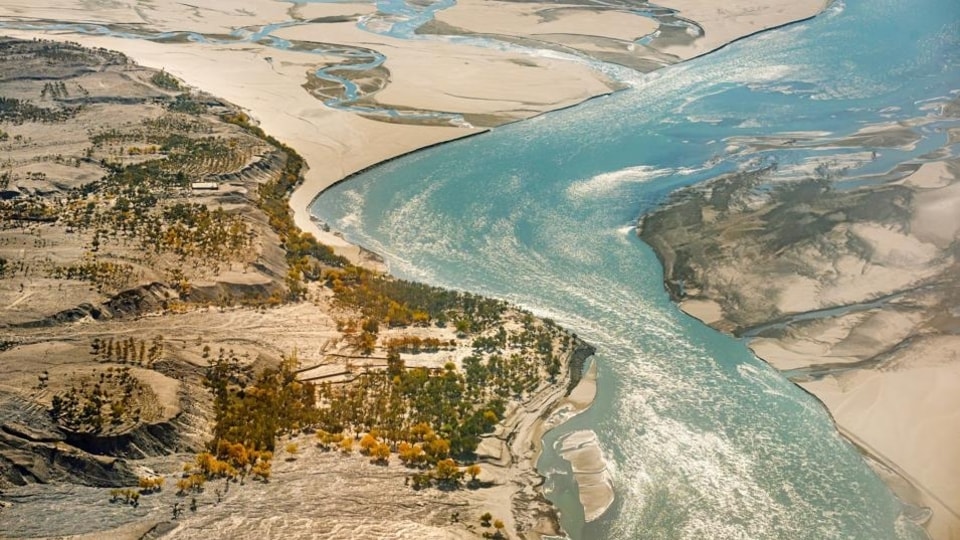
The tribunal held that the pact remains in force and that India must continue to observe its obligations under it, including those governing the design and operation of its hydroelectric projects on the western rivers. It also directed interim measures on India's Ratle project in Jammu and Kashmir.
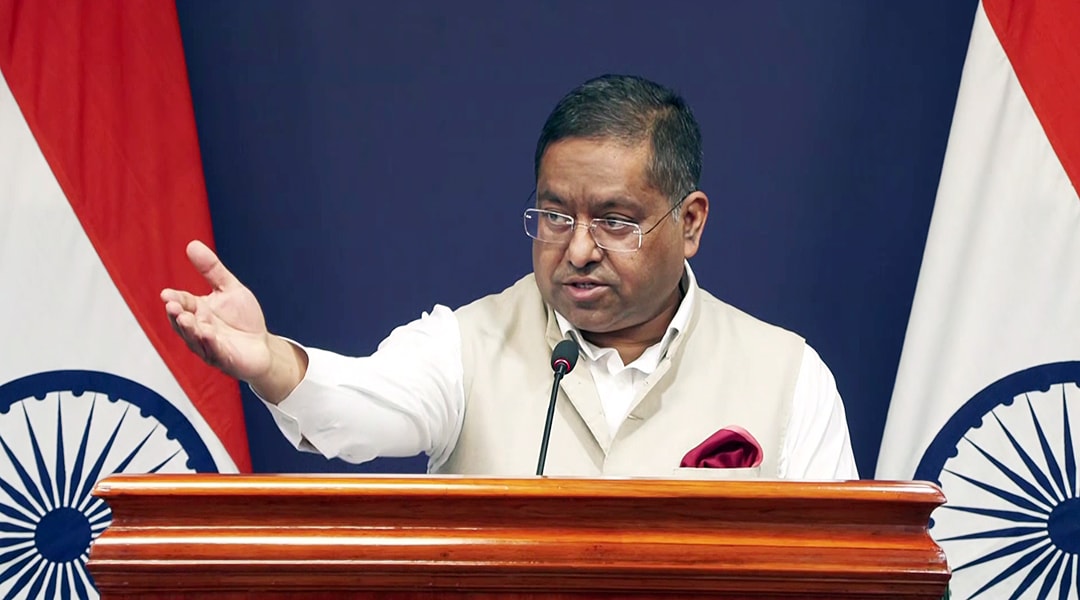
The Ministry of External Affairs (MEA) described the tribunal as a "so-called Court of Arbitration", said India had "never recognised the existence in law" of the tribunal, and asserted that the panel had "no jurisdiction whatsoever to pronounce on India's sovereign decisions". Its decisions, the ministry said, would have no effect on India's actions.
The ruling has drawn renewed attention to the Indus Waters Treaty, one of the world's closely watched transboundary water-sharing agreements. Signed after years of negotiations following Partition, it has survived wars and prolonged periods of India-Pakistan hostility. So what is the treaty, why was it created, and why are India and the Court of Arbitration at odds?
The Indus river system
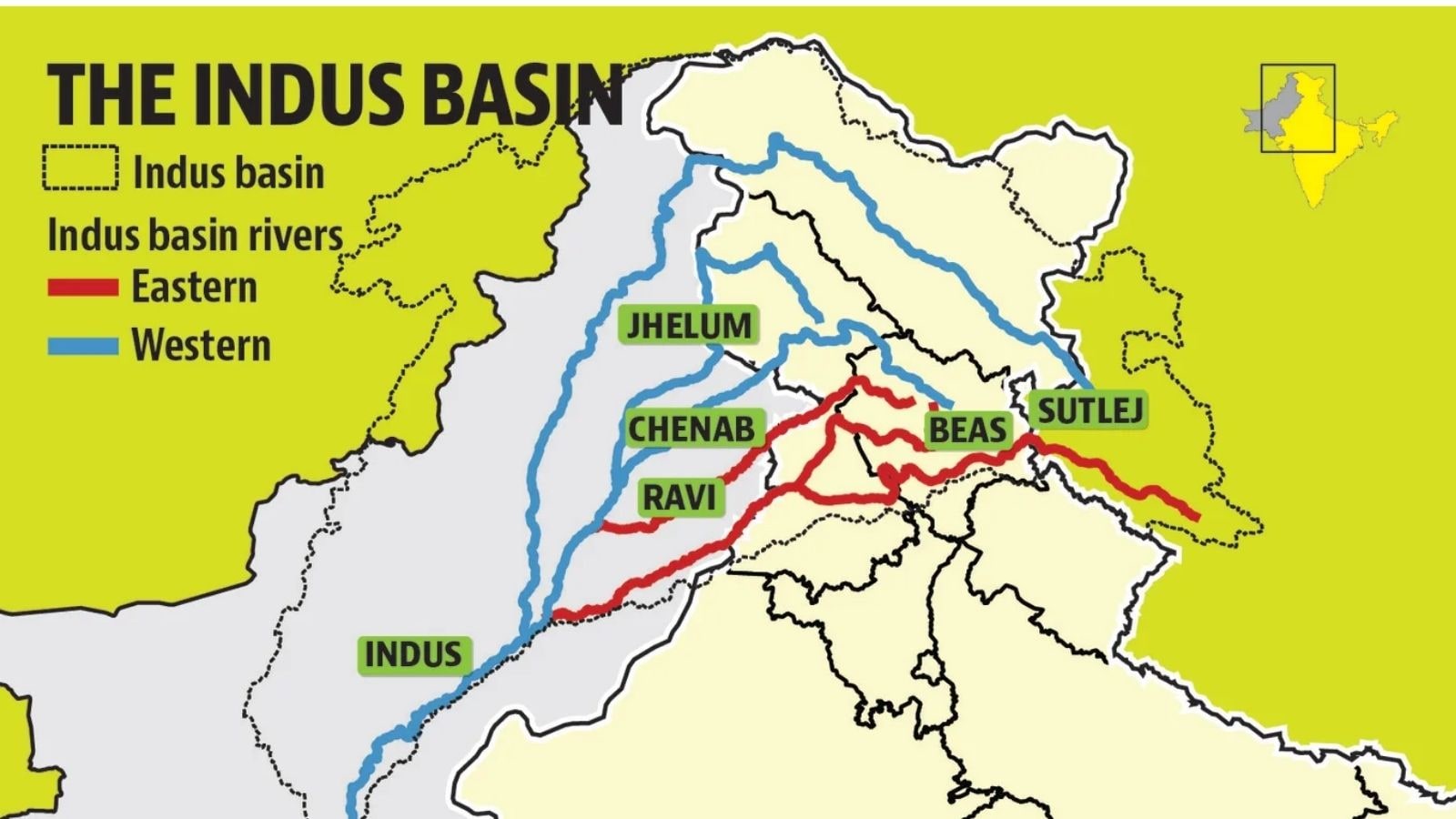
The Indus is the westernmost river system in the subcontinent, according to the Central Water Commission's Indus Basin Organisation. It rises from the Bokhar Chu glacier on the northern slopes of Mount Kailash in Tibet and enters India at Demchok in Ladakh. In Tibet, it is known as Singi Khamban, or Lion's Mouth.
Its main stem runs about 2,880 km, of which roughly 709 km lies in India. Together with its five main tributaries — the Jhelum, Chenab, Ravi, Beas and Sutlej — the Indus drains a catchment of about 1.165 million sq km spread across Tibet, India, Pakistan and Afghanistan. Around 321,000 sq km of that catchment lies within India, covering Ladakh, Jammu and Kashmir, Himachal Pradesh, Punjab, Chandigarh, and parts of Haryana and Rajasthan.
The five tributaries meet to form the Panjnad, which joins the Indus at Mithankot in Pakistan before the river empties into the Arabian Sea near Karachi.
The three eastern rivers — Ravi, Beas and Sutlej — carry a smaller share of the system's flow than the three western rivers — Indus, Jhelum and Chenab.
Also read: 'Every single drop of water our red line': Pakistan PM Sharif's fresh Indus Waters Treaty threat
Why a treaty
The roots go back to the Partition.
When India and Pakistan became countries, the boundary cut across the Indus system and its network of canals, headworks and irrigation infrastructure. Large parts of Pakistan's agriculture depended on water originating in or flowing through territory that became part of India.
The first major dispute broke out in 1948. On April 1 that year, India stopped water flowing from the Ferozepur headworks into some canals serving Pakistan.
At issue were competing claims over the rights to waters in east Punjab and the continued supply of water to canals in west Punjab. An interim arrangement in May 1948 defused the immediate crisis, but the episode pointed to the larger issue of the Partition dividing territory without dividing the river system.
The two countries needed a long-term framework to determine how the waters would be used and how future disagreements would be resolved.
The treaty
The search for a permanent settlement eventually brought in the World Bank. Rather than negotiate arrangements river by river, the eventual agreement divided the system's six major rivers into two groups.
The eastern rivers — Ravi, Beas and Sutlej — were allocated for India's unrestricted use, while the western rivers — Indus, Jhelum and Chenab — were allocated for Pakistan's unrestricted use, subject to specified rights and obligations.
Neither country is completely barred from using the rivers allocated primarily to the other. The pact sets out specific rules for irrigation, domestic use, storage and hydroelectric power. India is permitted certain uses of the western rivers, including hydroelectric power generation, on conditions laid down in the treaty.
The agreement also created the Permanent Indus Commission (PIC), with one commissioner from each country, to serve as a channel for communication, information exchange and cooperation.
India and Pakistan signed the treaty in Karachi on September 19, 1960, with Prime Minister Jawaharlal Nehru representing India, President Field Marshal Mohammad Ayub Khan for Pakistan, and the World Bank as the broker.
The Bank, a signatory, says on its fact sheet that its role is "limited and procedural". In disputes and differences, the document says, the Bank designates individuals to serve as 'neutral expert' or as members of a Court of Arbitration when either or both parties ask for them.
The treaty took effect from April 1, 1960.
Also read: ‘India could use water as weapon’: Pakistan minister warns amid Indus Water Treaty row
Resolving disputes
The IWT does not send every disagreement straight to an international tribunal. It sets up a graded, three-step mechanism.
Under Article IX, "questions" are first taken up by the Permanent Indus Commission. "Differences" that the commission cannot resolve go to a neutral expert, a highly qualified engineer.
“Disputes”, or questions of legal interpretation, go before an ad hoc Court of Arbitration.
India's consistent position, restated in successive MEA statements, is that the hierarchy is important. A matter cannot go before a tribunal while a neutral expert is already seized of the matter.
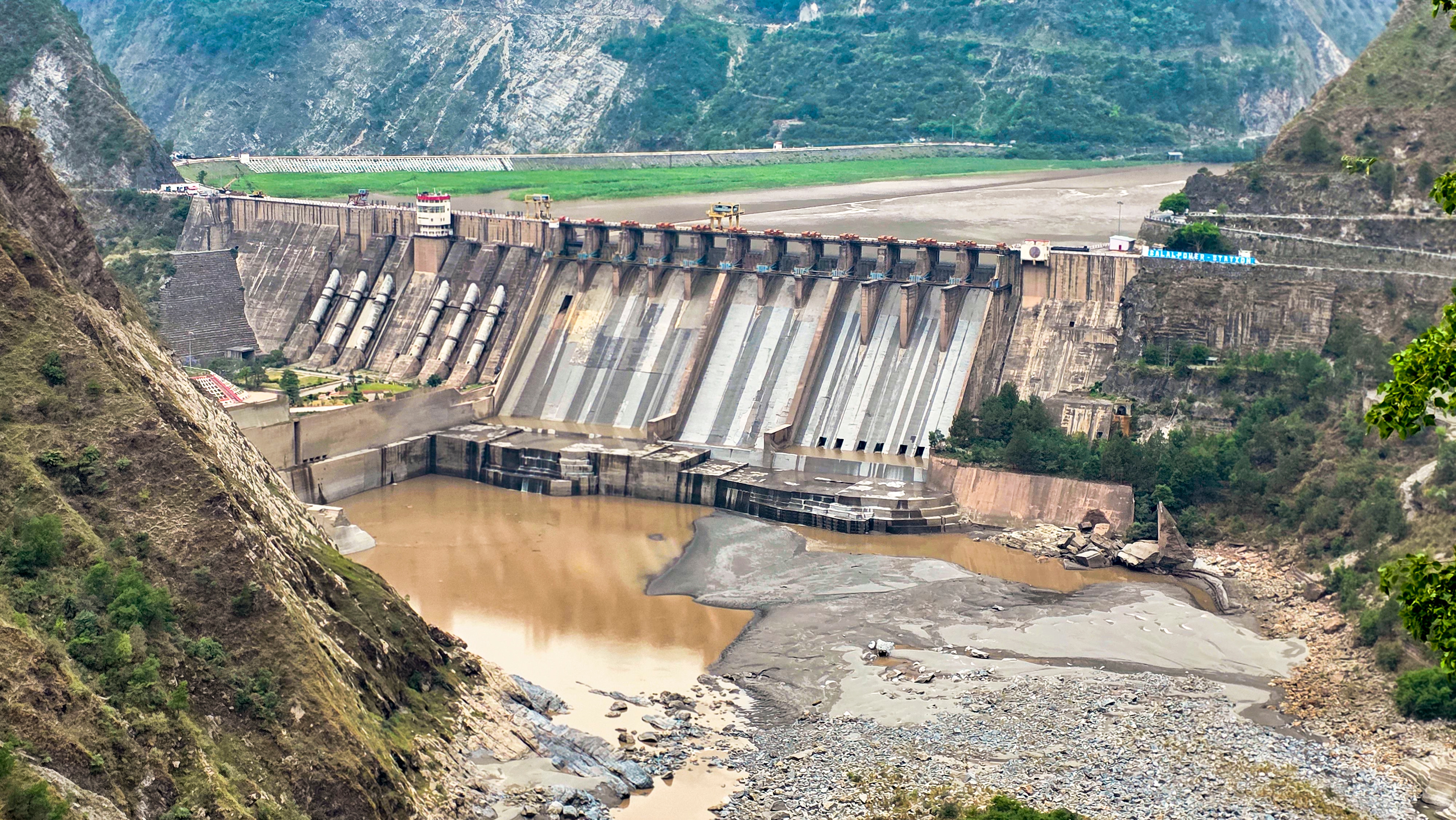
The current proceedings concern India's Kishenganga and Ratle hydroelectric projects on the western rivers.
Pakistan first sought a neutral expert in 2015, withdrew the request in 2016, and asked instead for a Court of Arbitration. India, for its part, formally requested the appointment of a neutral expert in September 2016. After a five-year pause the World Bank imposed between 2016 and 2022 to give both sides room for an amicable settlement, the Bank announced in October 2022 that it was appointing both — Michel Lino, president of the International Commission on Large Dams, as neutral expert, and Professor Sean D Murphy of the US as chair of the Court of Arbitration.
The World Bank has said its role under the treaty is “strictly procedural” and that the treaty “does not allow it to choose whether one procedure should take precedence over the other”.
Other members of the tribunal are Wouter Buytaert of Belgium, Jeffrey P Minear of the US, Awn Shawkat Al-Khasawneh of Jordan, and Donald Blackmore of Australia.
India took part in the neutral expert proceedings until the April 2025 abeyance decision, and refused to appear before the Court of Arbitration, saying the tribunal had been constituted in violation of the treaty.
India's stand was strengthened on January 20, 2025, when the neutral expert ruled that all seven technical questions referred to him on the Kishenganga and Ratle projects fell within his competence under Paragraph 7 of Annexure F. In a statement the next day, the MEA said the decision "upholds and vindicates India's stand". The neutral expert's final ruling is expected by July 2027.
One of the treaty's most notable features was its longevity. India and Pakistan have fought wars in 1965, 1971 and 1999 and gone through repeated periods of military and diplomatic confrontation, but the pact continued to operate.
Also read: Hormuz to Indus: The new water weapon isn't scarcity. It's uncertainty
India puts treaty ‘in abeyance’
India announced the abeyance decision in April 2025, days after the Pahalgam terror attack of April 22. The announcement was part of a wider set of steps against Pakistan as New Delhi linked the attack to terror networks based in the neighbouring country. Islamabad has denied involvement.
In a letter dated April 24, 2025, Jal Shakti secretary Debashree Mukherjee formally conveyed the decision to her Pakistani counterpart Syed Ali Murtaza. The letter recalled that India had already sent notices in January 2023 and August 2024 seeking modification of the treaty. "Sustained cross-border terrorism" targeting Jammu and Kashmir, it added, had "directly impeded India's full utilisation of its rights under the Treaty".
Since then, the Indian side has stepped up work on several hydropower projects in Jammu and Kashmir, which Pakistan has opposed under provisions of the 1960 pact. Among these are the Ratle and Kishenganga hydropower projects, over which Pakistan had sought the formation of a court of arbitration.
The Neutral Expert's proceedings concerning the projects remain ongoing, with the latest programme envisaging a final decision around July 2027.