
 E-Paper



A yoga story for International Yoga Day
One of the pioneers of ’Hatha Yoga’ was Tirumalai Krishnamacharya, widely regarded as the ‘Father of Modern Yoga.’

 Prefer HTon Google


In 2015, the Indian government, in a coup of sorts, convinced the UN General Assembly to declare June 21st as International Day of Yoga, thus reclaiming yoga, which had proliferated across the world in a variety of avatars, for Bharat. Since then, multitudes of eager Indians and non-Indians have come together on this day each year to perform a series of postures or asanas, which most of them understand simply as ‘yoga.’
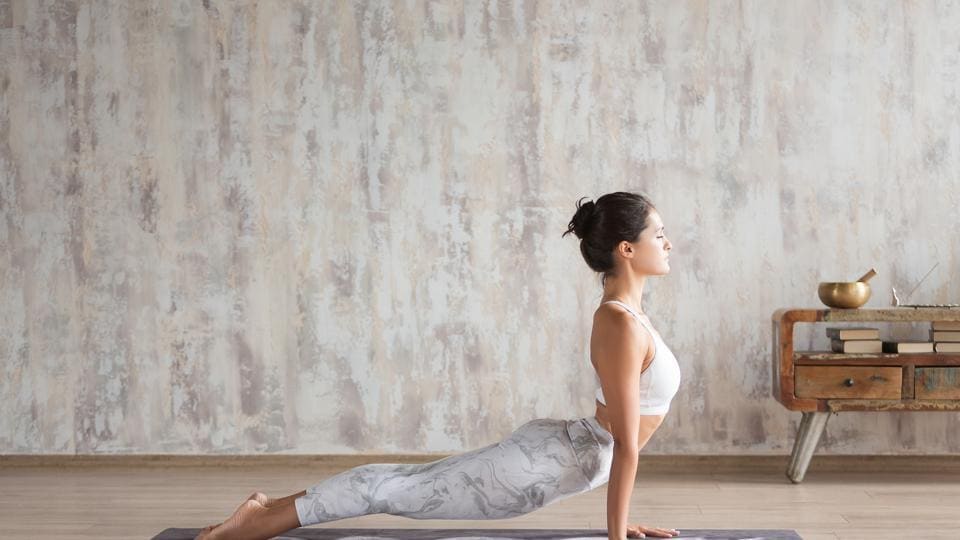
But today’s ‘postural yoga’, traditionally called Hatha Yoga, has very little to do with ancient lineage. In fact, Swami Vivekananda, who took yoga to the west in the 1890s, dismissed Hatha Yoga as ‘nothing but a kind of gymnastics.’ The rationalist monk himself espoused what he called ‘Raja Yoga’, a holistic spiritual practice based on ashtanga, the 8-step process to self-realization outlined by Maharishi Patanjali in the two-millennium-old Yoga Sutras.
Hatha Yoga, in a new, improved, form, had to wait until the 1920s to gain mainstream acceptance. One of the pioneers of this form – a rational, scientific approach to yoga as exercise and therapy – was (almost) local lad Tirumalai Krishnamacharya, widely regarded as the ‘Father of Modern Yoga.’
Born in 1888 in Chitradurga, Krishnamacharya’s education was eclectic. From studying the Vedas under his scholar father until the age of ten, moving to a mutt in Mysore after his father unexpectedly passed, to eventually graduating from Mysore University before moving to Varanasi for higher studies, and in between all of this, travelling across India to study the nuances of the six ancient schools of Indian philosophy – one of which is Yoga as interpreted by Patanjali – his youth was also peripatetic.
In 1919, he travelled to Simla to seek permission from the Viceroy, Lord Irwin, to cross the border into Tibet. His reputation as a healer having preceded him, Lord Irwin set before Krishnamacharya his own health problems, brought on by diabetes, which the latter proceeded to treat. Six months later, his health much improved, Lord Irwin sent the young man on his way, accompanied by an official escort.
In 1926, Maharaja Nalvadi Krishnaraja Wadiyar of Mysore accompanied his mother, Maharani Kempananjammanni, to Varanasi, on the occasion of her 60th birthday. Discovering to his delight that the great healer of Varanasi was from his own kingdom, he invited Krishnamacharya back to Mysore to teach yoga to the royal family, and, in 1933, encouraged him to establish a yoga school for the public – the famous Yogashala – in a wing of the Jaganmohan Palace.
It was at the Yogashala, as a teacher of a style of yoga that he developed himself, Vinyasa Krama Yoga, that the diminutive Krishnamacharya had his greatest impact. Famously exacting and short-tempered as a teacher, it was nevertheless his students – including his son TKV Desikachar; his brother-in-law, BKS Iyengar, of Iyengar Yoga fame; K Pattabhi Jois who developed Mysore Yoga; the Russian actress Indra Devi, yoga teacher to Hollywood; Srivatsa Ramaswami and AG Mohan – who would be counted among the greatest yoga teachers of the 20th century, and turn yoga into a global phenomenon.
In Mysore itself, with the death of Nalvadi in 1940, the Yogashala lost its royal patronage. Post-Independence, the chief minister, KC Reddy, ordered the school shut. Krishnamacharya moved to Bangalore, and then to Madras, where he taught until his death at the age of 100. His student Pattabhi Jois continued to teach in Mysore, at his own Ashtanga Yoga Research Institute. In 1967, a Belgian publisher called Andre Van Lysebeth wrote a book called Yoga Self-Taught, after spending a few months with Jois. The book caused a sensation in Europe, and brought yoga-seekers in droves to Jois’ door. That flood is yet to abate?
(Roopa Pai is a writer who has carried on a longtime love affair with her hometown Bengaluru)


