
 E-Paper



Abetment of suicide charges shouldn't be mechanically applied: Supreme Court
The Supreme Court ruled that abetment of suicide charges under IPC should not be applied mechanically to comfort grieving families

 Prefer HTon Google


The Supreme Court on Friday said the offence of abetment of suicide under the Indian Penal Code should not be invoked mechanically against individuals only to soothe feelings of the distraught family members of the person who has died.
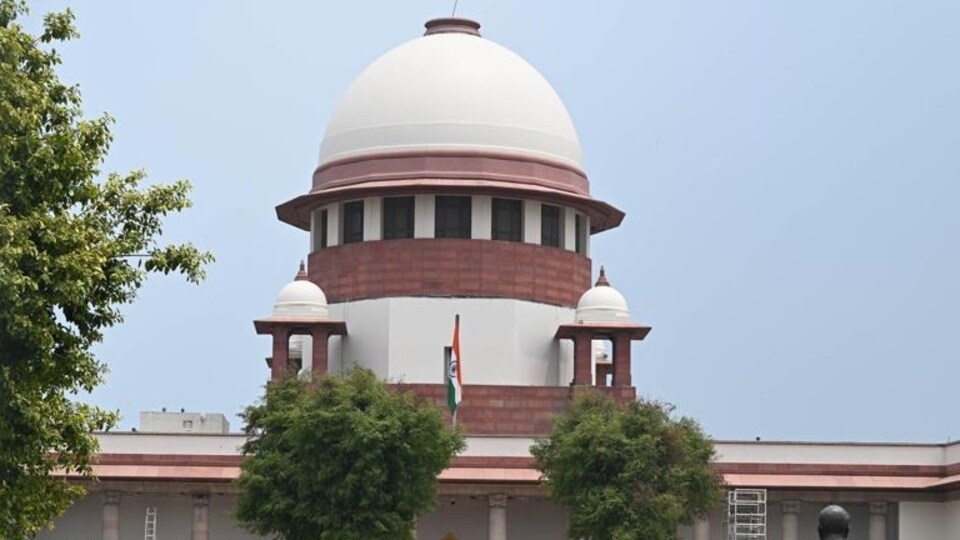
A bench of Justices Abhay S Oka and K V Viswanathan said the investigating agencies should be sensitised so that persons were not subjected to the abuse of the process of a totally untenable prosecution.
"Section 306 IPC appears to be casually and too readily resorted to by the police. While the persons involved in genuine cases where the threshold is met should not be spared, the provision should not be deployed against individuals, only to assuage the immediate feelings of the distraught family of the deceased," said the bench.
Also read: Supreme Court stays HC order asking Delhi govt to sign MoU with Centre over Ayushman Bharat scheme
"The conduct of the proposed accused and the deceased," the court went on, "their interactions and conversations preceding the unfortunate death of the deceased should be approached from a practical point of view and not divorced from day-to-day realities of life. Hyperboles employed in exchanges should not, without anything more, be glorified as an instigation to commit suicide."
The top court said the trial courts also should exercise "great caution and circumspection" and should not adopt a "play-it-safe syndrome" by mechanically framing charges, even if the investigating agencies in a given case showed utter disregard for the ingredients of Section 306.
The judgment came on a plea filed one Mahendra Awase challenging an order of the Madhya Pradesh High Court, which declined his prayer to discharge him from the offences punishable under Section 306 of the IPC.
According to the records, a person died by suicide and left a note in which he mentioned he was being harassed by Awase.
Apart from the suicide note, the statements of witnesses were recorded that indicated the person who died was disturbed as Awase was harassing him over the repayment of a loan.
The top court said in order to bring a case within the purview of Section 306 IPC there must be a case of suicide and in the commission of the said offence, the person alleged to have abetted the commission of suicide, must have played an active role by an act of instigation or by doing certain act to facilitate the commission of suicide.
The bench said it was convinced that there were no grounds to frame charges under Section 306 IPC against the appellant.
"A reading of the suicide note reveals that the appellant was asking the deceased to repay the loan guaranteed by the deceased ... It could not be said that the appellant by performing his duty of realising outstanding loans at the behest of his employer can be said to have instigated the deceased to commit suicide," the court said.
The bench's order said further, "Equally so, with the transcripts, including the portions emphasised hereinabove. Even taken literally, it could not be said the appellant intended to instigate the commission of suicide. It could certainly not be said that the appellant by his acts created circumstances which left the deceased with no other option except to commit suicide."
The apex court said the FIR was "strangely" lodged after a delay of over two months.


