E-Paper



AI summit, weddings, exams: Delhi braces for traffic chaos this week | Advisory on what to expect
The preparations for the AI summit include 15 DCPs and around 4,200 traffic personnel on duty to ensure smooth traffic in New Delhi.

 Prefer HTon Google


Already struggling with perennially choked roads, commuters in Delhi are bracing for a difficult week ahead as the Capital plays host to the AI Impact Summit 2026, bringing with it a surfeit of VIP movements and route closures that will paralyse large swathes of the city, adding to a surge in traffic caused by the ongoing wedding season and upcoming school board examinations
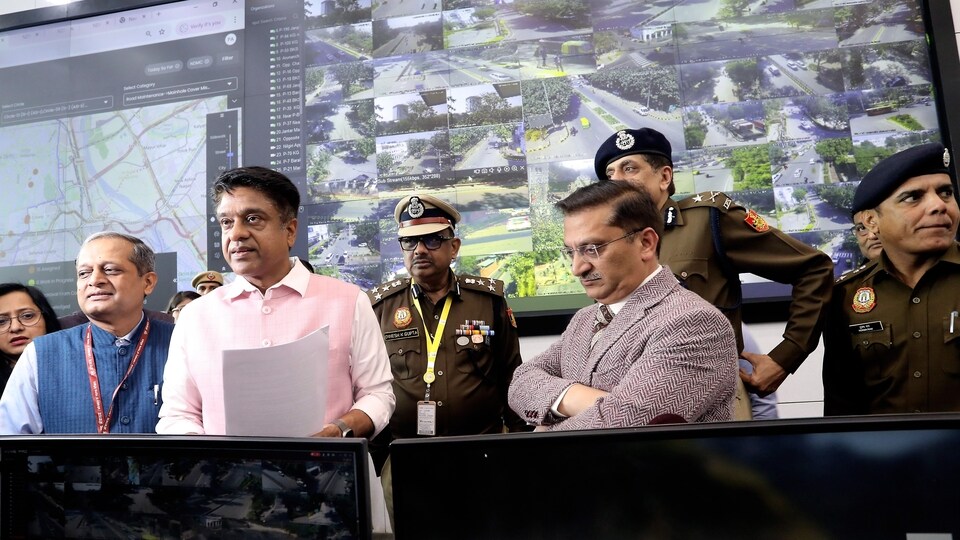

On Sunday, the Delhi Traffic Police issued an elaborate advisory for the summit, scheduled from February 16 to 20 at Bharat Mandapam, Pragati Maidan, warning of extensive diversions and regulated movement due to VIP convoys involving heads of state, ministers, and international delegates.
This comes even as the force appears to be battling a crisis of its own making.
On February 13, HT reported that the Delhi Traffic Police is operating at a staggering 20% vacancy, with another 10% of staff effectively unavailable due to leaves, VIP duties, and other deployments – the consequences of inadequate deployment play out on every choked intersection and unregulated flyover.
In the traffic advisory released on Sunday, police said restrictions will be imposed in large parts of central Delhi, particularly in and around the Bharat Mandapam, as well as around the ten hotels — eight in New Delhi and two in southwest Delhi — where police have said the foreign delegates will be staying.
This includes Mathura Road (Subramania Bharti Marg T-point to Lodhi Road flyover), Subramania Bharti Marg, Rajesh Pilot Marg, Tees January Marg, Akbar Road, Teen Murti Marg, Mother Teresa Crescent, Sardar Patel Marg, Janpath, Firoz Shah Road, Shanti Path, Satya Marg, Africa Avenue, Kamal Ataturk Marg, APJ Abdul Kalam Road, Dr Zakir Hussain Marg, Mahatma Gandhi Marg (Bhikaji Cama Place to Dhaula Kuan), Sikander Road, Ashoka Road, Prithvi Raj Road, Kautilya Marg, Purana Qila Road, Sher Shah Suri Marg, Tilak Marg, Bhagwan Das Road, Sansad Marg, Baba Kharak Singh Marg, Aurobindo Marg, Tuglak Road, Panchsheel Marg, San Martin Marg, Nyaya Marg and Brigadier Hoshiyar Singh Marg.
Bhairon Marg, excluding Ring Road T-Point, and stretches of Mathura Road up to Dinesh Nandini Dalmia Chowk fall under the restricted zone, where general vehicular entry will not be allowed during VIP movement.
“Non-destination vehicles will be diverted to eastern and western peripheral expressways, while emergency vehicles will be provided obstruction-free passage,” said deputy commissioner of police (DCP-traffic) Rajiv Kumar.
Despite this, a senior police officer said that no road will be completely closed.
“However, traffic is expected to be affected for about 30 minutes at a time when convoys move to and from Bharat Mandapam, the main venue,” an officer said.
Police said the situation could be worsened by wedding-related travel and by school board exams that start on February 17.
Ten schools located along the VIP corridors have been identified as vulnerable to disruption, including Atal Adarsh Senior Secondary Vidyalaya, Tilak Marg; Kitchener Road School, Malcha Marg; and Guru Harkishan Public School, Purana Qila Road.
“To minimise disruption, traffic police have deployed nodal officers for each school, shared their contact details with education authorities, and circulated multiple alternate routes. School managements have been asked to coordinate directly with these officers and guide parents and students accordingly,” Kumar said.
Police said that Metro services will continue uninterrupted, and commuters travelling to airports and railway stations have been advised to leave early and follow designated corridors.
Parking of autos and taxis will be restricted on regulated roads, they said.
“People should use public transport as far as possible, avoid roadside parking, and plan journeys in advance,” a senior traffic officer said on Sunday.
For passengers travelling to the airport, the police have issued detailed alternate routes. For instance, commuters from Gurugram heading to Terminals 3, 4 and 2 have been advised to use NH-48 via Rao Gajraj Singh Marg, Old Delhi-Gurugram Road and UER-II, while those bound for Terminal 1 can proceed via NH-48 under the Mahipalpur flyover and Ulan Bator Marg.
Traffic flow from Dwarka will be routed through Sector-22 Dwarka Road and the newly operational UER-II tunnel. Motorists from New Delhi and south Delhi can reach T3 via AIIMS Chowk-Ring Road-Moti Bagh Chowk-RTR Marg-Sanjay T-point, while west, north and east Delhi traffic has been diverted through Ring Road, Najafgarh Road and UER-II.
The preparations for the summit include 15 DCPs and around 4,200 traffic personnel on duty to ensure smooth traffic.
The city has been divided into 10 zones, each headed by a DCP, while eight additional DCPs have been brought in from other units to strengthen traffic management.
However, despite this extensive planning, there is little expectation of smooth commutes on the ground, as the city experiences hours of gridlock even during predictable weekday traffic.