
 E-Paper



Hindu side’s plea to worship in Gyanvapi maintainable: HC
A plea filed by five Hindu women seeking the right to regularly worship deities in the Gyanvapi Masjid complex is maintainable, the Allahabad high court ruled on Wednesday.

 Prefer HTon Google


A plea filed by five Hindu women seeking the right to regularly worship deities in the Gyanvapi Masjid complex is maintainable, the Allahabad high court ruled on Wednesday, dismissing a petition challenging a lower court order that allowed proceedings in the case to go ahead.
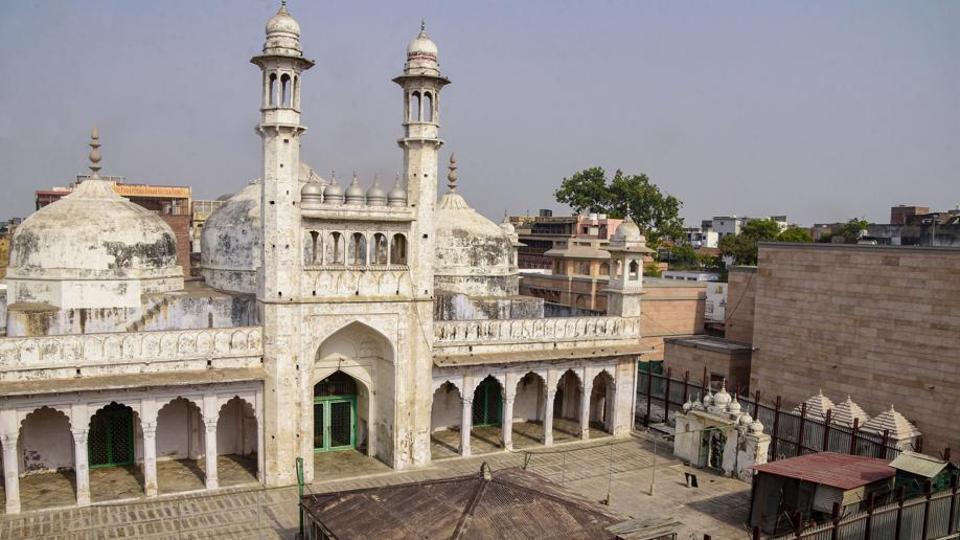
In September last year, the Varanasi district court ruled that the plea by the five Hindu women was not barred by the Places of Worship (Special Provisions) Act, 1991, the Waqf Act 1995, and the UP Shri Kashi Vishwanath Temple Act, 1983. The Anjuman Intezamia Masjid Committee (AIMC) had challenged this in the high court.
But justice JJ Munir sided with the Hindu side’s arguments, saying that the suit by the women for regular worship of Maa Shringar Gauri and other deities in the Gyanvapi mosque compound was maintainable.
“It is a historic verdict. The court clearly has said that the Anjuman Intezamia Mosque Committee’s petition is not maintainable and dismissed it,” said Vishnu Shankar Jain, who represents the Hindu side.
Senior advocate SFA Naqvi, representing AIMC, said: “This judgment has the potential to establish a precedent that could lead to an increase in frivolous lawsuits concerning disputes between temples and mosques. Some politically-motivated people are explicitly seeking the religious conversion of a place or a change in religious character of a place of worship, which is specifically barred by section 4 of the Places of Worship Act. This has opened up a pandora’s box of politico legal challenges. In reality, what they actually want is not hidden from anyone.”
Advocate Ekhlaq Ahmad, another lawyer of AIMC, said they will approach the Supreme Court. “The verdict is against our expectation. We expected the high court would allow our revision petition. But it has dismissed it. We will challenge the verdict in the Supreme Court,” he said.
The decision is a major victory for the Hindu side in a case that has become the most high-profile in a string of similar suits filed in lower courts across Uttar Pradesh, arguing that Islamic holy sites were built over Hindu temples, including in Varanasi, Mathura and Agra. During the arguments, Naqvi contended that the claim of the Hindu side that devotees were restrained from worshipping Shringar Gauri and other deities on the outer wall of Gyanvapi in 1993 is an artificial claim and an example of clever drafting. According to him, no order was passed by the then state government in writing in 1993.
Naqvi also said the claim was made only to avoid the application of the Places of Worship Act, 1991, which bars changing the religious character of any holy site as it existed on August 15, 1947, with the exception of the Ram Janmabhoomi-Babri Masjid dispute. According to Naqvi, the present suit was barred by the 1991 law, Limitation Act and the Waqf Act.
The counsel representing the Hindu side said that old maps showed the existence of Hindu deities and devotees were regularly worshipping Shringar Gauri and other deities on the outer wall of Gyanvapi. It was in 1993 that the then government restrained regular rituals and allowed people to worship only once a year, the counsel said.
Hence, the Act of 1991 was not applicable to the case, given that worshipping of the deities continued for decades, the counsel added.
The Gyanvapi dispute dates back decades but in August 2021, five women filed a petition in a local court demanding the right of unhindered worship at the Maa Shringar Gauri Sthal, located inside the complex that houses idols of Hindu gods. In April 2022, the local court ordered a controversial survey of the complex, which quickly ran into protests. The survey was finally completed in May, but not before the Hindu side claimed that a shivling was found in the final hours of the exercise. The court clamped security on the entire complex even as the Muslim side argued that the structure found was a ceremonial ablution fountain.
The case finally reached the Supreme Court, which on May 20, 2022 transferred the suit from the Varanasi civil judge to the district judge and protected the site.


