
 E-Paper



Article 370 hearing: SC seeks timeframe to restore Jammu and Kashmir statehood, Centre replies
The Supreme Court asked the Centre to indicate if there is a timeframe to restore the statehood for Jammu and Kashmir.

 Prefer HTon Google


The Supreme Court, hearing pleas challenging the abrogation of Article 370, on Tuesday asked the Centre to indicate if there is a timeframe to restore the statehood for Jammu and Kashmir, and a roadmap for this progression.
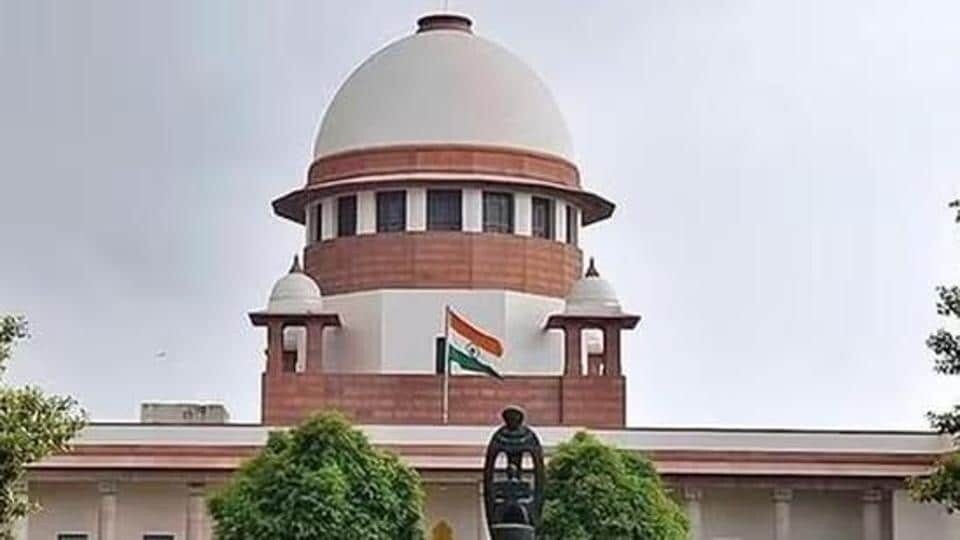
Solicitor General Tushar Mehta, who is representing the Centre, told the court that the current status of Jammu and Kashmir as a union territory is temporary, adding that he would be able to make a positive statement on the timeframe on August 31, after a meeting at the highest level. Ladakh, however, would remain a union territory, he added.
Several petitions challenging the abrogation of the provisions of Article 370 and the Jammu and Kashmir Reorganisation Act, 2019, which split the erstwhile state into two union territories - Jammu and Kashmir, and Ladakh - were referred to a Constitution bench in 2019.
On Monday, the Centre told the Supreme Court that the current status of Jammu and Kashmir as a union territory was not permanent and its statehood will be restored.“It’s necessary that for some time it remains under the union as a Union Territory. The Hon’ble Home Minister has said in the House that this is a temporary measure. Ultimately, J&K will become a state,” Mehta had told a five-judge Constitution bench led by Chief Justice of India DY Chandrachud.
Also Read | Article 35A took away three key rights from Indians: Supreme Court
The Supreme Court prima facie agreed with the Centre's submission on pleas challenging the abrogation of Article 370 that the Constitution of Jammu and Kashmir is "subordinate" to the Indian Constitution, which is on a higher pedestal.
The bench, however, did not seem to be in agreement with the plea that the Constituent Assembly of the erstwhile state, which was disbanded in 1957, was in reality a legislative assembly.
Without naming the two mainstream political parties of the erstwhile state, the Centre said citizens have been misguided that the special provisions for Jammu and Kashmir were "not discrimination but a privilege".
“Even today two political parties are before this court defending Article 370 and 35A,” the solicitor general told the top court on the 11th day of hearing the litany of pleas challenging the abrogation of the constitutional provision which bestowed special status to the erstwhile state.
Mehta said there is enough material to show that the Constitution of Jammu and Kashmir is subordinate to the Constitution of India and the constituent assembly of Jammu and Kashmir was in reality a legislative assembly making laws.
"At one level, you may be right subject to rejoinder arguments from the other side (petitioners' side) that the Constitution of India is really a document which lies on a higher platform than that of the Constitution of J-K," the bench also comprising justices Sanjay Kishan Kaul, Sanjiv Khanna, BR Gavai and Surya Kant said.
It told Mehta that it would be difficult to accept the second limb of the argument that the Constituent Assembly (CA) of Jammu and Kashmir was, in reality, a legislative assembly as proviso to Article 370 specifically mentioned that it (CA) brought certain subjects into the fold of the state upon its approval.
"On November 21, 2018, the legislative assembly of the state was dissolved but there was no contemporaneous challenge by any political party or any citizen or leader.
"Till, today there is no challenge to the dissolution of the assembly," Mehta said, adding that despite there being no challenge, arguments were made by the petitioners’ side that the action was "arbitrary".
Mehta added that on June 20, 2018, under Section 92 of the J-K Constitution, the Governor’s rule was imposed in the state due to the failure of constitutional machinery in the state and only one petition challenged it after 14 months.
(With inputs from PTI)


