
 E-Paper



Bandipur Elevated Corridor: Key facts misquoted in case, claim conservationists
Kerala and the MoRTH are keen on removing night-time restrictions as well as constructing elevated corridors through the reserve, which is opposed by Karnataka, NTCA and activists.


Conservationists have questioned the veracity of the claims made by the ministry of road, transport, and highways (MoRTH), in their submission to the Supreme Court (SC), regarding the ₹500 crore Bandipur elevated corridor project in a case that could have ramifications for all 668 protected areas in India that cover over 1.61 lakh kms of the country’s area.
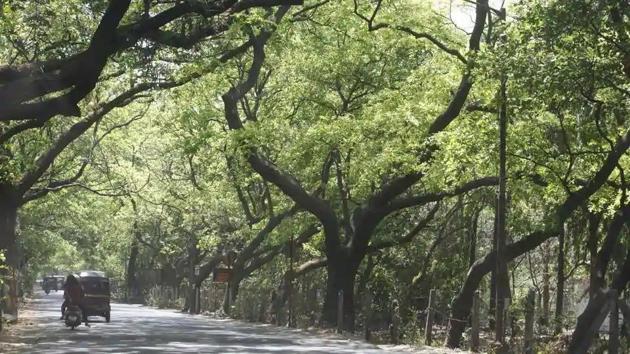
Sanjay Gubbi, a Bengaluru-based conservationist said: “In their submission to the court, the MoRTH has misquoted and misinterpreted its arguments based on the 2016 report, ‘Eco-friendly Measures to Mitigate Impacts of Linear Infrastructure on Wildlife’. This report was produced by the Wildlife Institute of India (WII), the Ministry of Environment, Forests and Climate Change (MoEFCC) and the National Highways Authority of India (NHAI). He added: “Despite a strong disagreement from Karnataka and the National Tiger Conservation Authority (NTCA), the MoRTH has submitted a unilateral report favouring the opening of the night time restrictions in addition to the construction of flyovers within Bandipur Tiger Reserve.”
The report states that the best practice would be to avoid or prevent adverse impacts as far as possible by considering a design alternative. Where impacts are highly significant or could lead to loss of irreplaceable biodiversity or conservation assets, avoidance is the only real option if development is to be sustainable.
The MoRTH submission to the SC refers to the same report but says that according to it: “There are enough measures that can be put in place to ensure safe passage to wildlife while not compromising the development goals.” The submission also refers to the chief executive officer and the director of Wildlife Trust of India (WTI), Vivek Menon.
According to Gubbi, “The current restriction on vehicular traffic at night time is in line with the ‘regulatory or prescriptive measures’ as suggested by the same report. It is clear that all the measures suggested under the report submitted by MoRTH are relevant to forest areas outside tiger reserves, national parks, and wildlife sanctuaries and not for places with source tiger populations like Bandipur Tiger Reserve.”
YS Malik, secretary, MoRTH, said, “Once I file a report in the SC, I cannot comment on it. There is no consensus for an agreement since the parties differ, so let the apex court take a call on this.”
Menon said, “This is a rather complex issue and the proceedings are (going) on in court. At this point, I would not like to comment regarding this.”
The Bandipur Tiger Reserve along with Nagarahole, Mudumalai, Sathyamangalam and Wayanad have an estimated tiger population of about 382. This constitutes the single largest wild population of tigers in the world and is home to 1/8th of all tigers in the world. The reserve is an important component of the 5,520 sq.kms Nilgiris Biosphere Reserve, the first biosphere reserve in the country and is also home to the largest population of Asiatic elephants in the world.
Kerala and the MoRTH are keen on removing night-time restrictions as well as constructing elevated corridors through the reserve, which is opposed by Karnataka, NTCA and activists.


