E-Paper



Vultures in BNHS centres to be released amid financial difficulties
Kishor Rithe, secretary, Bombay Natural History Society (BNHS) acknowledged that the organisation is facing financial difficulties in feeding vultures due to irregular funding

 Prefer HTon Google


The Bombay Natural History Society (BNHS), one of the India’s oldest conservation organisations plans to release hundreds of vultures from their conservation breeding centres following financial difficulties.
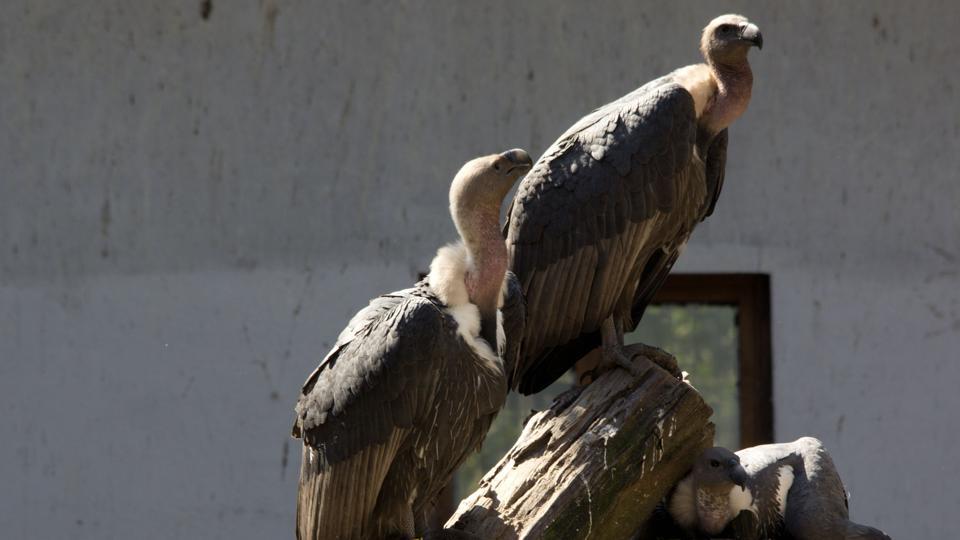
One of the concerns raised by former employees is BNHS’s sudden plan to release vultures which were cared for in BNHS centres, apart from other organisational issues that have developed since a new management took over.
There have been concerns on the safety of birds following release and whether scientific aspects of such large-scale release have been considered.
Also Read:Red-headed vulture seen at Delhi’s Bhatti mines, first since 2017
Kishor Rithe, secretary, BNHS acknowledged that the organisation is facing financial difficulties in feeding vultures due to irregular funding and hence we have requested state governments to take on that responsibility.
Excerpts:
Are you planning to release 500 vultures in the wild from your conservation centres?
We have not yet decided the number but yes, we have plans to release the vultures. Our scientists decide how many birds are required to be kept at the vulture breeding centre as breeding stock and how many are fit to be released in the wild. It’s improper to quote any figure to be released. But we can say that we have a good number of birds ready to be released. We have been successfully running the vulture conservation breeding programme since 2004-05 and today we have around 750 vultures at different conservation breeding centres. So, we are already executing a plan of releasing vultures and till today we have released around 28 vultures.
What is your experience of releasing captive bred vultures in the wild?
The release programme of the captive-bred critically Endangered Oriental White-backed vulture was started in 2020 following the successful release of two Himalayan Vultures in 2016 by Prakash Javadekar, former union minister of environment, forest and climate change. Eight Oriental White-backed vultures were released from the pre-release aviary on 8 October, 2020. Four of the vultures were fitted with Satellite Transmitters or PTT (Platform Transmitter Terminal) and four with GSM transmitters which work on mobile technology before they were released in the wild. None of the birds died due to non-steroidal anti-inflammatory drugs (NSAIDs) poisoning. The 85% birds that were released survived and hence we are prepared to increase this number now. Recently, the union environment minister Bhupender Yadav visited the conservation breeding centre at Pinjore in Haryana and he was satisfied to see the success of the release programme. So, our scientists are working hard to focus on release and post-release monitoring plans.
Will they be able to integrate in the natural environment easily? Where will you release them?
We want to release them in different parts of the country but that depends upon the Vulture Safe Zones (VSZ) from the NSAID. So, those states and the tiger reserves who are working on the VSZ programme are the preferred candidates and the locations. We have received the request from the Chief Wildlife Wardens of Maharashtra, Rajasthan and Madhya Pradesh where we plan to release them, especially in the tiger reserves where safe carcasses of wild prey are available.
How much were you spending on them in captivity?
We are spending approximately ₹6 lakh per week on their food, maintenance and staff at one location.
What is the current status of vultures in the wild? Do they need captive breeding anymore?
Presently, their population is either stable, and has stopped declining and increasing in a few pockets. This is good for India. BNHS wants to conduct a national estimation of wild vulture population with the help of the centre and the state governments.
Are the ones under your care presently being fed/attended to?
A. Yes. We faced financial difficulties to feed them due to irregular funding and hence we have requested states to accept that responsibility. The West Bengal government has accepted this and it’s happening in other places too. BNHS scientists and staff can focus more on the scientific activities.
There have been several resignations from BNHS, especially of noted scientists. Why do you think this happened?
This is not true. Only scientist who resigned is our director Dr Bivash Pandav who was on deputation from the Wildlife Institute of India. (WII). WII has curtailed his deputation, and hence he has returned to his parent organisation.
What is your vision for the organisation? Which species/areas of work will you focus on?
BNHS want to focus more on the conservation of lesser-known species like vultures, Great Indian Bustard, Lesser Florican, Indian Skimmer, Black-bellied Tern, Bengal Florican, Finns Baya, Cranes, and so on. Our scientists are working on these projects and the initial outcomes are fantastic.
How has the vulture population stabilised in India?
BNHS identified diclofenac, a veterinary drug as a problem for vulture deaths and then requested the drug controller of India to impose a ban on its veterinary use. The GoI imposed a ban on its veterinary use in 2006. BNHS started a Vulture Safe Zone program in UP and MP. At the same time the vulture population got safe food in our tiger reserves. The village relocation programme made extra space available to wild prey and carnivores and also removed a huge number of livestock from core areas of tiger reserves. In the states like Rajasthan, people do not take livestock to hospitals and safe carcasses are available to Vultures. So, this helped stop further decline in vulture numbers.