
 E-Paper



Chhattisgarh police defuse IEDs planted on scarecrows near CRPF camp
Scarecrows dressed in black were placed very close to the CRPF camp to trick security forces into confusing them with Maoists and opening fire.


Police in Chhattisgarh defused two improvised explosive devices (IEDs) planted on two scarecrows and placed near an under-construction road in Dantewada district on Sunday, officials said on Monday.
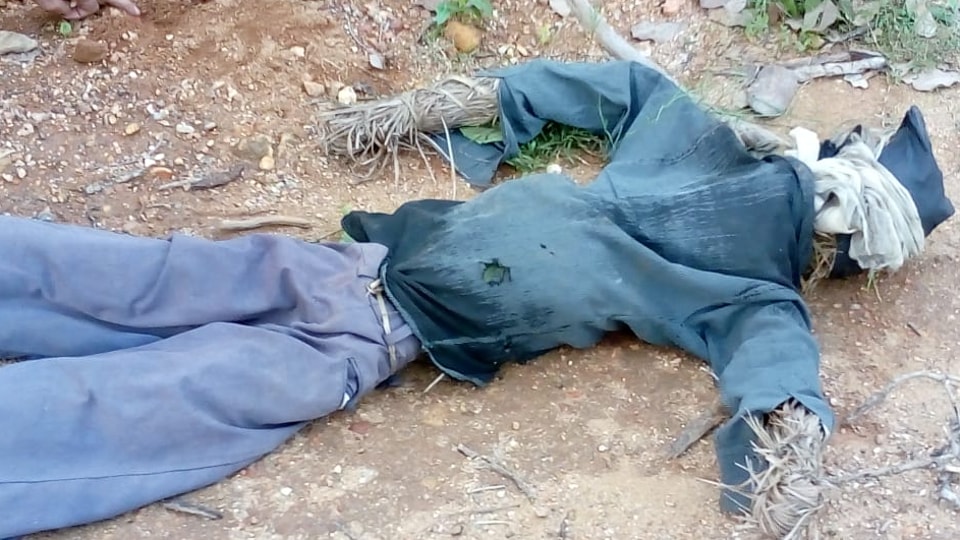
The Maoists had put these scarecrows about 400meters from the Kondasawali camp of 231 Battalion of Central Reserve Police Force or CRPF on the Aranpur-Jagargonda road. Police said that IEDs weighed 2kg and 5 kg each and were planted on the scarecrows “to inflict maximum damage” to the security forces moving on the road.
“They thought that since security forces have been dismantling and destroying smaraks (monuments) made by Maoists for upcoming the Maoists’ martyrs’ week, police will remove the scarecrows too and thus would lead to IED blasts,” Dantewada’s superintendent of police Abhishek Pallav said while speaking to HT.
Pallav said the scarecrows dressed in black were placed very close to the CRPF camp to trick security forces into confusing them with Maoists and opening fire.
“Lots of civilian casualties, especially among children who could have touched and moved the scarecrows in curiosity, and casualties to animals could occur with irresponsible implantation of release IEDs,” he said.
It was just desperation to inflict damage on forces in whatever way possible, the SP added.
This is not the first time scarecrows have been used by Maoists to confuse security forces in south Bastar.
“In 2018, they used some scarecrows in Burkapal area in Sukma district but they were only dressed in clothes of security forces. The aim was to confuse the security forces then but this time they have planted IED which shows they are improvising the strategy,” senior police official Jitendra Shukla, who was Sukma’s SP then, said.
-kW0H-U20214218012MgB-250x250%40HT-Web.jpg)


