
 E-Paper



China draws up a peace plan on Ladakh. India sees right through it
Army finds PLA’s condition that India should only patrol till Finger 3 of Pangong Tso unacceptable as it means that Finger 4 will become part of occupied Aksai Chin

 Prefer HTon Google


Even as New Delhi awaits Beijing’s confirmation on a date for the eighth round of military-diplomatic level dialogue on disengagement in East Ladakh, HT learns that it has rejected the conditions posed by the People’s Liberation Army for the withdrawal of Chinese troops from the Finger 4 mountainous spur on the north banks of Pangong Tso.
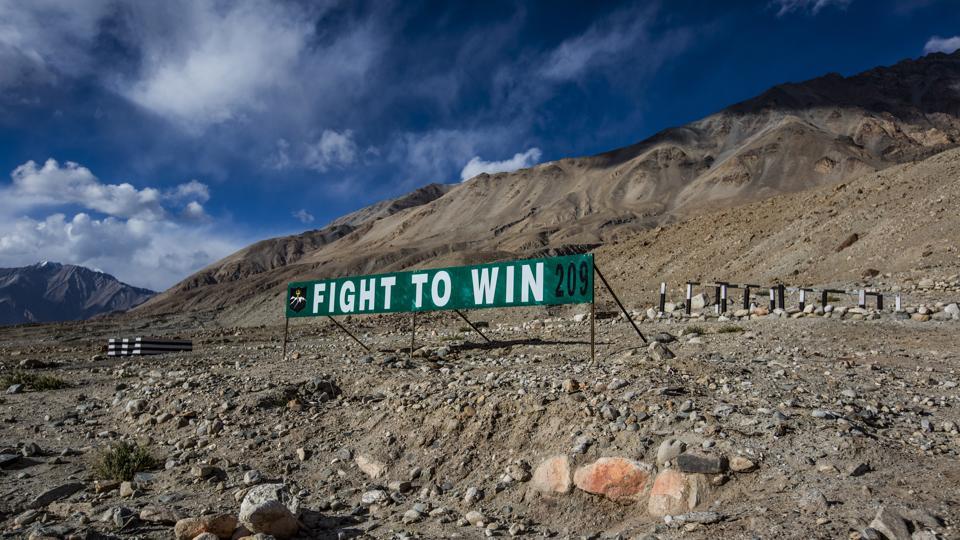
According to officials familiar with the thinking in India’s national security establishment, the next round of talks will likely be held after the end of the 5th Plenary Session of the 19th CPC Central Committee meeting and the November 3 US Presidential elections. India’s defence minister Rajnath Singh on his part has made it clear that the country is ready to continue with the disengagement and de-escalation dialogue so that both armies, deployed since May 2020, can return to their barracks.
According to senior military commanders familiar with the discussions between the two sides, India has found PLA’s condition that Indian Army should only patrol till Finger 3 of Pangong Tso, with the Chinese army only patrolling till Finger 5 unacceptable as this means that the contentious Finger 4 will become part of occupied Aksai Chin.
Essentially, the Chinese proposal means that Finger 4 will become out of bounds for both armies even though the Indian Army used to (or at least try to) patrol till Finger 8 in the past.
The Chinese perception of the line of actual control or LAC, by a 1959 line, runs through Finger 4 of the Pangong Tso lake.
India has rejected this.
Also Watch | Explained: How India-US BECA pact will help in LAC faceoff with China
The Indian perception of LAC is that the line runs through Finger 8 of the salt water lake. To complicate matters, the PLA has built a road right up to Finger 4 from Finger 8, while the Indian side is still to connect by road to Finger 4.
While Indian and Chinese troops are both at the height of 5800 metres on Finger 4, Beijing’s proposal calls for permanent vacation of the spur by the Indian Army. On May 5-6 night, the PLA, using riot gear and nail studded clubs and rods launched an assault on Finger 4, throwing an Indian Army officer into the Pangong Tso lake and overpowering contesting Indian troops.
New Delhi has also rejected Beijing’s proposal that the Indian Army vacate the Rezang La -Rechin La ridge-line on the south bank of the Pangong Tso first as part of the disengagement process.
India’s position, which has been conveyed to the Chinese according to the military commanders cited above is that the aggression on the LAC was initiated by Chinese troops — first on Finger 4, then in the Galwan valley and finally, in the Gogra-Hot Springs area — and that the Indian Army then retaliated in South Pangong Tso. New Delhi wants the disengagement and de-escalation to follow the same order, with the Chinese withdrawing first.
The ground situation all along the 1597 km LAC in Eastern Ladakh remains the same with both Indian and Chinese armies now battling the elements. While the Indian Army is trying to keep all the high mountain passes to to both north and south of Pangong Tso open, the PLA are at an advantage (in terms of logistics and movement) due to the vast and flat Tibetan plateau on their side.
The military commanders insisted that the morale of Indian troops, under the new XIV Corps commander, remains high and pointed out that this is first time in many years that Indian soldiers are patrolling right up to the limits defined by the China Study Group in 1976.


