
 E-Paper



Colour blind student challenges admission denial by FTII, SC says panel to review criteria
On Tuesday, Ashutosh Kumar, 35, convinced the Supreme Court to consider whether he should be barred from admission to the prestigious Film and Television Institute of India (FTII) just because he is colour blind.


Christopher Nolan, the man behind several Hollywood blockbusters such as The Dark Knight, Inception, Memento and Interstellar, is a role model for Patna-based Ashutosh Kumar. Incidentally, Kumar and Nolan have one thing in common – both are colour blind, unable to distinguish between certain colours.
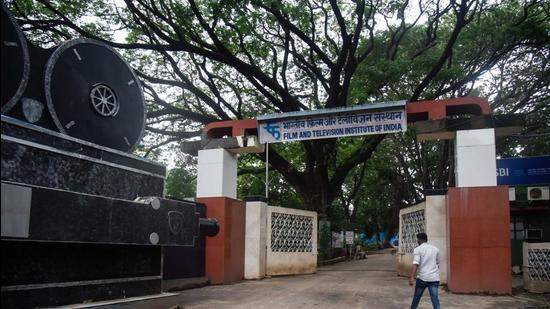
On Tuesday, Kumar, 35, convinced the Supreme Court to consider whether he should be barred from admission to the prestigious Film and Television Institute of India (FTII) just because he is colour blind even as Nolan is revered across the globe for his keen eye for cinematic beauty.
Moved by Kumar’s passion for filmmaking and his persistence, a bench of justices Sanjay Kishan Kaul and MM Sundresh decided to review of FTII’s admission criteria with respect to colour blind candidates, especially after taking into account the advancement in technology as well as medical science.
The bench directed the creation of a panel of experts, comprising an ophthalmologist (a doctor who specializes in eye and vision care), a film director, a film editor, a colourist, a script supervisor, a head of department of FTII and a lawyer.
“Role of the committee would be to ascertain whether colour blindness is to be perceived as a disqualification for all courses in FTII,” stated the court order, emphasising that the FTII’s regulation requires a relook on the principle of providing “reasonable accommodation” for disabled persons under the Right to Persons with Disabilities (RPwD) Act of 2016.
Kumar applied for the three-year post graduate diploma course in film editing at FTII in 2015 and he was also short listed for the course. But his candidature was declined after he was found to be colour blind during the medical examination. The authorities cited FTII Rules which state that colour blind candidates are not fit for admission in a few courses, including film editing.
Kumar approached the Bombay high court in 2016 against denial of admission to him but got no relief. The high court noted that FTII has set up an admission committee of experts from various fields to review the admission criteria and carved out six out of 12 courses at FTII in which colour blind candidates are not found suitable. It rejected Kumar’s plea, holding a court cannot interfere when an expert body has fixed eligibility criteria for FTII courses.
Aggrieved by this order, Kumar filed an appeal in the Supreme Court in September 2017 through advocate Satya Mitra, and urged the court to declare that part of FTII’s prospectus disallowing persons with colour blindness from pursing the film editing course is violative of the right to equality and right to life.
Arguing for Kumar before the top court on Tuesday, senior advocate Colin Gonsalves highlighted that several leading filmmakers, including Nolan, are colour blind. He also placed on record statements by some FTII’s alumni who maintained that they had no issues with various aspects of film making even though they suffered from colour vision deficiency. Gonsalves further argued that Satyajit Ray Film and Television Institute does not discriminate against candidates with colour blindness or partial defect.
Advocate Amit Anand Tiwari, representing FTII, submitted that the institute is sensitive to candidates with disabilities and that decision to hold colour blind candidates unsuitable for 6 out 12 courses was taken after a study by the expert committee, which also took into account the problems faced by two colour blind candidates who were admitted to the institute in a different course in 2013.
At this, the bench also wondered if there was a scope for a judicial review in a case like this where FTII had taken a considered decision after a panel went into the issues.
However, some recent Supreme Court judgments came in handy for Gonsalves --a 2017 judgment that allowed two colour-blind students to pursue MBBS course; a 2018 judgment that allowed a candidate with “low-vision” to pursue the MBBS course; and a February judgment that cautioned against the adoption of one size fits all approach and called on the Union government to to provide “reasonable accommodation” to persons with disability. Reasonable accommodation means necessary and appropriate modification and adjustments not imposing a disproportionate or undue burden.
The bench then found it appropriate to follow the course adopted by the Supreme Court in these judgments and directed for setting up a committee of experts to review if FTII regulations need revamping.
“It is an evolving process. We now have documents with details of some renowned filmmakers, some even got national awards in India, who have been colour blind...The best thing to say that with advancement of science, the issue should be revisited by a committee, within the principle of reasonable accommodation. It is futuristic thinking,” observed the bench.
The bench then recorded in its order that a committee of experts, including a film director, a colourist, a script supervisor, a film editor, an ophthalmologist and head of department of the course concerned, shall be set up to examine the matter. The panel will submit its report to the court in three months.
The bench is expected to name members of the committee on Monday after it consults some experts. In the meantime, Gonsalves and Tiwari have also been asked to submit a few names of the proposed members.
FTII is India’s leading film institute based in Pune, Maharashtra. Its list of famous alumni include Adoor Gopalakrishnan, Naseeruddin Shah, Shabana Azmi, Om Puri, Jaya Bachhan, Santosh Sivan and Sanjay Leela Bhansali.


