
 E-Paper



Congress white paper warns of Covid-19 third wave
The document, released by Rahul Gandhi on Tuesday asked the government to invoke compulsory licensing provisions under the Patents Act 1970 to ramp up domestic vaccine production.

 Prefer HTon Google


The Congress party, in a white paper on the Covid19 pandemic has sought free, universal vaccination for all Indians in the shortest possible time frame and compensation for those who died after contracting the viral disease, claimed that nine of every 10 deaths in the brutal second wave of the pandemic in India were avoidable, and blamed the Modi government for its failure to handle the pandemic.
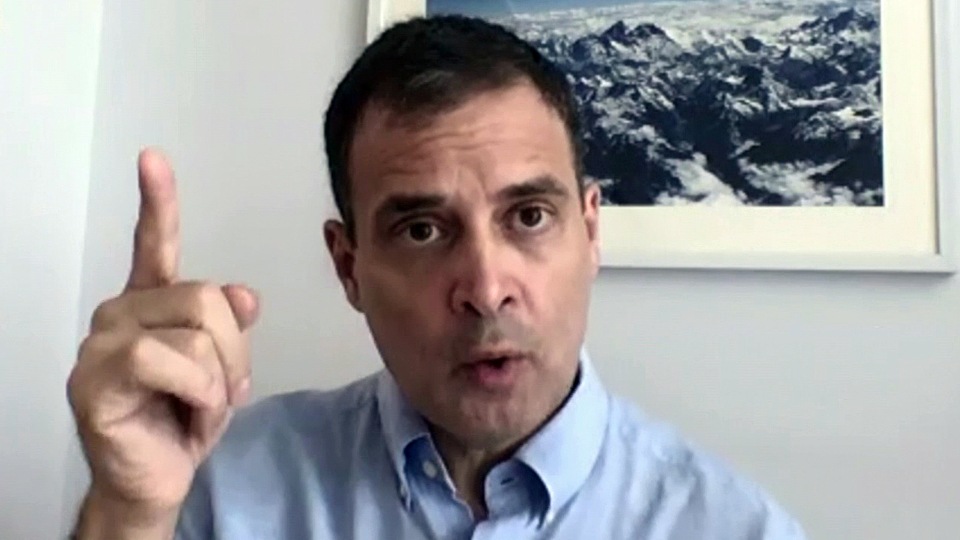
The document, released by Rahul Gandhi on Tuesday asked the government to invoke compulsory licensing provisions under the Patents Act 1970 to ramp up domestic vaccine production.
The paper, prepared by the party’s research cell also asked for a minimum income support scheme for the poor and most vulnerable, wage subsidies to Micro, Small and Medium Enterprises (MSMEs) and more funds for the Mahatma Gandhi National Rural Employment Guarantee Scheme.
Releasing the paper, Gandhi said 90% of Covid19 deaths in the second wave were “needless” as they could have been saved if oxygen or drugs were available, and demanded a commission to look into “what went wrong” in the government’s strategy .
In a series of tweets, Union minister Smriti Irani hit back asking Gandhi to introspect. “Where did second wave start?ruled states. Which states had huge percentage of India’s cases and deaths? Congress ruled states”
She also said Congress-ruled states have higher case fatality rates and recorded high positivity rates during the second wave. “Who demanded decentralization (in vaccine sourcing) & then did a U-turn? Congress. Which states did the worst in terms of vaccination yesterday even as the country created a world record? Congress ruled states.” Irani tweeted.
Her reference is to the high vaccination numbers registered by BJP-ruled states on Monday, the start of a new phase of the vaccine drive. Madhya Pradesh, for instance, administered 1.7 million doses. However, the state administered only 68,370 till 10pm on Tuesday. Overall, doses administered from from around 8.5 lakh; till 9 pm, India had administered 5.4 million doses on Tuesday.. As for deaths, reports based on the government’s own data from the Civil Registration System have shown that many states, including some ruled by the BJP such as Uttar Pradesh, Karnataka, Assam and Madhya Pradesh, but also others such as Andhra Pradesh and Tamil Nadu have seen a huge number of excess deaths in 2020 and 2021, a spike that can be explained only by Covid.
Interestingly, the government has, in separate affidavits filed in the Supreme Court already weighed in on two of the demands raised in the white paper: it has said it does not make sense to take the compulsory licence route with vaccines, and, more recently, over the weekend, said that the ₹4 lakh compensation as mandated under the national disaster management law will not be paid to the families of those who died from Covid-19. “The Centre is making 4 lakh crore through cess on petrol and diesel. It has taken money from the people. They can give any name they want but a compensation plan is required,” Gandhi said.
In his comments while releasing the document, Gandhi also targetted the Prime Minister, and said he was busy campaigning during the second wave of the pandemic.
Gandhi acknowledged India’s feat of administering 8.5 million doses on Monday as “good work” but cautioned that vaccination is a process, not a series of events. Congress chief spokesperson Randeep Surjewala quickly added that Manmohan Singh government had administered pulse polio doses to 120 million children on a single day in 2012. To be sure , a comparison of the two is out of place given the significant complexities involved in administering Covid vaccines.
The Congress leader maintained the White Paper is aimed at giving suggestions to the government to keep itself ready for any possible third wave and that “the government should not repeat the mistakes”.
The document labelled the vaccination campaign as “ad-hoc, short-sighted, unscientific, and inequitable” and alleged that the Union government “did not intend to vaccinate all Indians.” It further accused the government of “ignoring multiple warnings to the contrary, and thereby committed the critical error of not placing sufficient orders in advance, cascading to the vaccine shortages.”
“Among the major impact of policy failures was that India was forced to break away from its 17-year-long tradition of not accepting foreign aid to deal with domestic crises. The Union government then delayed the distribution of the foreign aid it received and is yet to make public the details of donations,” the White Paper added.
India has never stopped accepting foreign aid, as pointed out in an article in this paper by academics Manjari Chatterjee Miller and Vidhu Priya Mukundan. After 2004, “the terms of receiving aid” changed, they pointed out, and aid was “requested on a long-term basis, accepted only from G8 countries, from donors who would agree to give more than $25 million per year, or accepted by the state governments rather than the Centre.”


