
Congress objects to logo of affordable medicines scheme in Madhya Pradesh
Congress says Centre is focussed on printing ‘BhaJP’ in saffron colour on medicine wrappers.
The Congress in poll-bound Madhya Pradesh has objected to the highlighting of initial letters of Bharatiya Jan Aushadhi Pariyojna, the scheme for providing medicines at affordable prices, in its logo in orange, which put together become acronym ‘BhaJAP’ in Hindi.
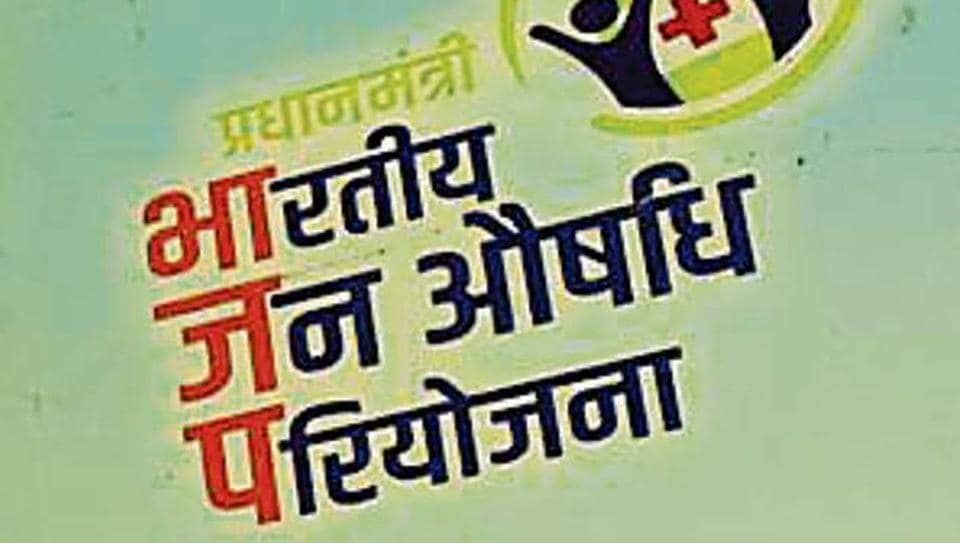
This is close to the ruling Bharatiya Janata Party’s Hindi acronym and saffron colour is commonly identified with the party.
“This is highly objectionable that the government is using schemes for the BJP’s publicity in view of the elections.
“Bharatiya Janaushadhi Pariyojna is a scheme to provide generic medicines to people. But instead of providing medicines to people, they are focussed on printing ‘BhaJP’ in saffron colour on every medicine wrapper. The BJP’s flag, too, has saffron colour,” said Madhya Pradesh Congress spokesperson Shobha Oza.
“This is the first government in India which is misusing government schemes for the sake of publicity for its party. We will lodge a complaint against the Centre’s decision to use the specific logo of the scheme with the chief electoral officer, Madhya Pradesh, on Monday,” she added.
BJP spokesman Rajneesh Agrawal said he was unable to understand the Congress’s objection.
“More than saffron colour, the scheme logo has the blue colour, which is used in the party symbol of the Bahujan Samaj Party. A colour does not belong to any particular political party and if initials of the scheme’s name resemble with our of party name, then it is just a coincidence,” he said.
ABOUT THE AUTHORShruti TomarI have spent over a decade chronicling Madhya Pradesh’s political and social landscape, covering politics, investigative journalism, crime, human interest, and government policy, blending sharp insight with ground‑level depth. I have closely tracked three assembly elections, three Lok Sabha elections, leadership transitions in MP while exposing governance lapses, tender irregularities, and flawed policy rollouts. My reports have revealed gaps in the Cheetah project, irregularities in medical education, rigging in recruitment exams, and loopholes in policy implementation. In crime reporting, I have moved beyond FIRs to map systemic patterns — from organised crime networks and gender‑based violence to custodial accountability — balancing urgency with sensitivity. My journalism is defined by a commitment to human interest. I have profiled the marginalised Bancchda community, documented atrocities against tribal groups, and highlighted efforts to preserve their culture through heritage liquor and revival of spiritual practices. I have reported on farmers struggling with failed MSP promises, giving voice to those often reduced to statistics in policy files. Passionate about field reporting, I have reported on rampant sand mining in Chambal and Narmada, pharmaceutical companies supplying medicines under altered names, the dire condition of schools and colleges, the plight of commercial sex workers, and skewed sex ratios in specific districts. Beyond deadlines, and as HT’s state correspondent and assistant editor in Madhya Pradesh, I engage with ministers, farmers, students, and activists, believing the best policy stories begin with a single human voice. A postgraduate in Journalism and Mass Communication, I also hold a diploma in sports journalism.Read More

E-Paper


