
 E-Paper



Coronavirus outbreak: 50 to 82% Covid cases in India are asymptomatic
India has high number of asymptomatic coronavirus cases which underlines the importance of increased testing and isolation of patients, say experts.

 Prefer HTon Google


50 to 82 per cent of India’s total coronavirus patients registered across states are asymptomatic, say officials from different states, presenting a difficulty in the further easing of lockdown norms beyond May 3.
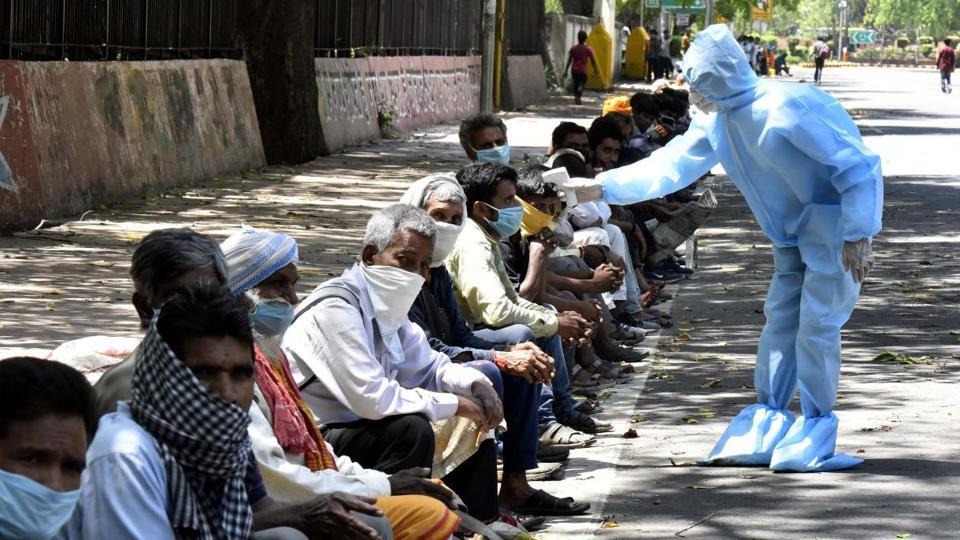
An asymptomatic coronavirus patient doesn’t show any visible symptoms of the disease because of various factors including a strong immune system and is a carrier of the virus who can spread it further if unchecked.
Doctors said showing signs of Coved-19 depends on the load of the virus, one’s age and body immunity.
“If the load is not very high and virus is not virulent, the symptoms may not be there. But, it can be detected through test,” Dr Suraj Bhan Kamboj, nodal officer for Covid-19 in Haryana said.
Dr C Nagaraja, Director Rajiv Gandhi Institute of Chest Diseases in Bangalore said younger patient with a good immunity may not show any signs of the disease. Most of the asymptomatic patients are in the age group of 20-45. “Even older persons taking certain medicines may not show any signs initially. Those with weak immunity and co-morbid conditions show Covid signs faster,” he said.
There have been instances when persons kept in observation have turned Covid positive after a long time. In central Kerala’s Pathanamthitta district, a girl student, who travelled in a train compartment with some Tablighi Jamaat members, tested positive after 22 days of her trip. Under observation, she remained asymptomatic throughout but turned positive when her observation period was about to end, said district medical officer, Dr N Sheeja.
A 21-month old baby in Kolkata tested positive after being cured for mild fever. “There were no signs (of Covid). We got him tested when we saw patches in his lungs in his X-ray,” said a doctor, who was not willing to be quoted. Instances of persons reporting positive after being in observation for long period have been reported from Kozhikode in north Kerala and SBS Nagar in Punjab.
Identifying such persons is difficult unless massive testing is done. As of now, the government tests contacts of a positive person and those living near the Covid containment areas to identify symptomatic persons. Testing of asymptomatic patients has started only in the recent past.
The HT Guide to Coronavirus COVID-19
However, with the government deciding to introduce rapid and pool testing, the reporting of such cases is likely to increase in the coming days. While all states have started rapid tests, some such as Uttar Pradesh and Maharashtra have initiated pool testing, in which samples of up to 64 persons are tested together. If the combined test is positive, then all persons are tested individually to identify those carrying the virus.
Assam presents a scenario of a state that may not report many cases as most positive cases were found to be asymptomatic. Assam did not report any Covid cases till March 25. Nearly 82% of the 34 Covid-19 patients in Assam were asymptomatic, said health minister Himanta Biswa Sarma.
“They didn’t show any of the typical symptoms associated with the disease during treatment,” health minister Himanta Biswa Sarma said on Saturday.
This is not restricted to smaller states.
Around 75% of total Covid cases in Punjab, 50% in Karnataka, 65% in Maharashtra and 75 % in Uttar Pradesh were asymptomatic.
“Most of the Covid-19 positive cases in Haryana are asymptomatic,” Dr Kamboj said.
In Delhi, all 28 persons tested positive in Jehangirpuri on Saturday were symptom-free. “One of them was working at a food distribution Centre. We have isolated all persons working there and are identifying people he may have served food to,” said Delhi chief minister Arvind Kejriwal.
Countries such as South Korea, Japan and China, where the number of Covid-19 have declined have started an exercise to identify the asymptomatic carriers. According to a report in South China Daily Post, around 43,000 symptoms free careers have been identified and isolated. Similarly, in South Korea more than 30,000 such persons have been identified, reported multiple new agencies.
Experts, however, said that asymptomatic patients are not a big threat if the chain of transmission is broken and the lock-down is an effective way of doing that.
“Lockdown is effective in breaking the (transmission) chain,” said ICMR head Balram Bhargava.
Dr. Karan Peepre, medical superintendent, AIIMS, Raipur, said the only way to deal with asymptomatic persons is quick identification through massive testing and isolation. Uttar Pradesh health secretary Amit Mohan Prasad said identifying hotspots is crucial to prevent the spread of the disease by symptom-free patients.
Andhra Pradesh Covid nodal officer, D Arja Sreekanth said identifying such persons is not easy and therefore, they are conducting door to door survey.
“We are also testing all those above 60 years having co-morbid issues like diabetes, hypertension, past history of tuberculosis etc, though they might not have Covid-19 symptoms,” he said.
ALSO READ:Lockdown 2.0 relaxation: Government lists permitted and banned activities from April 20


