
 E-Paper



Delhi excise policy case: K Kavitha of BRS sent to judicial custody till April 23
Delhi excise policy case: Rouse Avenue court sends BRS leader K Kavitha to judicial custody till April 23.

 Prefer HTon Google


Delhi's Rouse Avenue court on Monday sent BRS leader K Kavitha to judicial custody till April 23 in connection with the excise policy case. Kavitha, the daughter of former Telangana chief minister K Chandrasekhar Rao, was produced before the court by CBI on the expiry of her three-day police custody.
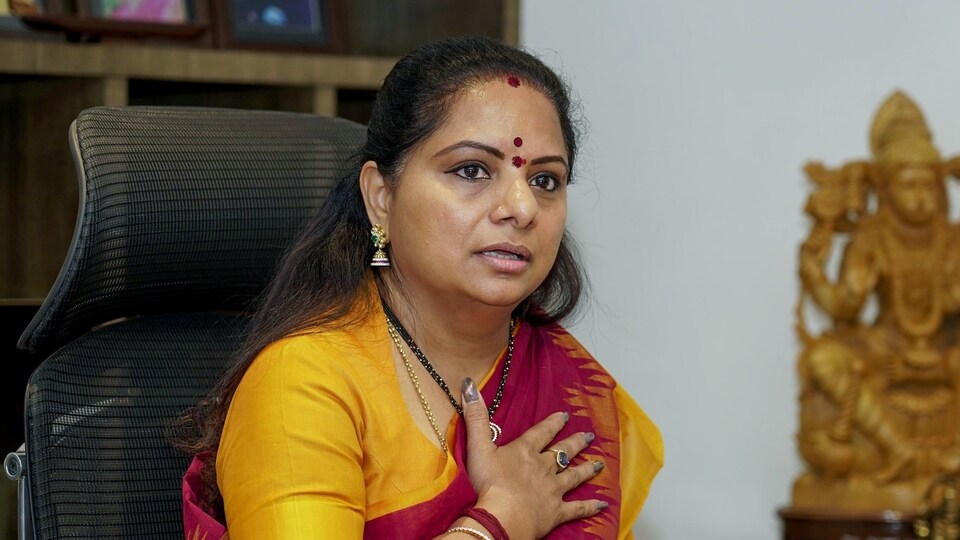
During the hearing, the CBI told the court that the BRS leader was not required for further custodial interrogation, reported PTI.
Also read: CBI to court: 'K Kavitha threatened Sarath Reddy to harm his business if...'
Kavitha was arrested by the Enforcement Directorate (ED) on March 15. Following her arrest, she was sent to CBI's custody till March 23. The CBI then arrested her on April 11 and lodged her in Tihar jail. Earlier a Delhi court reserved its order on interim bail of the BRS leader for April 9 - which she had sought on the grounds that her son had an exam.
Before her arrest, Kavitha was summoned multiple times for interrogation, however, she skipped at least two of those summons. Last year, Kavitha was questioned three times, with the central agency recording her statement under the Prevention of Money Laundering Act (PMLA).
During her recent three-day CBI custody, the probe agency officials questioned Kavitha about the WhatsApp chats recovered from a co-accused Buchi Babu's phone and documents related to a land deal, following which an amount of ₹100 crore was allegedly paid to the Aam Aadmi Party (AAP) in kickbacks to swing the excise policy in favour of a liquor lobby.
The BRS leader was the third high-profile politician to be arrested in the case after AAP leaders Manish Sisodia and Sanjay Singh. On March 21, Kejriwal became the first sitting chief minister to be arrested in the case.
What is the allegation against Kavitha in excise policy case?
According to the Enforcement Directorate, Kavitha was a member of the so-called ‘South Group' that paid kickbacks worth ₹100 crore to AAP leaders - in exchange for nine retail zones under the now-scrapped policy. The probe agency had also revealed names of other people involved in the group - Yuvajana Sramika Rythu Congress Party (YSCRCP) MP Magunta Srinivasulu Reddy, his son Raghav Magunta, Aurobindo Group promoter Sarath Reddy, and Delhi-based businessman Sameer Mahendru.


