
 E-Paper



Delhi govt says efforts on to double Covid-19 testing, but in gradual manner
Senior officials in working with state health minister Satyendar Jain said a reflection of this “gradual increase” could be found in Tuesday’s health bulletin, which reflected the number of tests conducted in the city on Monday.

 Prefer HTon Google


Six days after chief minister Arvind Kejriwal announced that testing in Delhi would be doubled in a week’s time, the city administration on Tuesday said it has decided to scale up tests in a staggered manner, and indicated that the plan is likely to include opening new testing centres in some mohalla clinics.
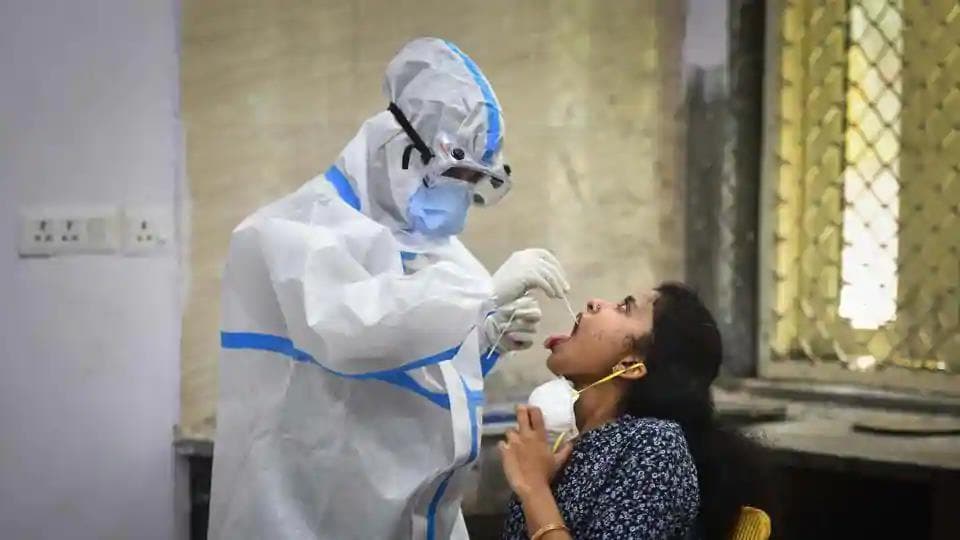
Senior officials in working with state health minister Satyendar Jain said a reflection of this “gradual increase” could be found in Tuesday’s health bulletin, which reflected the number of tests conducted in the city on Monday.
“Ramping up Covid-19 testing in Delhi as per the directions of the CM has started from Monday. Yesterday, 24,198 tests were conducted -- which is over 6,600 more tests than the average of 17,500 tests per day that happened in the month of August,” the official in Jain’s office said when asked about the government’s plan of hitting the 40,000 tests per day mark.
The 24,198 tests were the second highest number of tests conducted in the city so far -- after 24,592 tests conducted on August 8.

The official said that apart from further increasing rapid antigen tests, the health minister has asked health secretary Padmini Singla to immediately explore ways of increasing RT-PCR testing capacity in Delhi.
“The minister has opined that some mohalla clinics can be shut for the general public and can be used as dedicated Covid-19 testing centres. The health department has to identify which ones can be turned into testing centres and suggest other alternatives which can be executed simultaneously,” the official said. The minister was unavailable for comments.
Delhi currently has over 450 operational mohalla clinics.
Antigen tests generally provide results within hours and are relatively cheap, but they can give false negatives (in other words, they can miss positive cases). RT-PCR tests, on the other hand, is the most definitive test currently available for Covid-19 and experts say should be used to the extent possible, especially if authorities have the capacity to do so. The downside is that they can generally take 24-48 hours and needs specialised machines.
According to Tuesday’s bulletin, RT-PCR tests also saw a marginal increase. Over the past one month, government was conducting an average of 5,465 RT-PCR tests per day against a capacity of over 11,000.
On Monday, 7,198 tests were conducted through this molecular testing method in the last 24 hours, while 17,000 people were tested through the rapid antigen tests.
When asked if the government is facing a shortage of RT-PCR kits, a second official in Jain’s office said they were adequately stocked.
“As on date, the Delhi government has a stock of three lakh (300,000) RT-PCR kits at its disposal. The health department has initiated the process of procuring more kits - both of RT-PCR and rapid antigen. Since rapid antigen is cheaper, there is absolutely no dearth of those kits as well,” the official said.
The government, however, said there is no deadline set on when the 40,000 tests per day mark will be achieved. But senior health officials said the escalation will not take more than a week. The government also said there is no set ratio of RT-PCR and antigen tests because it is not possible to put a cap on either of the forms of tests.
On Tuesday, 2,312 new cases were reported in Delhi — the highest single-day case count since July 4 or 59 days — keeping with the trend of resurgence of daily infections in the city. The seven-day average of daily cases, which peaked at 3,446 on June 26 before falling to 983 on August 4, has now been rising for the 16th consecutive day.
The positivity rate also continued to rise, with 9% of all tests conducted in the last week coming back positive, suggesting that an increasing proportion of Delhi residents are now carrying the virus. In terms of the single-day, 9.6% of samples tested in the last 24 hours came back positive.
The spokesperson in the chief minister’s office said the process of ramping up tests got delayed because the state’s principal secretary (health), Vikram Dev Dutt, proposed to keep the matter in front of the Central government’s executive committee led by Niti Aayog member Dr VK Paul before moving on it. “The principal secretary (health) had written to the ministry of home affairs in this regard, but no response has been received on it yet from the Centre,” the spokesperson said.
Dutt did not respond to calls and messages seeking a comment on the matter.
A government spokesperson said in order to ramp up testing, the timings of all state-run dispensaries and seed PUHC (Primary Urban Health Centre) have now been extended by two hours. “Delhi government has 265 dispensaries and clinics, in addition to major hospitals where Covid-19 testing is available for free. This is where we expect the testing numbers to go up mainly. All Delhi government dispensaries and seed PUHCs are now testing patients between 9 am and 2 pm – for five hours instead of three hours,” the spokesperson said.
Dr Lalit Kant, former head of epidemiology and infectious disease at ICMR said the Delhi government is on the right track of following the test, track and treat strategy. “But just increasing testing is not the point. Which form of testing is being increased is also significant. Ideally, rapid antigen tests should be conducted only in hospitals, containment zones and on special surveillance groups and high risk groups such as senior citizens. The primary form of testing ideally should be RT-PCR in the city,” he said.


