
 E-Paper



Dichotomy between Maoist surrender and rehab numbers
The process of rehabilitation by the government is meant to begin the day a Maoist surrenders, either to the state police, or administration or the central paramilitary forces that are posted in Chhattisgarh

 Prefer HTon Google


Only 3% of Maoists that surrendered in Chhattisgarh in the past three years have passed muster of the state Screening and Rehabilitation Committee (SRC), which decides if those surrendering to the state are eligible for benefits under the surrender and rehabilitation schemes of the government. Data accessed by HT from the beginning of 2018 shows that while Chhattisgarh, the state hit worst by the state-Maoist conflict over the last two decades, claims a record total of 1,462 Maoist surrenders, only 113 of these were actually sent to the SRC for screening, and only 47 were found fit enough to receive the benefits under the surrender and rehabilitation scheme.
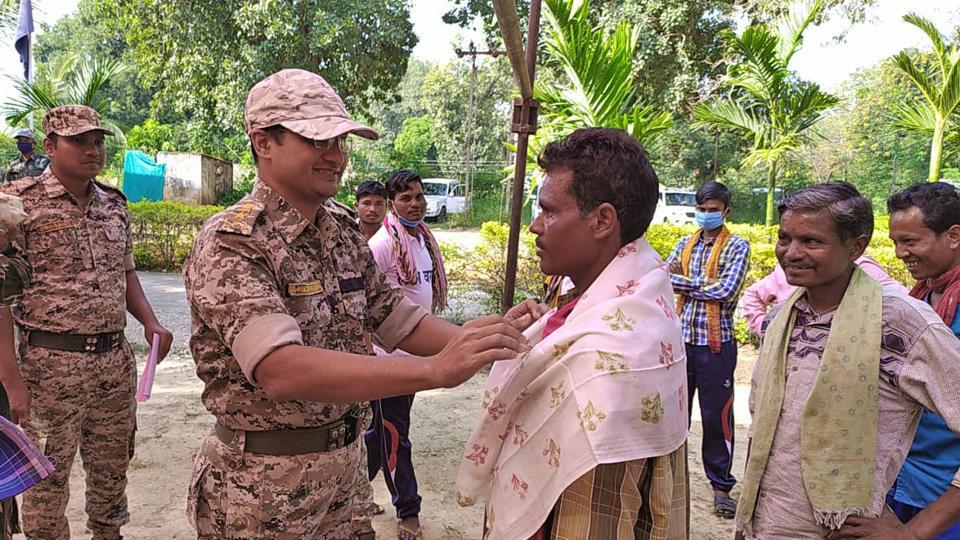
The process of rehabilitation by the government is meant to begin the day a Maoist surrenders, either to the state police, or administration or the central paramilitary forces that are posted in Chhattisgarh. Most Maoists that surrender immediately receive a protsahan rashi (encouragement reward), now set at ₹10,000. An interrogation is meant to follow where their rank is verified with police intelligence records, and recoveries recorded if they are surrendering with weapons or arms and ammunition, which increases the amount due to the person, given that there is a reward attached with each kind of weapon. Finally, the names and records must be sent to the SRC. This screens their antecedents, and if they pass muster, the surrendered Maoists become eligible for government benefits.
The objectives of these guidelines for surrender, the Union ministry of home affairs says, is to “wean away misguided youth and hardcore naxalites who have strayed into the fold of the naxal movement and now find themselves trapped into that net and to ensure that the naxalites who surrender do not find it attractive to join the naxal movement again.” However, the MHA also adds that “tactical surrenders by those elements who try to make use of the benefits extended by the Government to further their vested interests should not be encouraged”.
The benefits that a surrendered Maoist is eligible for in Chhattisgarh are significant: ₹5 lakh for a high ranking Maoist (category 1), and ₹2.5 lakh for middle and lower cadre Maoists (category 2A and 2B respectively); a monthly stipend of ₹6,000 for a maximum period of 36 months; additional incentives for recovered weapons; and study and house-building grants.
While category 1 is defined as “State Committee members, Regional Committee members, Central Committee members and Politburo members”, category 2-A refers to area commanders, sub-zonal commanders and zonal commanders. Any other hardcore cadres, Dalam members and identified LWE (left wing extremism) cadre involved in heinous crimes will come under category 2-B.
But to receive these benefits, the Maoists must be cleared by the SRC.
The composition of the SRC is an additional director general of police (ADGP) or inspector general of police (IG)-level police officer from the state police, a representative from the state home department, and a representative of Central Armed Police Forces. The definition set by the MHA, for screening says, “The naxalite who surrenders may be a hardcore, underground naxalite cadre and a member of a Dalam and surrenders in accordance with the comprehensive surrender and rehabilitation policy being implemented by the concerned State Government. Rehabilitation of surrendered naxalite should be confined to dalam members and above, other ranks and overground supporters/sympathisers being considered only in exception cases. The authority designated by the concerned State Government for the purpose should ensure that the surrenderee is a genuine naxalite and the naxalite should make a clear confession of all the criminal acts committed by him/her including names of planners and other participants, names of financers, harbourers, couriers, details of the naxal organizations, arms / ammunition and the property looted/distributed/disposed of by the naxalite and organization to which the naxalite belongs, which may be verified.”
The numbers
The records of the Chhattisgarh Police show that 1,462 surrenders have taken place in the past 33 months, from January 1, 2018, to September 25. Of these, as many as 1,223 were in the three districts of Dantewada, Sukma and Narayanpur.
Of the 1,462 recorded surrenders, the district police administrations only sent 113 cases for scrutiny to the SRC, of which 47 were approved, and 66 were rejected. In 2018, 18 were approved by the committee of which only one was a “category 1” cadre. In both 2019 and 2020, the number approved was 14 (all category 2A and 2B) and this year, till September 25, only one surrender has been approved by the committee.
The last meeting of the committee was on June 26 and another meeting of committee is scheduled in November, officials said. The SRC generally meets twice a year.
The debate around surrenders
Human rights activists, who work in Bastar, said that the numbers are evidence that most surrenders that occur in the region are fake, and that this required an explanation from the police. Bela Bhatia, a human rights activist and lawyer, said, “Does this mean cases shown as surrenders are actually fake surrenders? The police in Chhattisgarh should be asked to explain. Our ground work has shown that ordinary villagers get picked up and are given the option to surrender or face imprisonment. Rather than facing long years behind bars, individuals settle for the former.”
Senior police officials in Chhattisgarh defended the low number of cases being sent to SRC and being approved but claimed that the poor surrender numbers of top cadres is cause for concern.
“Only those Maoists who have rewards on their heads and have police records are considered for compensation under governments’ surrender and rehabilitation policy, and that too if the surrender is approved by the state-level committee. Many lower cadres surrender before the police and go back to their villages and live a normal life. We don’t compensate them because they are not active. The aim of these small cadres when they surrender is to remove themselves from polices’ list and live a life without police fear,” said OP Pal, deputy director general (DIG) of State intelligence Bureau (SIB), and Surrender and Rehabilitation officer of Chhattisgarh, the head of the SRC.
The DIG further said that lot of these surrendered Maoists are low-level cadres or a part of the “Jan Militia”, who have no bounty on their heads. “However, there are other benefits for them in different departments including – Below Poverty Level (BPL) cards, education and hostel facilities for their children, various health services, houses under state or central schemes, training for self-reliance and employment, if they are eligible for government jobs including induction in the police force,” Pal said. Activists, however, point out that these are routine benefits available to all.
An IPS officer working in Bastar said that even in the case of cadres with bounties, there are bureaucratic challenges, such as what lists their names appear on. “Even with cadres who have rewards, many do not have their profiles in the state headquarters’ records, so their names are not approved,” he said, adding that the state intelligence bureau list should be regularly updated.
The official added that with the primary LWE districts in Chhattisgarh-Dantewada, Bijapur, Sukma and Narayanpur, being geographically contiguous with Andhra Pradesh and Telangana, a region from where much of the top Maoist leadership hails, most choose to surrender in their home states. “It is a fact that very few senior cadres are surrendering in Chhattisgarh. This is because there is no pressure on them here as there have hardly been any arrests, or encounters where they have been reached, which means there is less incentive or fear to surrender. They largely operate in south Bastar which still has vast swathes where they are completely in control. Most importantly, most of the senior cadres are from AP and Telangana and more likely to surrender in their home states,” said the officer.
Another police official based in Raipur said that the surrender of low-level cadre, despite them not making the basic SRC grade, should be seen as a positive sign. “Yes, this (low approval rate under SRC) is an issue of concern and the reasons should be discussed by the police and government. But, I believe that the surrender of lower cadre is also a positive sign because it reflects that people are leaving the movement and shifting from Maoist ideology or they have lost faith in Maoism,” said the officer.
The people caught in between
Yet, for those Maoists who surrendered under the impression that they would be the recipient of the long list of benefits, but failed to make the grade, these debates bring little solace. Mahru Ram Punem is now part of the police, with the Narayanpur’s District Reserve Guard, carrying a gun again, a protagonist in a battle he was trying to escape. The DRG is a wing of the state police raised in May 2015, which operates in Bastar, and is comprised primarily of locals and surrendered Maoists, with the operational argument for them being that they provide innate knowledge of both the Maoists and the difficult terrain.
“I had ₹8 lakh reward on my head when I surrendered in 2014. I was a platoon commander in Indravati Area Committee. I got ₹10,000 on the day and since then, I have received nothing. I have written many times to senior police officers but all of it has been in vain. In 2018, the police inducted me in the district DRG, but I have not received what I was promised,” said Punem, now posted in Narayanpur.
Intelligence officers operating in Bastar said that there is clearly a question mark on the effectiveness of the state’s surrender policy if so many of the surrenders were “jan militia” with little to no stated police records. “It’s almost ironical that the state police claims that most of its surrenders are jan militia, who will not find mention in the surrender policy. This is only beefing up numbers to hide that very few active Maoists are actually surrendering. Area Committee Members (ACMs) or Divisional Committee Members (DCMs) seldom do it. The surrender of militia is like pruning the tree, which will constantly regenerate,” said one.
But for 32-year-old Madka Varte, the process of surrendering to the Dantewada Police has brought another deep fear, typical to others like him. Varte is a resident of Mahrakarka village, falling under the Malangir Area Committee in the Maoist lexicon. He surrendered to the Dantewada Police in 2020, and was given at the time, ₹10,000 and nine goats. “Seven of the goats are now dead, and I have nothing left. Worse, because I surrendered, the Maoists think I am a police informer. I live in fear,” he said.
-kW0H-U20214218012MgB-250x250%40HT-Web.jpg)


