
 E-Paper



‘Gen Z, take it seriously’: Rahul Gandhi's ‘power to change’ shoutout vs system ‘rigged by EC, BJP’ | Explained
Rahul Gandhi's attention to Gen Z, the age-group of protesters who recently toppled govet in neighouring Nepal, was clear at the Nov 5 press conference

 Prefer HTon Google


Congress leader Rahul Gandhi's continued focus on the youth, particularly Gen Z, was evident yet again as he shared what he claimed to be a third set of proofs of rigging by the Election Commission and the ruling BJP, in New Delhi on November 5.
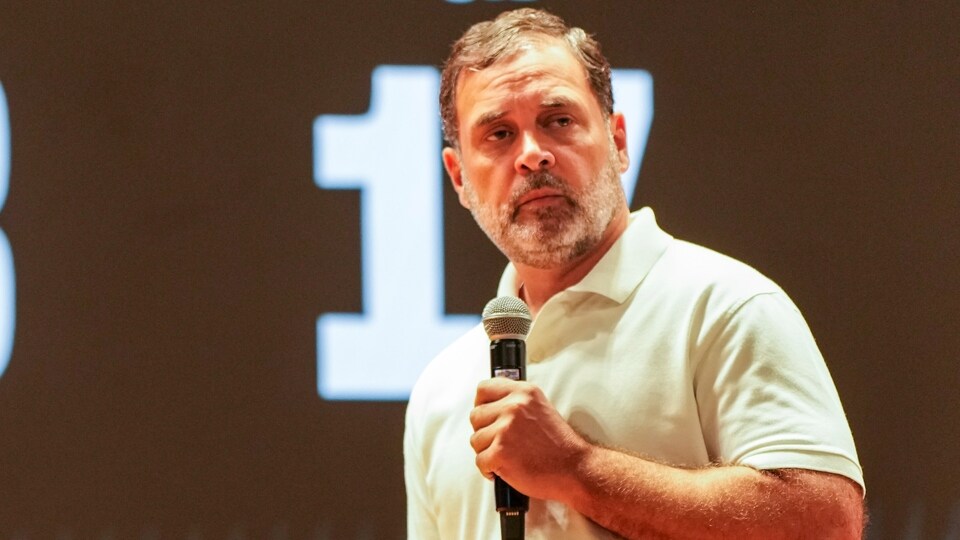
Haryana, where the Congress to the BJP lost last year, and Bihar, where it is hoping to unseat the BJP-JDU alliance in the election this month, formed the core of his allegations: that lakhs of fake voters were added or deleted “to help the BJP”.
His attention to Gen Z — roughly those born in the late 1990s, the age group of protesters who recently toppled a government in neighouring Nepal — was clear in the very first few sentences at the Wednesday press conference at the Congress national headquarters.
What Rahul said on younger generation
“I want Gen-Z to take this seriously, because your future is being taken away from you. They are the one being stolen from,” he said at the start of his presentation, barely two days before voting begins in the Bihar election.
“India’s Gen Z and youth have the power to restore our democracy with satya and ahimsa (truth and non-violence),” said a concluding slide in his presentation.
Since Nepal, term ‘Gen Z’ in India's narrative
Rahul Gandhi has sought to appeal to the broader youth electorate by leveraging frustrations over unemployment, corruption, and inequality — a high-stakes campaign to “save the Constitution”.
This has become more pronounced after the youth-led political upheavals in neighboring countries, such as Nepal, Bangladesh and Sri Lanka in India's neighbourhood. The term was in vogue also during the recent protests in the union territory of Ladakh where mostly young men and women have been asking the Indian government to grant them full statehood.
Also read | From Ladakh to Assam, Nepal Gen-Z protest fuels fears and jibes across India
Gandhi's appeal gained attention precisely because of its timing. Even in his September press conference on "voter fraud", also the month of the Nepal protests that toppled the older elites there.
"The youth of the country, the students of the country, the country's Gen Z will save the Constitution, protect democracy, and stop vote theft. I will always stand with them. Jai Hind!" Rahul Gandhi wrote on X at the time.
The explicit mention of a digitally native generation — "Gen Z" is a relatively new term in Indian political discourse — was interpreted by the BJP as an attempt to “incite a Nepal or Bangladesh-like situation” in India.
What Rahul is trying
Gandhi, who's been dubbed a “nepo kid” for his family legacy of top leadership, has sought to break that mould with a street brand of politics lately. He frequently accuses the BJP of providing “cheap data instead of jobs… to divert the youth's attention".
By directly addressing "Gen Z" as well as the backward classes — thus framing the struggle as one for the Constitution and democracy against corruption — Rahul Gandhi has been positioning the Congress as the champion of the marginalised, digitally connected, and disillusioned youth of India.
How BJP has reacted
The BJP has framed Gandhi's appeal to Gen Z as a “dangerous attempt to incite unrest and create instability”.
“Gen Z is against dynastic politics. Why would they tolerate Rahul after Nehru, Indira, Rajiv and Sonia?” BJP MP Nishikant Dubey has said, referring to Rahul's family legacy — his great-grandfather Jawaharlal Nehru, grandmother Indira Gandhi and father Rajiv Gandhi, all former PMs; and mother Sonia Gandhi, a former party chief.
This legacy of alleged nepotism was also pointed out by Rahul Gandhi's fellow Congress MP, Shashi Tharoor, in an article last week.
“The influence of the Nehru-Gandhi dynasty… is bound up with the history of India’s struggle for freedom. But it has also cemented the idea that political leadership can be a birthright…” — these words by Tharoor gave fresh ammunition to the BJP just before the assembly election in Bihar.
Tharoor, who hasn't been on particularly good terms with his party for a while now, has mentioned examples other than the Congress too, though his piece happened to not mention the cases of alleged nepotism in the BJP.


