
 E-Paper



‘Had there been a nuclear misunderstanding…’: Pakistan PM’s aide recalls BrahMos strike scare
Rana Sanaullah said that the Pakistani military had just 30 to 45 seconds to assess whether the BrahMos missile fired by India at Nur Khan airbase was nuclear.

 Prefer HTon Google


Pakistan Prime Minister Shehbaz Sharif’s advisor, Rana Sanaullah, has said that Pakistan had only 30 to 45 seconds to assess whether the BrahMos cruise missile launched by India during Operation Sindoor carried a nuclear warhead. The missile, which hit the Nur Khan Airbase in Rawalpindi, could have triggered a nuclear conflict if misunderstood, he said.
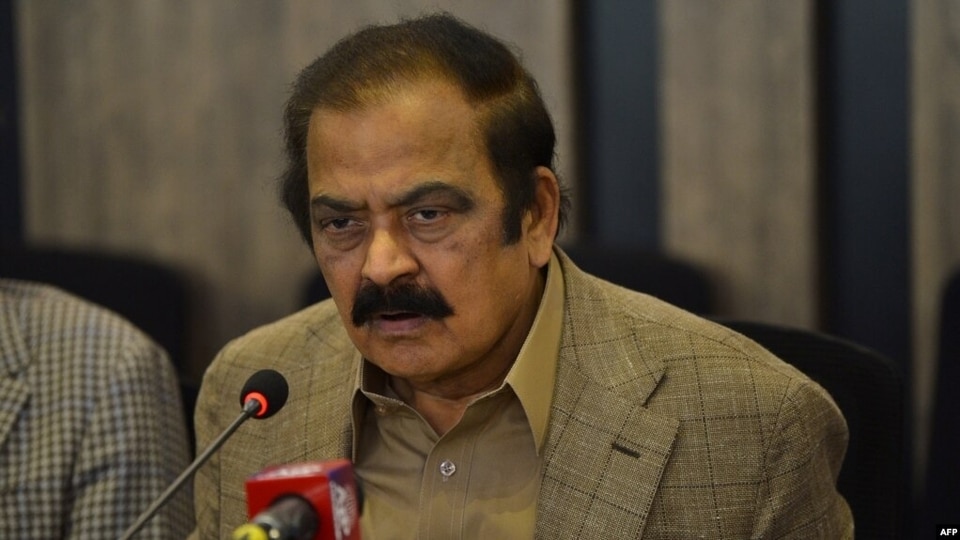
“Pakistan had only 30 or 45 seconds to respond,” Sanaullah told a local news channel. “Now, this BrahMos missile coming silently—if it had been nuclear, and to make the decision in just 30 seconds about whether it was or wasn’t—that shows you how dangerous the situation was.”
He added, “I’m not saying they (India) did a good job just because it didn’t contain nuclear material, but had there been a misunderstanding that it was nuclear, and if action was taken from that side, or action was taken in response, then the entire world could have been plunged into nuclear war. And the destruction that would have followed—you can’t even imagine it.”
Sanaullah went on to credit US President Donald Trump for mediating a ceasefire understanding on May 10 and defusing the crisis. “In such a situation, if Donald Trump played a role and saved the world from such a great danger, then there should be an independent evaluation of that role. And if he indeed played that role, which he did, then there should be appreciation for it,” he said.
“So, the Government of Pakistan or Prime Minister Shahbaz Sharif has nominated him ( for the Nobel peace prize) based on that act,” he further said.
Pakistan PM's advisor was talking about the days when the Indian military launched Operation Sindoor on May 7 in response to a terrorist attack in Pahalgam on April 22, which killed 26 people, mostly civilians. During the operation, Indian forces targeted terrorist camps linked to Jaish-e-Mohammed, Hizbul Mujahideen, and Lashkar-e-Taiba in Pakistan and Pakistan-occupied Kashmir, reportedly killing over 100 terrorists.
India hit 11 Pakistani military airbases during retaliatory strikes
Later, as Pakistan attempted to retaliate with military strikes on Indian border cities, New Delhi expanded its response. On the night of May 9–10, the Indian Air Force carried out strikes on 11 Pakistani military airbases, including Nur Khan, Sargodha, Rafiqui, Jacobabad, and Murid.
The strike on Nur Khan airbase was confirmed by Islamabad's Prime Minister Shehbaz Sharif, who said that Army chief General Asim Munir called him at 2:30 am on May 10 to report the attack.
Following four days of heavy fighting, India and Pakistan agreed to a ceasefire on May 10. In June, Pakistan’s deputy PM Ishaq Dar revealed that Islamabad had requested the ceasefire after India bombed two of its key airbases.
Dar also disclosed that Saudi Prince Faisal helped mediate the talks. “He asked if he could talk to Indian external affairs minister S Jaishankar to convey that Islamabad was ready if India would stop the attacks. I said yes, brother, you can. He then called me back, saying he had conveyed the same to Jaishankar,” Dar said.


