
 E-Paper



Hits and misses: Women’s quota in rural, urban local bodies a mixed bag
While many women found an opening through reserved seats, an equal number found their political power subverted by male relatives

 Prefer HTon Google


A suave spokesperson for the Biju Janata Dal (BJD). A Trinamool Congress leader with three key portfolios in West Bengal. A Bharat Rashtra Samithi (BRS) leader who is now a senior minister in Telangana. And a Dalit woman who rose to become a Bharatiya Janata Party (BJP) legislator after leading a grassroots campaign for sanitation and education in Bihar.
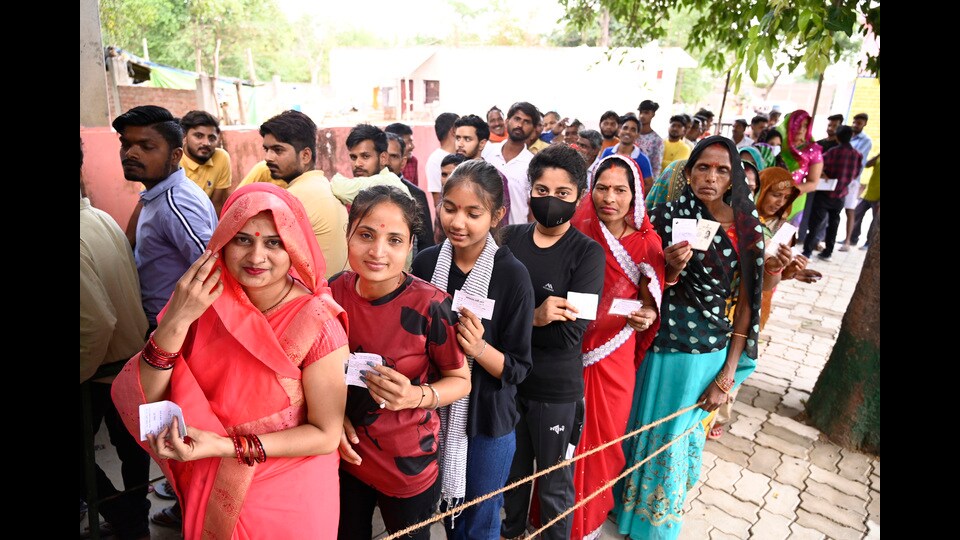
The common thread tying the disparate careers of these four women lawmakers is just one – the reservation granted to women in local bodies, as part of the panchayati raj revolution unlocked by the 73rd and 74th amendments to the Constitution in April 1993, which enabled them to enter public life. This quota – first pegged at 33% and then increased to 50% in some states – was India’s first experiment in using reservation to boost the political participation of women. Three decades later, the results are decidedly a mixed bag: While many women found an opening through reserved seats, an equal number found their political power subverted by male relatives installing proxies.
READ | Women’s quota bill cleared by Cabinet
A woman panchayat president from Karnataka said the male members of the family help them in conducting the panchayat work. “It has no happened with me but it is not uncommon,” said Bagalkote Zilla Panchayat President Veena Kashappanavar.
The seeds of panchayati raj originated in Bihar in 1948, when regular elections provided the country with the first model of a decentralised governance system, decades before the Constitutional Amendments established the three-tier panchayat system with regular elections.
In 1985, the then Janata Dal government led by chief minister Ramakrishna Hedge in Karnataka implemented 25% reservation for women in Mandal Praja Parishads with a sub-quota for scheduled caste and scheduled tribe women, becoming the first state to do so.
In 1987, the erstwhile united Andhra Pradesh implemented 9% reservation for women in gram panchayats. In 1991, Odisha effected 33% reservation for women in panachayats. The 1992 Constitutional amendment made this quota national, and inserted a 33% sub-quota for scheduled caste and scheduled tribe women.
READ | Women’s Reservation Bill: Parties raise concerns, demand ‘quota within quota’
In 2006, Bihar became the first state to reserve 50% seats in panchayats and urban local bodies for women, followed by Sikkim the next year. Since then, as many as 20 states such as Andhra Pradesh, Madhya Pradesh, Telangana and Tamil Nadu have passed legislation providing 50% reservation to women in urban and rural local bodies. As of today, India has 3.1 million panchayati raj institution representatives in the country, of which 1.4 million are women, according to data put out by the Press Information Bureau.
Yet, despite these strides, research by various reputed institutions have underlined that while women’s participation in governance at the ground level improved health and education indicators, there were severe gender bias limitations arising out of a lack of structural reform in society and politics.
A London School of Economics paper in 2004 said the election of women at panchayat level led to an increase in the focus on drinking water, road connectivity and school education. “Women in villages with reserved pradhans are twice as likely to have addressed a request or a complaint to gram pradhan in the previous six months, and this difference is significant,” said a 2003 study published by Massachusetts Institute of Technology (MIT), terming the 1992 Constitutional Amendment as a “landmark” piece of legislation.
READ | What is women's reservation bill cleared by the Union Cabinet?
But the same researchers also flagged limitations. The MIT study found that 43% of the women leaders in panchayats admitted to help from their spouse in conducting panchayat work. These women also acknowledged that their husbands participated more in supervising work than them due to the impression that women are not effective leaders.
The study also said that in 17% of cases their spouses had been a Panchayat member earlier, in which case the system simply be ineffective (though not harmfu). “The lack of transparency may also mean that an unelected leader (for example, a member of the local elite) just takes the reins. The reservation system would then have the perverse effect of weakening village democracy, potentially leading to situations where the disadvantaged group is actually worse off as the result of the reservation,” the study conducted in select districts of West Benal and Rajasthan in 2004 said.
Still, the reservation helped several women leaders rise in political life. BJD Rajya Sabha member Sulata Deo said she would not have entered politics without panchayat reservation for women. In 2002, Deo became sarpanch of Brahmabarada gram panchayat in Jajpur district and was elected as member of Zilla Parishad in the 2007 panchayat polls. “I could rise to the top due to the reservation brought in by Biju Patnaik for women in local bodies,” said Deo, 50.
In Bihar, Bhagirathi Devi, 69, a BJP lawmaker from Ram Nagar in Paschim Champaran, credited her political rise to women reservation. A Mahadalit who worked as a sweeper, Devi first became a panchayat member in 2000. “The reservation of women in panchayats brought a sea change in the state and they became a force to reckon with,” said the 2019 Padma Shri awardee.
Sabina Yeasmin, who now holds three portfolios in the Mamata Banerjee administration, started her political career in 2008 when she contested the panchayat elections on a Congress ticket from Kaliachak in Malda, a seat reserved for women. In 2011 and 2016, she was elected as a legislator from Mothabari on Congress tickets. In 2021, she moved to the Trinamool Congress and became a minister. “I am very happy that the Centre approved the women’s reservation bill. Our chief minister has shown the way. 50% seats are reserved for women in panchayats in Bengal,” she said.
Telangana state women and child welfare minister Satyavathi Rathod also rose from panchayat president to state cabinet minister. Rathod was elected as sarpanch of Gundrathimadugu village in the erstwhile Warangal district (now part of Mahabubabad district) in 1995, and in 2006 entered the Warangal zilla parishad from Narasimhulupet territorial constituency, a seat reserved for women. In 2019, she was made a member of the state legislative council and inducted into the K Chandrasekhar Rao cabinet. “We have been fighting for the reservations for women in Parliament and state assemblies, under the leadership of Kalvakuntla Kavitha. At last, our struggle has yielded results with the Centre introducing the women’s reservation bill,” Rathod said.


