E-Paper



India at 100k tests a day, says health minister Harsh Vardhan
In the past 14 days, the number of cases in India have doubled every 10.9 days, and improved to 12.2 in the past three days.

 Prefer HTon Google


As the number of coronavirus disease cases spurted in recent weeks, India has scaled up its Covid-19 testing capacity to 100,000 samples a day, which is nearly three weeks earlier than the Union health ministry’s initial May-end target.
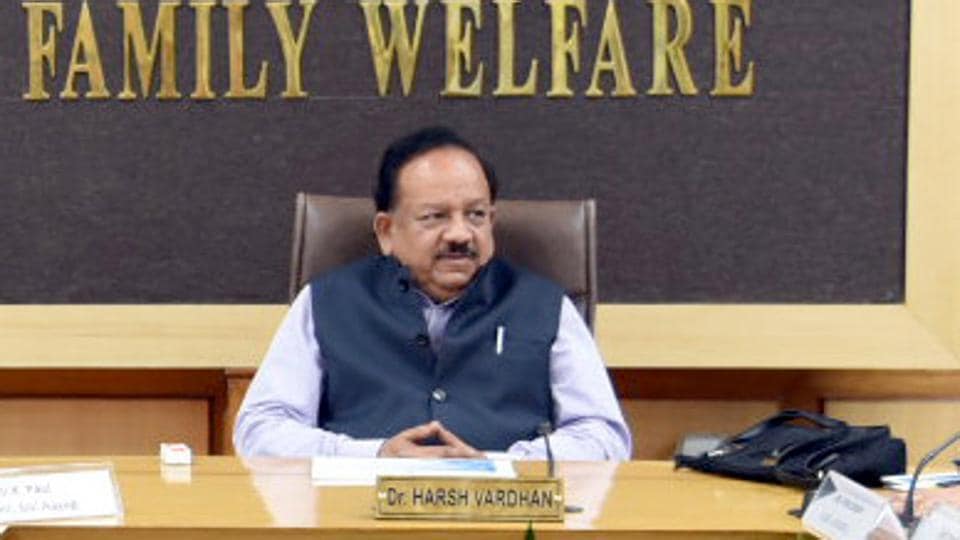
“…the testing capacity has increased in the country and it is 1 00,000 tests per day with 347 Government laboratories and 137 private laboratories. Cumulatively, 17, 62,840 tests have been done so far for Covid-19. Whereas, 86,191 samples were tested yesterday,” health minister Harsh Vardhan said in a statement on Tuesday.
In the past 14 days, the number of cases have doubled every 10.9 days, and improved to 12.2 in the past three days. The fatality rate is 3.2%, and recovery rate 31.74%, which is better than the many other Covid-19-hit countries. The global fatality rate is around 7-7.5%. As of Monday, 2.37% of active Covid-19 patients were undergoing treatment in intensive care units (ICUs), 0.41% patients were critical and on ventilators, and 1.82% were on oxygen support.
“In view of the surge of returning migrant labourers, States/UTs need to focus on more effective surveillance, contact tracing, adequate testing and timely treatment of all the returnees. This also includes the ones that shall be returning from abroad,” Harsh Vardhan said.
The states have been directed to ramp up surveillance for Severe Acute Respiratory Infection (SARI) / Influenza Like Illness (ILI) in the affected and non-affected districts, and take the help of government medical colleges if required.
“Such measures will help to indicate the presence of any possible hidden infection at an early stage thus helping in its timely containment,” the health minister said.
The ministry, along with the Indian Council of Medical Research (ICMR), is also conducting a community-based sero-survey to estimate the prevalence of Sars-CoV-2, the virus that causes Covid-19, infection within households in 69 districts of 21 states.
“The survey is coordinated by ICMR’s National Institute of Epidemiology (NIE) and National Institute of Research in Tuberculosis (NIRT), Chennai. This household level cross-sectional survey will cover 24,000 adults distributed equally across four strata of districts categorized on the basis of reported cases of Covid-19,” ICMR said in a statement.
The survey will involve collection of venous blood samples from 400 randomly selected individuals (one per household) from 10 clusters in each district. Samples from each of these individuals will be tested for presence of IgG (immunoglobulin G) antibodies using the ELISA test developed by ICMR-National Institute of Virology (NIV), Pune, and test kits being manufactured by Zydus Cadilla.
The results of the survey will provide information about the spread of Sars-CoV-2 infection in different parts of the country.
Besides this community-based survey, the health ministry is also initiating hospital-based surveillance to monitor the trend of infection in all districts.
“It is a part of initiating systemic surveillance to know the extent of disease spread, to determine future course of action in order to curtail the virus spread. This is the most effective way,” says Giridhara R Babu, professor and head, lifecourse epidemiology, Public Health Foundation of India.