
 E-Paper



India in touch with Iran for safe passage of vessels through Strait of Hormuz
India engages Iran in diplomatic talks seeking safe passage for vessels through the vital Strait of Hormuz amid heightened tensions and attacks on shipping

 Prefer HTon Google


India is in touch with Iranian authorities to arrange the safe passage of almost 30 Indian-flagged merchant vessels through the Strait of Hormuz, which has effectively been closed by the Iranian military because of the conflict with Israel and the US, people familiar with the matter said on Thursday.
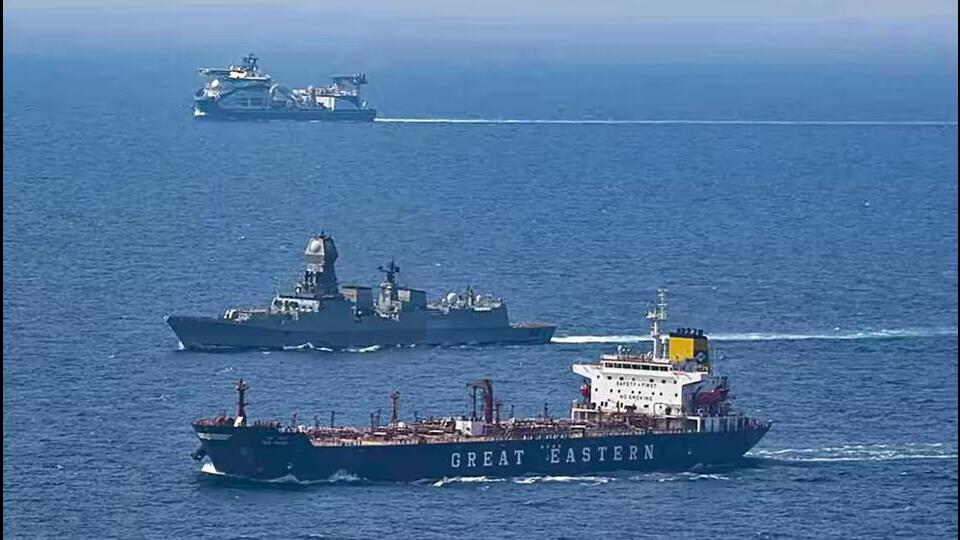
The focus is on arranging the safe passage of the merchant shipping with an Indian Navy escort, the people said, against the backdrop of a string of attacks on tankers and bulk carriers in the Persian Gulf by Iran’s Islamic Revolutionary Guard Corps (IRGC) over the past few weeks. Three Indian seafarers have been killed so far and another reported missing in attacks on three vessels.
“Talks are continuing and things are yet to be worked out,” one of the people said.
The safety of both Indian-flagged vessels and merchant shipping bound for India is understood to have figured in a phone call between external affairs minister S Jaishankar and his Iranian counterpart Seyed Abbas Araghchi on March 10 – their third conversation since the Iran-US conflict started on February 28.
“External affairs minister and the foreign minister of Iran have had three conversations in recent days. The last one discussed issues pertaining to safety of shipping and India’s energy security. Beyond that, it would be premature for me to say anything,” external affairs ministry spokesperson Randhir Jaiswal told a weekly media briefing.
Iran has not allowed any Indian-flagged commercial vessel to cross the Strait of Hormuz in the past four to five days, the people cited above said. On Thursday, the Suezmax tanker Shenlong, carrying Saudi crude oil, arrived in Mumbai after transiting the Strait of Hormuz. The Liberia-flagged vessel is believed to be the first tanker to reach India from West Asia since hostilities began on February 28.
Rajesh Kumar Sinha, special secretary in the shipping ministry, told an inter-ministerial briefing that Indian authorities are closely monitoring 24 Indian-flagged vessels with 677 Indian seafarers currently located to the west of the strait, and another four vessels with 101 Indian seafarers to the east of the strategic waterway.
“All Indian vessels and their crews are being actively monitored for their safety and security,” Sinha said, adding that a total of 78 Indian crew members were on board foreign-flagged vessels involved in “maritime incidents” in recent days. Three crew members were killed, one was reported missing and four more sustained injuries in these incidents, he said.
On Wednesday, India denounced attacks on merchant shipping after a Thai-flagged vessel bound for Kandla port in Gujarat was fired upon by the IRGC. Twenty crew members of the Thai-flagged Mayuree Naree were rescued and three more reported missing.
“India deplores the fact that commercial shipping is being made a target of military attacks in the ongoing conflict in West Asia,” the external affairs ministry said.
“India reiterates that targeting commercial shipping and endangering innocent civilian crew members, or otherwise impeding freedom of navigation and commerce, should be avoided,” the statement added.
Iran’s foreign ministry said in a readout on the March 10 phone call between Jaishankar and Araghchi that the two sides had discussed the “consequences” of the US and Israeli military aggression on the security of shipping in the Strait of Hormuz.
“Referring to Iran’s principled approach to safeguarding shipping security in the Persian Gulf, [Araghchi] reminded that the insecure situation and problems arising for shipping in the Persian Gulf are a result of the aggressive and destabilising actions of the United States, and the international community must hold the US accountable for this situation”, the readout said.
Global oil and gas prices have surged after Iran virtually closed the Strait of Hormuz, a narrow shipping lane between the Persian Gulf and the Gulf of Oman that handles roughly 20% of global oil and gas shipments.
Jaiswal also said some 9,000 Indians are still in Iran and the government is assisting those who want to travel to Azerbaijan and Armenia to return to India by facilitating visas and land border crossings. “These 9,000 Indian nationals comprise students, seafarers, business people, professionals and some pilgrims,” he said.
Authorities have already relocated several Indian nationals, including students and pilgrims, from Tehran to safer locations in Iran.



