
 E-Paper



India managed to protect interests at COP25: Javadekar
India is hopeful that there will be resolution on issues which matter to the country at the 26th session of the Conference of the Parties (COP 26) to the United Nations Framework Convention on Climate Change (UNFCCC) to be held in Glasgow next year.


India has managed to protect its interests at the United Nations Climate Change Conference (COP25) in Madrid last week, environment minister, Prakash Javadekar said on Friday.
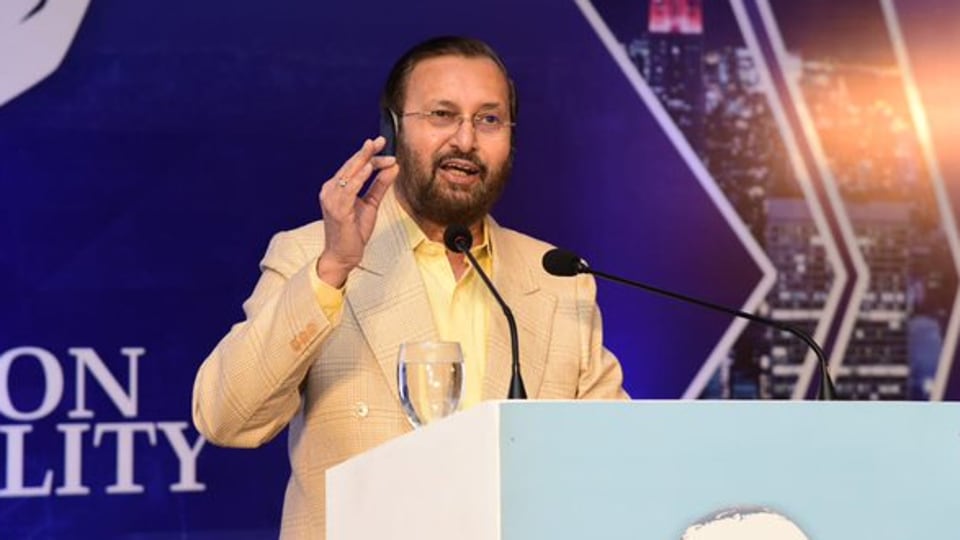
Indian negotiators have pushed for carryover of millions of unsold carbon credits from clean development mechanism (CDM) under Kyoto Protocol to the new carbon markets to be developed after 2020 which can yield a benefit of nearly ₹5,000 crore to industries holding these credits, Javadekar added.
The climate talks have largely been labelled to be “disappointing” and “unfortunate” by the small and vulnerable countries and civil society organisations because it failed to build consensus on key issues for meeting the Paris Agreement goal of keeping global mean temperature rise under 2 degree C.
There was no agreement on how new carbon markets covered under Article 6 of the Paris Agreement would shape up; no progress on compensation for climate change induced “loss and damage” to vulnerable countries and most developed countries didn’t commit to enhance their nationally determined contributions (NDCs) by 2020.
“I am disappointed with the results of #COP25. The international community lost an important opportunity to show increased ambition on mitigation, adaptation & finance to tackle the climate crisis. But we must not give up, and I will not give up,” UN secretary general Antonio Guterres had tweeted.
But India is hopeful that there will be resolution on issues which matter to the country at the 26th session of the Conference of the Parties (COP 26) to the United Nations Framework Convention on Climate Change (UNFCCC) to be held in Glasgow next year. Javadekar also said that some countries also pushed for not counting of credits once they are sold to another country, also called corresponding adjustments in climate negotiation terminology. This essentially means when one country sells emissions reductions to another, it must adjust its own emissions data accordingly so that there is a real reduction in emissions.
Civil society organisations have also linked double counting of credits as an issue which could jeopardize environmental integrity of carbon markets. Carbon markets trade in emission reduction credits. For example, if two countries are required to achieve a certain carbon emission target and one has over-achieved the target while the other hasn’t managed to meet its target, the country with more reductions can sell carbon credits to the other.
“We haven’t agreed to the issue of corresponding adjustments. It will be discussed again next year,” Javadekar added. He said India has been together with like-minded developing countries (LMDCs) and the Brazil, South Africa, India and China (BASIC) groups during the negotiations. It will have several meetings with these two groups before deciding on what will its stand be at COP26 when parties are expected to update their NDCs in line with the Paris Agreement.
The COP25 decision provides for assessing the gaps in commitments delivered by the developed countries in the pre-2020 period. The developed countries have time till 2022 to deliver on these. “Developed world promised 1 trillion dollars in the last ten years and not even 2% of that has materialised. We will push for these commitments to be met,” Javadekar said.
“All countries have emissions reduction targets under the Paris Agreement. If two countries are allowed to count the same credit, those targets are undermined. The purpose of markets is destroyed,” said Tarun Gopalakrishnan, deputy programme manager, Climate at Centre for Science and Environment.


