
 E-Paper



India posts double-digit growth when China heads for slowdown
While the Indian economy is going to clock 7.5 per cent growth this year, the Chinese economy under wolf warrior President Xi Jinping is hit by a teetering real estate sector which is threatening the banking sector.

 Prefer HTon Google


India’s gross domestic product (GDP) saw a double-digit growth of 13.5% in the first quarter of current financial year at a time when major global economies are struggling and the mammoth Chinese economy is heading for a slowdown. Credit goes to the carefully calibrated doses of fiscal and monetary measures announced by the Narendra Modi government after the pandemic hit the country in March 2020.
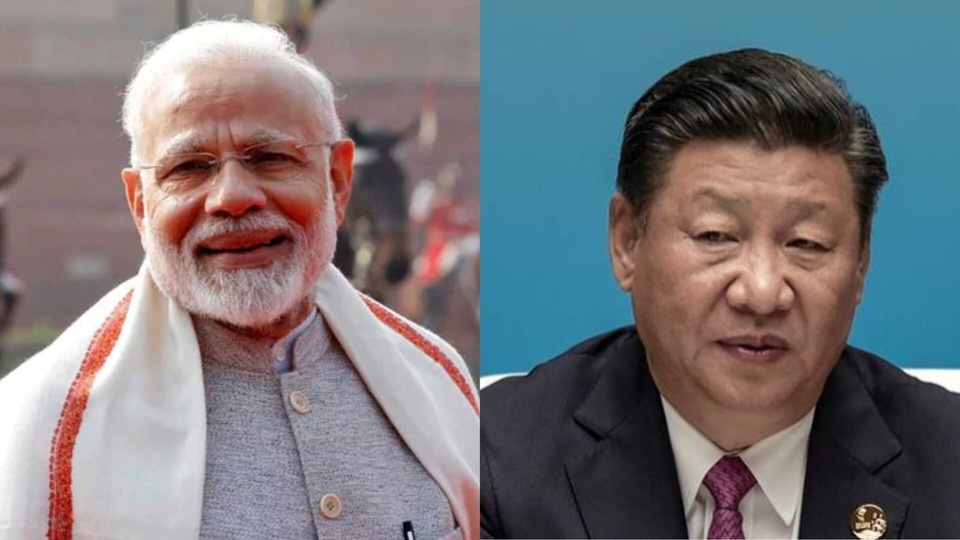
India has been able to perform well due to the Modi government’s focus on shielding the poor through PM Gareeb Kalyan Yojana, easy credit to micro, small and medium enterprises (MSMEs), enhanced public funding to capital expenditure and stimulating private investments, government officials and experts said.
“Modi government’s capital expenditure during Q1 of FY23 stands at ₹1.75 lakh crore, which is equivalent to capital expenditure in the whole financial year of 2013-14 during the Congress-led United Progressive Alliance (UPA) era,” one of them said.
India’s Private Final Consumption Expenditure (PFCE) in the first quarter of the current fiscal year is ₹22 lakh crore, which is an increase of 10% compared to pre-pandemic levels of ₹20 lakh crore in 2019-20, indicating a sustained increase in household consumption despite pandemic disruptions, he said.
“Indian GDP stands at ₹36.85 lakh crore which has not only surpassed the pre-covid levels but it is 3.83% higher than pre-pandemic levels. It is the outcome of government’s prudent economic policy that India is the world’s fastest-growing economy with minimal impact of inflation compared to other major economies” he said.
According to the Organisation for Economic Co-operation and Development (OECD) quarterly GDP database of major economies -- growth forecast for April-June, 2022 for China is 0.4%, Germany (1.7%), US (1.7%), France (4.2%), Italy (4.6%), Canada (4.8%). The economic slowdown in China is a result of its draconian zero Covid lockdowns with serious trouble in the banking and real estate sector. The Xi Jinping regime has worsened the economic impact with its wolf warrior diplomacy against Taiwan and the QUAD countries with recipient nations of Beijing's Belt Road Initiative (BRI) facing bankruptcy like Sri Lanka, Pakistan, Myanmar and Kenya.
Rumki Majumdar, an economist at Deloitte India said, “Growth in India is in contrast to other major economies that are showing signs of a slowdown. This should help boost global investors’ confidence and attract investment in the economy.”
“With relatively high growth and low inflation, India, among the major peer economies, has faced less of a trade-off between growth and inflation. India’s retail inflation (CPI-C) has eased to a five-month low of 6.71 per cent in July 2022,” one of the officials working in the Union finance ministry said.
Officials and experts are confident that the Q1 data of GDP show that the economy is on the growth trajectory to achieve 7-7.5% growth in 2022-23. “Robust performance of High frequency indicators in July/August 2022 indicates to sustained growth in Q2 of 2022-23,” the official said.
Data show that manufacturing PMI [Purchase Managers’ Index] in July 2022 was at an eight-month high of 56.4 supported by growth in new business orders and output. Services activity also robustly remained in the expansionary zone in July 2022 with a PMI services reading of 55.5. A PMI value greater than 50 signifies expansion in economic activity in these sectors.
DK Srivastava, Chief Policy Advisor at consultancy firm EY India also said that on the demand side all major segments show magnitudes in 1Q FY23 that are higher than their corresponding levels in 1Q FY20. “Recovery in domestic demand is reflected in the growth rates of private final consumption expenditure (PFCE) at 25.9% and gross fixed capital formation (GFCF) at 20.1% over the corresponding quarter of the previous year,” he said.
Experts hope that India may close this financial year with over 7% growth. “We consider that an annual growth of 7% plus in FY23 is still possible with adequate policy support which ensures continued growth momentum in the trade, hotels, transport et. al. sector supplemented by augmenting government capital expenditure on the demand side. This should be feasible given high growth in central tax revenues which increased by nearly 25% in the first four months of FY23,” he said.
India Inc is also confident about the robustness of the Indian economy. CII director general Chandrajit Banerjee said: “Industry remains optimistic despite the prevailing global uncertainty, as domestic growth prospects are expected to remain strong on the back of the facilitative policies of the government.”
ASSOCHAM president Sumant Sinha said the Indian economy “continues to roar post-pandemic thanks to deft and fiscally prudent management by Hon'ble Nirmala Sitaraman and her colleagues and it is absolutely critical we build on this growth surge by continuing reforms including in the power, financial services, and manufacturing sectors to ensure we seize this historic opportunity to propel our journey towards developed nation status”.


