
 E-Paper



India readies for QUAD and 2 plus 2 dialogues, China is elephant in the room
The QUAD dialogue is an informal tie-up between democratic countries that share military logistics support, inter-operability through exercises and information and are committed to keep the Indo-Pacific sea lanes of communication free from artificial constructs and constraints.

 Prefer HTon Google


United States, India, Australia and Japan are in conversation to decide the venue and date of QUAD security dialogue next month, which will be followed by the 2 plus 2 dialogue between India and US here. As of now, Japan is an option for the QUAD dialogue or both QUAD and 2 plus 2 dialogues could be held back to back in New Delhi late next month.
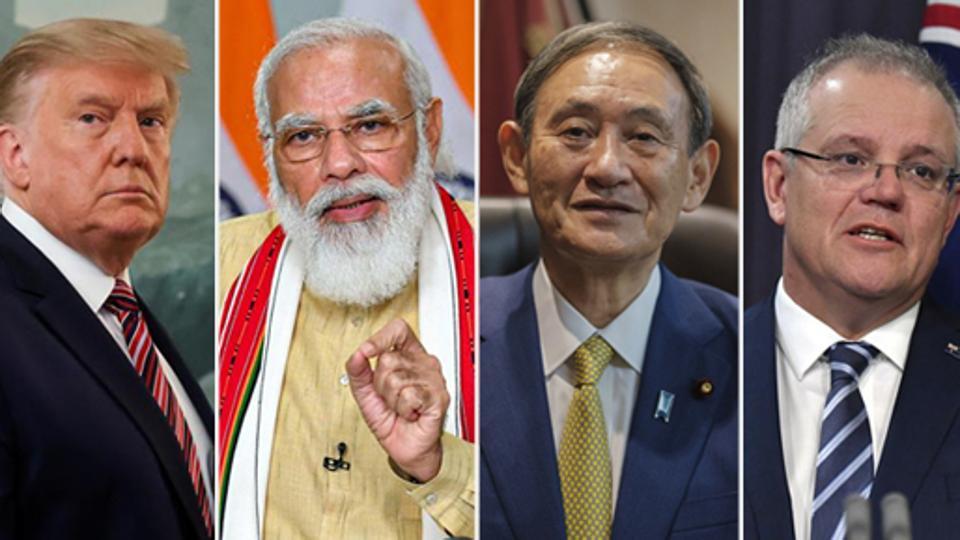
The QUAD dialogue is an informal tie-up between democratic countries that share military logistics support, inter-operability through exercises and information and are committed to keep the Indo-Pacific sea lanes of communication free from artificial constructs and constraints. The QUAD dialogue will be held in person between US secretary of state Mike Pompeo, Indian external affairs minister S Jaishankar, Japanese foreign minister Toshimitsu Motegi and Australian foreign minister Marise Payne. The ministers are guided by the leadership of the four countries who share personal rapport and global visions for peace. The delay in the date and venue is due to the change of government in Japan with prime minister Yoshihide Suga taking over from ailing Shinzo Abe.
For the two plus two dialogue, defence minister Rajnath Singh will join with US secretary of defence Mark Esper in New Delhi.
Although the QUAD is not targeted at any particular country, the informal group is closely watching the rise of wolf warriors in Communist China and its impact on security of Indo-Pacific and Indian Ocean with Beijing opening fronts against all four QUAD members---from land disputes to exports to data extraction. The rise of QUAD is a direct consequence of China claiming the entire South China Sea through artificial nine dash line which has been rejected by the global body tribunal.
QUAD is expected to be further strengthened as India has 2 plus 2 dialogue with US and Japan at ministerial level and with Australia at the foreign secretary level. All the four nations time and again conduct military exercises and the chances of QUAD navies participating under the rubric of Malabar exercises is very high though the decision is still to be taken.
The QUAD will be followed by the two plus two in Delhi, with US and India to initial the long pending foundational basic exchange and cooperation agreement for sharing geospatial data. While the US is ready to supply top of the line military hardware to India including armed drones, it has been left to the latter to work out what it requires to deal with a rising global power next door.
Given the fact that the People’s Liberation Army is dragging its feet on total disengagement from Ladakh sector, it is quite obvious that the Chinese aggression in western sector in May 2020 will be a hot topic of discussion for both QUAD dialogue and 2 plus 2.


