E-Paper



India’s Covid-19 tally crosses 6 million
Overall, there is a good chance of recovery among Covid-19 patients, with the country’s recovery rate being about 82% currently. The number of active patients has been below one million for several days. The active caseload is 15.96% of the total positive cases.

 Prefer HTon Google


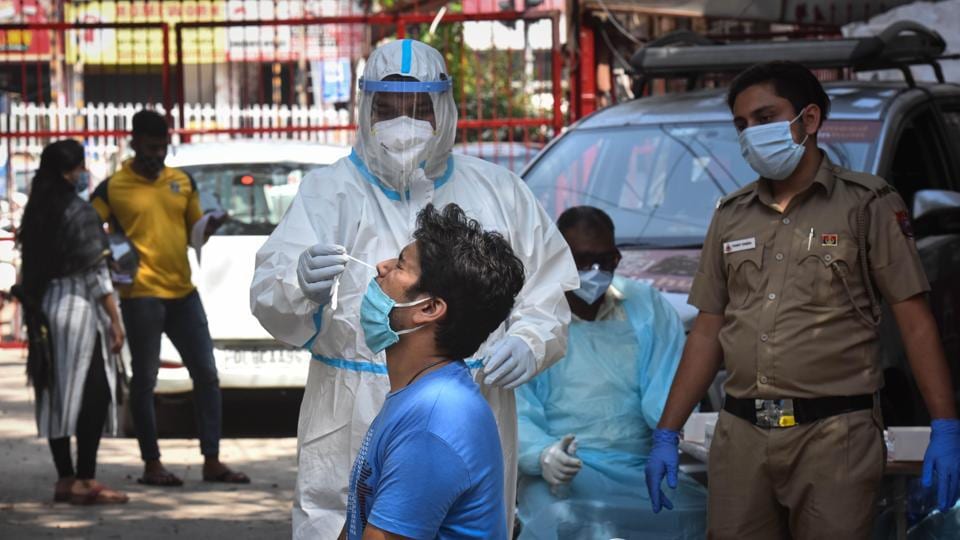
Cases of the coronavirus disease (Covid-19) in India crossed six million on Sunday, with the latest million infections coming in 11 days and the number of deaths from the disease approached 100,000, even as the number of those who have so far recovered surpassed the five-million mark.
Even though India’s case fatality rate (CFR), the proportion of people who have died among the confirmed cases, of 1.6% remains nearly half of the global average of 3.1%, the number of deaths reported in the country per million population has seen a jump of 42% in September alone — from 50 deaths per million to 71.
On September 1, a total of 50 people had died for every million residents in the country. This number increased to 62 by September 15, and, as on September 27, this stands at 71 deaths per million residents, according to HT’s Covid-19 dashboard.
Click here for complete coronavirus coverage
The seven-day average of daily deaths (commonly known as the death trajectory) has increased from 984 deaths per day for the week ending September 1 to 1,096 for the week ending September 27.
As on Sunday, India’s Covid tally was 6,073,310 cases and 95,567 deaths, with 82,824 new cases and 1,028 new deaths being reported in the last 24 hours. India has had the worst Covid outbreak in the world since August first week, accounting for more than a quarter of all recorded infections since then. In the past week, nearly one in every three (29.9%) new infections reported in the world and one in every five deaths (20.9%) have come from India.
Epidemiologists, however, said the rise in deaths was not unexpected keeping in mind the rise in overall cases in the country. “As the number of cases keep on increasing there will also be increase in the number of deaths; it is directly linked. Also, it is linked to efficient reporting of cases and deaths in the long run as some states that were lagging earlier in terms of case reporting are now catching up,” said Dr Giridhara Babu, professor, epidemiology, Indian Institute of Public Health, Public Health Foundation of India.
Also read: Why adequate testing is crucial to saving lives
Globally, India is among the countries that have fared relatively better in terms of saving lives. The worldwide average for deaths per million population is 129. Russia reports around 139; South Africa is at 275; France has an average of 485; the United States is at 631; United Kingdom at 618; and Brazil reports 665 Covid-19 deaths per million of its population. All figures are from worldometers.info.
Meanwhile, government data shows that men are far more likely to die from Covid-19 in India than women, with the former accounting for 69% of all fatalities.
The analysis of mortality data by the Union health ministry shows that a majority of deaths were among those above 50 years of age. It showed that 1% of those who succumbed to the viral infection were below 17 years; another 1% between 18 and 25 years; 11% deaths among 26- and 44-year-olds; and 36% among people in the 45 and 60 years age group.
People with comorbidities and elderly are at high risk, as almost 70% of those who die have one or more comorbidities such as hypertension, diabetes, cardiac, renal or liver disease, the data shows.
“Deaths are being reported in the age group of 60 and above because this age category generally suffers from some form of underlying medical conditions that hamper the recovery process. It is important, therefore, for this age group to take extra precautions and also keep their disease under control,” said Dr Srikant Sharma, consultant, department of medicine, Moolchand Hospital.
Overall, there is a good chance of recovery among Covid-19 patients, with the country’s recovery rate being about 82% currently. The number of active patients has been below one million for several days. The active caseload is 15.96% of the total positive cases.
“This high rate of daily recoveries has sustained India’s leading global position as the country with maximum number of recovered cases. As India records more recoveries than the new cases, the gap between percentage of recovered cases and the percentage of active cases is continuously increasing. The gap currently is nearly 4 million,” the health ministry said in a statement.