E-Paper



New Covid strain: India to genome sequence all positive samples of UK passengers
People whose samples indicate the presence of new variant of Sars-CoV-2 after the genomic sequencing will continue to remain in a separate isolation unit


All samples of passengers who arrive in India from UK that test positive for coronavirus disease (Covid-19) will be re-tested through a spike gene-based reverse transcription polymerase chain reaction (RT-PCR) test to look for the new variant of Sars-CoV-2 that causes Covid-19, according to the union ministry of health and family welfare.
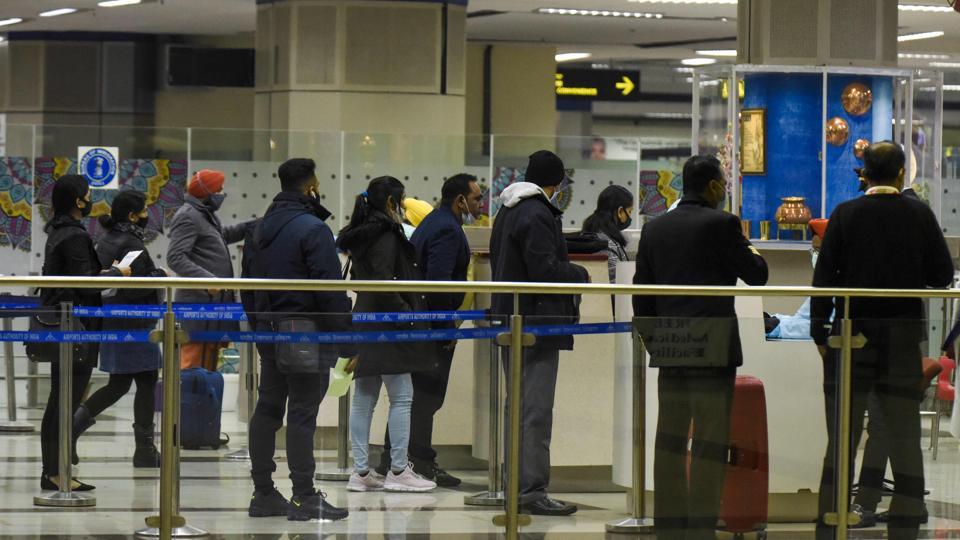
Separate isolation facilities will be created for people who test positive, and those whose samples indicate the presence of new variant of Sars-CoV-2 after the genomic sequencing will continue to remain in the separate isolation unit.
While necessary treatment will be given as per the existing protocol, the patient shall be tested on 14th day, after having tested positive in the initial test. In case the sample is found positive on the 14th day, another sample may be taken until two consecutive samples taken 24 hours apart test negative.
The health ministry issued a detailed standard procedures for epidemiological surveillance and response in the context of new variant of Sars-Cov-2 detected in the United Kingdom that is known to be at least 70% more transmissible.
Also Read: New Covid-19 strain in South Africa: Countries that announced flight suspensions
“Passengers testing positive shall be isolated in an institutional isolation facility in a separate (isolation) unit coordinated by the respective State Health Authorities. They would earmark specific facilities for such isolation and treatment. Necessary action to send the samples to National Institute of Virology (NIV), Pune or any other appropriate lab for genomic sequencing will be initiated at the facility level,” the SOP says.
Those who test negative via the RT-PCR method at the airport would be advised to quarantine at home and authorities will follow up to make sure they comply.
The government has also initiated a massive exercise to track all UK passengers who have arrived in India in the past four weeks.
“The statewise passenger manifest of the flights from UK landing at various International airports in India for the past 4 weeks (from 25th November 2020 to 23rd December 2020) shall be conveyed by the Bureau of Immigration to State Government/Integrated Disease Surveillance Programme (IDSP) so that this data would be provided to the surveillance teams,” it says. These people will be asked to self-monitor their health, and get tested using RT-PCR kits if they develop symptoms.
All contacts of those travellers who arrived at various airports on December 21-23, 2020, and tested positive would be subjected to institutional quarantine in separate quarantine centres (without exception) and would be tested as per the Indian Council of Medical Research (ICMR) guidelines.
Contacts of the suspected case would also include co-passengers seated in the same row, 3 rows in front and 3 rows behind along with identified cabin crew.
All the community contacts (without any exception) of those travellers who test positive would be subjected to institutional quarantine in separate quarantine centres and would be tested between the 5th and 10th day as per current ICMR guidelines using RT-PCR kits.