
 E-Paper



India to get normal monsoon this year, says IMD
For the first time in IMD’s monsoon forecast history, the agency also released new monsoon onset and withdrawal dates, considering factors that have led to a change in the way monsoon progresses.


In what could bring relief to farmers across the country, monsoon rains are likely to be normal this year at 100% of long period average, according to the India Meteorological Department (IMD)’s forecast released on Wednesday.
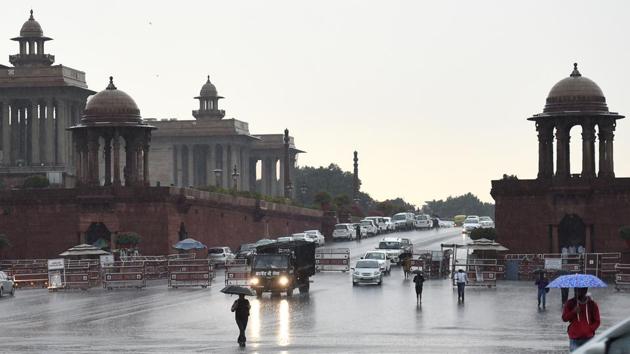
For the first time in IMD’s monsoon forecast history, the agency also released new monsoon onset and withdrawal dates, considering factors that have led to a change in the way monsoon progresses. IMD’s new onset and withdrawal dates are based on analysis of monsoon data from 1961 to 2013 by scientists in IMD Pune.
Click here for the complete coverage of the Covid-19 pandemic
IMD said the agency is expecting a normal monsoon at 100% of LPA, with an error margin of +/-5% this year, because prevailing neutral El Nino and Indian Ocean Dipole (IOD) conditions. El Nino is a climate pattern characterised by high sea surface temperatures in the tropical Pacific Ocean. El Nino years in India are linked to below normal monsoon rains and higher than normal frequency of heat waves. Last monsoon, El Nino conditions led to a delayed onset of monsoon, according to scientists. IOD is characterized by warmer sea surface temperature in the equatorial Indian Ocean; positive IOD conditions are associated with normal monsoon.
Click here for the latest updates from the coronavirus outbreak
IMD, in its statement, also said a few global climate models are indicating the possibility of development of weak La Nina conditions (climate pattern that describes the cooling of surface ocean waters along the tropical west coast of South America) over the Pacific Ocean during the second half of the season. La Nina is associated with a strong monsoon and above-average rains in India. “As sea surface temperature (SST) conditions over the Pacific and Indian Oceans are known to have strong influence on Indian monsoon, IMD is carefully monitoring the evolution of sea surface conditions over the Pacific and the Indian oceans,” the weather department said.
On new monsoon dates, M Rajeevan, secretary, ministry of earth sciences, said while the onset date over Kerala continues to be June 1, there are lots of changes when monsoon advances over Maharashtra, Gujarat, Madhya Pradesh, Chhattisgarh, West Bengal, Bihar etc. The withdrawal of monsoon is delayed by 7-14 days from northwest India. For instance, the onset in Chennai will be on June 4 against June1; June 21 in Ahmedabad against June 14; July 1 in Jaipur against June 23; June 27 in Delhi against June 23.
“The withdrawal from northwest India and central India is nearly 10 days late,” Rajeevan said. The zone-wise monsoon forecast will also be released by IMD in the last week of May or first week of June, IMD officials said.
India receives about 70% of its annual rainfall during the monsoon season that generally begins in June before starting to retreat by September. The monsoon rainfall is crucial to rice, wheat, sugarcane and oilseeds cultivation in the country, where farming accounts for about 15% of the economy and employs over half of its people.
Roxy Mathew Koll, a climate scientist at Pune’s Indian Institute of Tropical Meteorology, said global agencies are unanimously indicating normal monsoon rains for June to September. “This is largely based on the favourable conditions in the Pacific as there is no coherent sign of an El Niño developing during the early stage of the monsoon. El Niño, if present, can weaken the moisture carrying monsoon winds and reduce the rainfall received,” Koll said.
The rain in the pre-monsoon period has also been above average, which experts say will help improve and retain soil moisture and help with sowing in some parts of the country. From March 1 to April 12, central India received 165% and northwest India 52% excess rain even as east and northeast India are 44% deficient, according to IMD.
Ocean temperatures in the equatorial Indian Ocean are forecast to be warmer than normal, which has the potential to reduce monsoon rains. “Our analysis has shown that such conditions can have an adverse impact on monsoon rains over central-north India. The significance of the Indian Ocean is increasing year by year as it is warming rapidly due to increasing carbon emissions. Forecast models do not generally pick this link between the warm Indian Ocean and the monsoon rains,” Koll added.


