
 E-Paper



India-France to produce subs and warships for export in Mumbai and Kolkata
As the acquisition of Rafale-M and three additional submarines are part of Defence Ministry’s processes, the two items were not included in the joint statement.

 Prefer HTon Google


The bilateral ties between India and France during Prime Minister Narendra Modi’s visit to Paris took an orbital jump with defence public sector undertakings (DPSUs) of both countries signing two MoUs to fabricate submarine and surface combatants and parts in Mumbai and Kolkata respectively for export to third countries. Both the MoUs will launch PM Modi’s “Make in India” initiative as Mazagon Dockyards Limited will jointly develop and manufacture Scorpene class submarines with French Naval Group for a third country, while Kolkata GRSE’s MoU with Naval Group is to fabricate surface naval combatants for export.
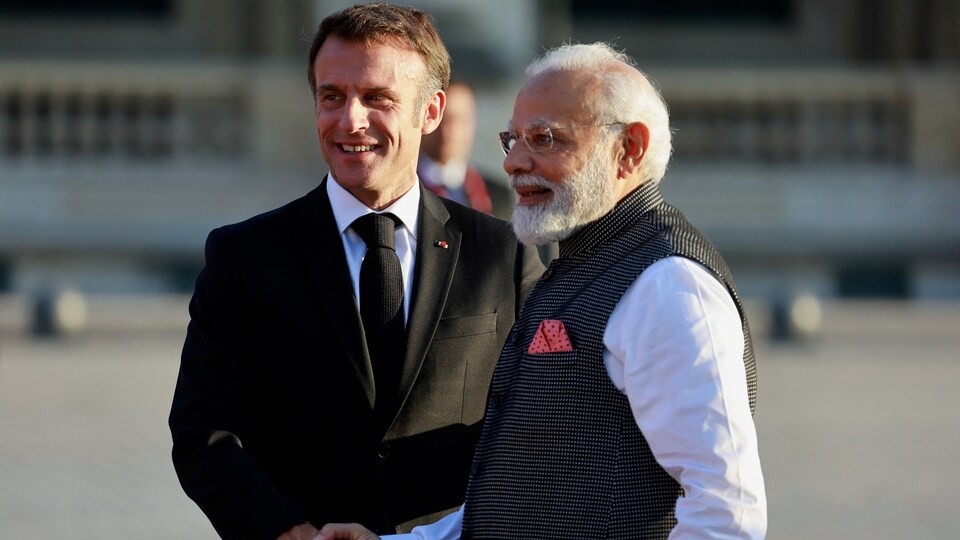
While some in the media have noted that acquisition of 26 Rafale-Marine fighters for INS Vikrant or reordering of three additional Scorpene class submarines did not find mention in India-France joint statement, fact is that the South Block did not want to get into the Defence Ministry’s acquisition processes as the Defence Acquisition Council has already given acceptance of necessity to both the projects. PM Modi's focus was to marry India’s talent and workers with French technology to produce platforms for time to come.
Read more: France ready to offer naval SCALP missile with three Scorpene subs
French President Emmanuel Macron went out of his way to fete PM Modi by discussing global affairs and forthcoming G-20 during a two hour long private dinner in Elysee Palace on July 13 and then closed the Louvre for the first time on July 14 Bastille Day since France hosted Queen Elizabeth in 1953. Even the thread of the specially curated vegetarian menu was in Indian tri-colors and not that of the host nation.
The two leaders discussed the Ukraine war and the forthcoming G-20 summit in India with President Macron giving his commitment to do anything to help India make the event a success despite friction over the war in Europe.
While the media was focused only on 26 Rafale M and three Scorpene submarines, the two leaders decided that small diesel attack submarines will be fabricated for countries in the Indo-Pacific who are at the receiving end of belligerent China. Already Indonesia has contracted two Scorpene class with France with an option of another four. While US submarines are all nuclear powered, the Scorpene attack submarines with diesel power are very difficult to detect in equatorial waters after its engine has been shut down. The nuclear submarines with continuously running nuclear reactors cannot be shut down and hence are easier to detect.
It is understood that PM Modi was more than satisfied with the hospitality extended by his close friend President Macron and the two discussed all the major issues of global concerns like terrorism, Indo-Pacific, climate change, clean energy and the war in Ukraine. Fact is that President Macron went out his way at the Bastille Day parade by introducing PM Modi to the veterans and the two shared an emotional moment after an Indian contingent of Punjab Regiment, which participated alongside French troops in World War I, smartly marched on Champs Elysee.ead


