
 E-Paper



Not expecting any major hit to wheat output due to untimely rain: Food secy
Last year, a prolonged heatwave in March crimped wheat output by 2.5% to 107 million tonne.


The government expects only a “marginal” loss in wheat output due to untimely rain last month and the world’s second largest grower is still on track for a record harvest of 112 million tonnes, Union food secretary Sanjeev Chopra said on Thursday.
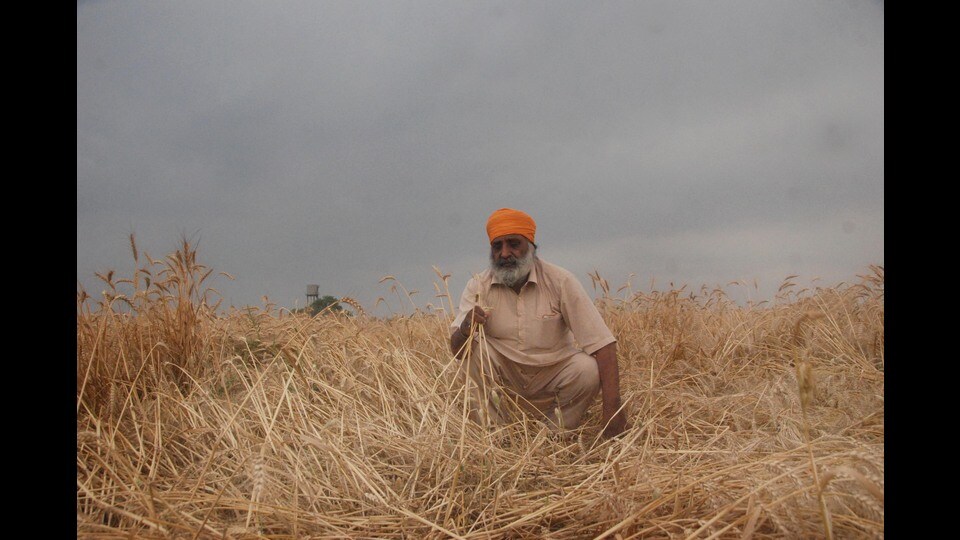
The top bureaucrat said the impact of a long spell of hail and rain in the wheat-growing northwestern states last month would be more on quality rather than on output, based on the latest assessment.
Also read: Wheat arrival begins on slow note in food bowl Punjab
“Overall, I’d like to tell you that the damage we are expecting in terms of the production (that) we have estimated of 112 million tonnes…the shortfall that we are expecting will be very marginal,” Chopra said, briefing reporters.
Since mid-March, a series of storms has battered ripening wheat in states such as Uttar Pradesh, the largest grower, Madhya Pradesh, the second-biggest grower, Punjab and Haryana, apart from Rajasthan. Farmers and traders reported losses in these states to rabi or winter sown crops, especially wheat, the main winter staple, HT reported. Wheat is sown in November and harvested in March-end and April.
“Because of the inclement weather in the last two weeks, there has been some damage to the wheat crop. But the production loss will be minimal. We are hopeful of achieving the overall production target of 112.2 million tonnes,” Chopra said.
Last year, a prolonged heatwave in March crimped wheat output by 2.5% to 107 million tonne, stoking shortages and food inflation, amid a global cereal crisis due to the Ukraine conflict.
The shortfall plunged the Centre’s procurement of wheat to a 15-year-low at just 18 million tonnes. Procurement refers to the Centre’s purchase of cereals at minimum support prices, which are then distributed to nearly 800 million beneficiaries of the National Food Security Act.
“We are still collecting reports, but what could happen or what is happening is some impact on quality,” the official said, adding: “We are fully confident that the target that we have set for procurement which is 342 lakh tonnes (34.2 million tonnes)..we should be able to achieve that target.”
The Centre has received requests from Punjab and Haryana for relaxation in wheat quality norms for procurement, which are under consideration, the official said.
Quality standards for wheat to be procured by the Centre have already been eased for Madhya Pradesh, allowing for more than 10% loss in lustre, or the natural gloss of grain, a key indicator of quality.
Early-sown varieties of wheat suffered damage due to wet weather in March but the losses would be offset by late-sown varieties, which gained from the rain, the food secretary said.
“There had been some reports of damage in Punjab, in about 16 districts and some parts of Haryana. The estimates are now being worked out as to what is the extent of damage,” Chopra said.
Also read: 40% wheat already damaged, more rains to pile up Punjab farmers’ woes
Assessments show that lower temperatures in March would lead to higher wheat yields in areas not affected by storms, according to the food secretary. “This will be greatly beneficial to the late-sown varieties in Uttar Pradesh and Bihar, which are now going to come (into markets) in a month or so.”
The food secretary also rejected claims made by certain NGOs that the fortified rice being given by the Centre could have any adverse public health impacts. A total of 269 districts in 27 states have started distributing fortified rice under the public distribution system, achieving a 100% target set for phase II by March 2023, he said.


