
 E-Paper



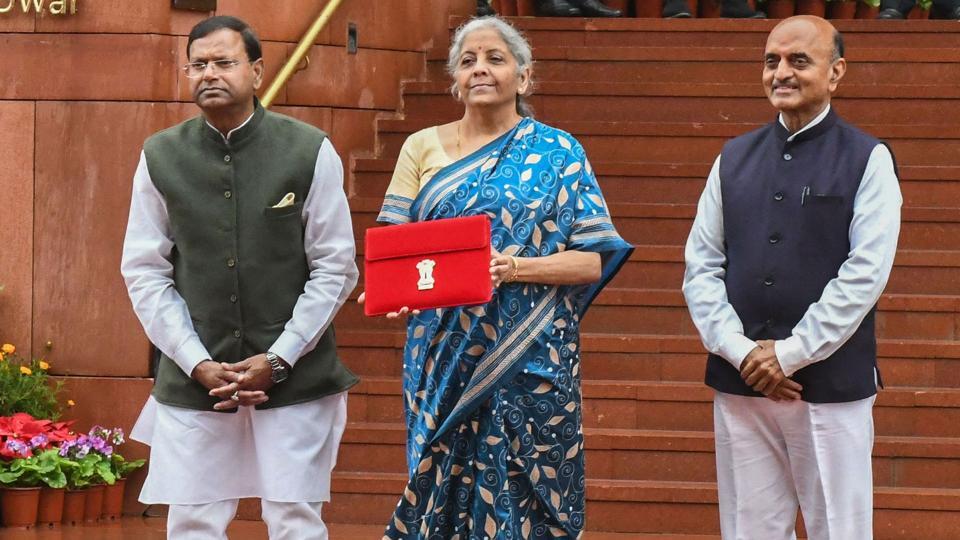
Inflation in control as measures working: FM Sitharaman
Inflation management under India’s economic policy framework is not in the realm of fiscal policy, and therefore, of the budget.

 Prefer HTon Google


Inflation management under India’s economic policy framework is not in the realm of fiscal policy, and therefore, of the budget. India’s inflation targeting framework delegates this task to the Reserve Bank of India, which is expected to control inflation with the tools in the realm of monetary policy. However, the interim budget has weighed in on controlling inflation. “Proactive inflation management has helped keep inflation within the policy band”, the budget speech says, adding that “moderate inflation” has been among the key factors in people “getting empowered, equipped and enabled to pursue their aspirations”.
What does this tell us about the government’s attitude to inflation? The most important takeaway is that it realises that inflation is potentially the most disruptive economic force as far as a government’s political fortunes are concerned, and therefore too important to be left to an apolitical body.
Read here: Interim budget 2024-25: Amnesty for small disputes relief to income-tax payers
This is exactly why it has been intervening in food markets to keep prices under control even at the risk of hurting farm incomes and generating potential headwinds for what is an already weak rural demand. By taking on this task, the government has also helped monetary policy in fighting inflation, which has mostly been driven by food prices and where raising interest rates is of little consequence. Governor Shaktikanta Das acknowledged this fact in his statement after the Monetary Policy Committee meeting in December 2023. “Going ahead, inflation outlook would be considerably influenced by uncertain food prices…Pro-active supply side interventions by the government are also containing domestic food price pressures.”
The other important messaging as far as inflation is concerned is the interim budget’s emphasis on inflation being in the “policy band” of 2%-6% rather than the actual target of 4%. The finance minister’s emphasis on this fact will clearly have a dovish impact on the sentiment of MPC when it meets later this month. It is worth underlining that Governor Shaktikanta Das has been emphasizing the fact that the benchmark inflation as measured by the Consumer Price Index (CPI) being at the 4% target rather than within the policy band is sacrosanct when it comes to inflation management.
To be sure, there is a possibility that the government might announce an important inflation relief measure sometime closer to the announcement of the general elections. This is because government owned oil marketing companies (OMCs) have not brought down petrol-diesel prices despite international crude oil prices coming down significantly from much higher levels. In fact, the freeze on petrol-diesel prices since April 2022 has pretty much made the practice of fuel prices being deregulated in India irrelevant. HT reported on this possibility in January this year. “According to data, OMCs froze petrol and diesel rates on April 6, 2022 amid volatility in international oil prices, while the central government reduced excise duty twice (by ₹13 on petrol and ₹16 on diesel) to protect the consumer when average crude purchase prices (Indian basket) surged from $73.30 per barrel in December 2021 to $112.87 a barrel in March 2022, and further to $116.01 a barrel in June 2022”, the story said. India’s crude oil basket was priced at $82.5 per barrel on January 31, according to data from the ministry of petroleum. A significant reduction in petrol-diesel prices is bound to lead to a major reduction in both fuel and other components of CPI via favourable cascading effects.
The other policy decision, although it has preceded the budget, which could help bring down inflation in high-end white goods is the reduction in customs duties on mobile phone components and expectations that similar policies could be announced for other products . These are likely to bring down cost of production of these goods in the country and even if they do not show in the actual inflation numbers, will help assuage sentiment on inflation.
The budgetary numbers also give a hint that the government is expecting a benign inflation environment over the course of the next fiscal year. Given the fact that the budget assumes a nominal GDP growth rate of 10.5% and the government has been talking about real GDP growth rate being closer to 7% next year, the GDP deflator, which closely tracks the wholesale price index is likely to stay under 4%.


