E-Paper



It’s man versus man in MP’s villages where condoms are a taboo
Experts say the decline in the use of contraceptives by men has threatened women’s reproductive health and has led to an increase in the number of abortions in the central state


Radheshyam Sharma scouts agricultural fields, bus stops and tea shops under a scorching sun to look for newly-wedded and other men so that he can distribute packets of condom among them.
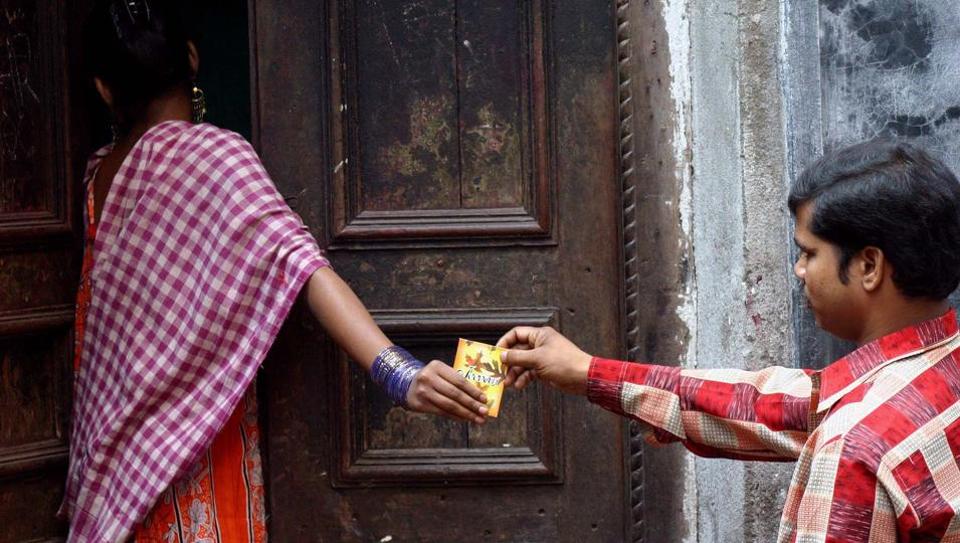
Sharma is not a salesman for a condom manufacturing company but a male health worker assigned by the Madhya Pradesh government to ensure more men start using contraceptives and also create awareness about their benefit among them, especially in the rural areas.
Like Sharma, hundreds of male health workers in MP have been given the task after the ministry of health and family welfare released data on reproductive and child health (RCH) recently that revealed a major decline in usage of condoms in the state.
As per the data, the use of male contraceptives decreased by 76% in the past nine years in Madhya Pradesh. In 2008-09, there were 11.8 lakh users of the condom but in 2016-17 the number drastically came down to 2.79 lakh. The decline is not limited to usage of contraceptives; vasectomy – a surgical procedure meant to protect against pregnancy permanently – also came down by a whopping 74%, it said.
Experts say the decline in the use of contraceptives by men has threatened women’s reproductive health and led to an increase in the number of abortions by 127% in the central state. The major problem lies in rural areas, they add. The problem is compounded by the fact that men play a dominant and decision-making role in reproductive health in villages because of gender inequities.
Madhya Pradesh’s public health and family welfare department (PHFWD) started the campaign to ensure more men start using condoms. Under this campaign, the department has deputed male health workers to motivate more men to use contraceptives in all the districts in the state, but especially in 25 districts where infant mortality rate (IMR), total fertility rate (TFR) and maternal mortality rate (MMR) are very high.
“Despite all efforts of the department in the previous years, the results were not satisfactory. When we saw the data, we realised that ASHA workers are motivating only women for family planning. Particularly in the rural area given the social customs, it is not possible for them to motivate men so we have decided to launch a campaign by engaging male workers in it,” state PHFWD director JL Mishra says.
Mishra was referring to accredited social health activists (ASHA), who are responsible for delivering health services to the villages.
Doctors also say the participation of male health workers is necessary as in the remote parts of rural MP people have little awareness about condoms as ASHAs only talk to women and often hand over male contraceptives to women without explaining much about its use.
“A few months ago, a woman, who had come for tubectomy, told us that she chews the condom as she didn’t know how to use it. It was shocking to me,” Dr Hemendra Singh Kadam, a surgeon based in Bhopal, said.
An IndiaSpend report cited a 2015 research study conducted in rural Odisha that male health workers can make a difference by educating men about maternal health issues and guiding their decisions. They can also complement the efforts of female health workers in delivering health services in remote areas and at late hours.
The report added that India’s RMNCH+A (Reproductive, Maternal, Newborn, Child and Adolescent) health strategy – formulated in 2013 – recognised the central role of men in women’s reproductive health and includes guidelines for the training of health workers to provide husbands of pregnant women with the relevant information.
“In rural areas, the family planning concept awareness goes from ASHA workers, who all are women to women of society only. A man comes forward to family planning only for money, which is given as an incentive by the government but a woman’s concern is always family planning. There is a need to change the mindset of men,” Dr BS Ohri, former executive director of PHFWD, said.
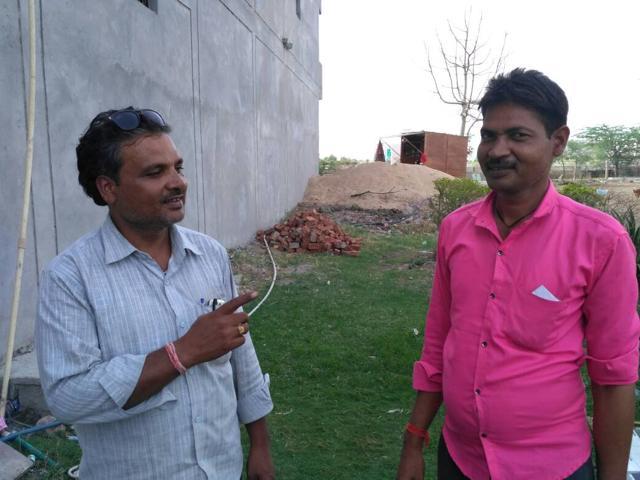
This was corroborated by Balram Vidhu, a male health worker from Kadaiya community health centre in Bhopal, who said is it difficult to talk to men regarding contraception and sexual health issues.
“First, we have to cover almost an entire village to search for men. The real challenge starts when we try to convince them for using male contraceptives. In the process, we sometimes have to face abuses too and we also become a laughing stock. Many refuse to listen to me while saying that it’s a duty of women to go for family planning.”
According to experts, if the health department’s campaign is successful MMR and IMR will improve significantly in the state.