E-Paper



Japan announces emergency loan for India to fight Covid-19 pandemic
This is the largest amount of financial assistance announced by any country so far to support India’s response to the Covid-19 crisis.

 Prefer HTon Google


Japan announced on Monday it will extend a emergency support loan of up to 50 billion yen (almost ₹3,500 crore) to back India’s response to the Covid-19 crisis, including implementation of health and medical policies and development of hospitals equipped with ICUs.
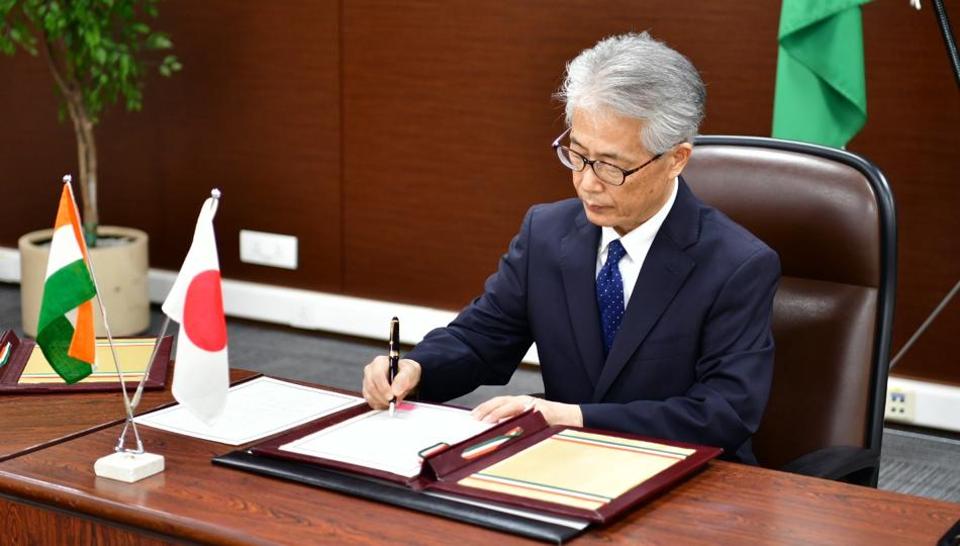
Japanese ambassador Satoshi Suzuki, and CS Mohapatra, additional secretary in India’s department of economic affairs exchanged notes regarding the provision of the yen loan for the response to the Covid-19 emergency.
A statement issued by the Japanese embassy noted that the Indian government has taken several measures, including health sector reforms, in response to the spread of Covid-19. “This loan provides the necessary funds for emergency response in the fight against Covid-19 in India,” it said.
This is the largest amount of financial assistance announced by any country so far to support India’s response to the Covid-19 crisis, which has had widespread impacts on the economy and health sector.
The “Covid-19 crisis response emergency support loan” will back the “implementation of health and medical policy by the government of India, and will lead to the development of hospitals equipped with ICUs and infection prevention and management facilities, which are undersupplied in India”, the statement said.
“It is also expected to lead to the enhancement of telemedicine using digital technology in numerous villages across India. It is expected that these measures, in addition to controlling the spread of infection in the country, will also contribute to the recovery and stability of the country’s society and economy, as well as to sustainable development,” the statement added.
The terms and conditions of the loan include an interest rate of 0.01% per annum and a redemption period of 15 years, including a four-year grace period.
Suzuki and Mohapatra also exchanged notes for the provision of grant aid worth 1 billion yen under Japan’s Official Development Assistance scheme for India’s Economic and Social Development Programme, which is being implemented by the health ministry.
“This programme will provide oxygen generators to government of India. Oxygen generators can be employed for the treatment of Covid-19 patients under critical conditions. This programme will lead to the strengthening of India’s infectious disease countermeasures, as well as her health and medical systems,” the Japanese embassy said.
In a separate development, the Japanese embassy and consulates and Japan External Trade Organisation (JETRO) updated the list of Japanese businesses in India with the cooperation of Japanese chambers of commerce and industries in India.
As of October 2019, the total number of Japanese companies registered in India is 1,454. The number has increased by 13 (0.9% growth), compared to 1,441 in 2018.
The total number of Japanese business establishments in India, as of October 2019, is 5,022, a decrease by 80 (1.6% decline) as compared to 5,102 in 2018.
West Bengal and Haryana showed the largest increase in the number of Japanese companies. There was a significant increase in the number of companies in such sectors as information and communications as well as services.
The manufacturing sector accounted for half of the total Japanese companies and more than a third of Japanese business establishments in India.
“The total number of establishments decreased while the number of companies increased, because some companies became non-Japanese due to the closure of office, corporate restructuring, change of ownership etc,” said a statement from the Japanese embassy.