
 E-Paper



Jhiram Valley massacre: Maoists planned ambush months in advance, rehearsed attack, court order reveals
The court order, which sentenced the 10 surviving convicts to death, reconstructs the deadly assault using the NIA’s investigation and testimonies from survivors, injured personnel, and eyewitnesses.

 Prefer HTon Google


The 2013 Maoist attack on a convoy of Congress leaders that killed 27 people in Chhattisgarh’s Jhiram Valley was a meticulously planned conspiracy executed after months of route surveys, cadre mobilisation, and mock rehearsals, according to the detailed judgment of a special National Investigation Agency (NIA) court in Jagdalpur.
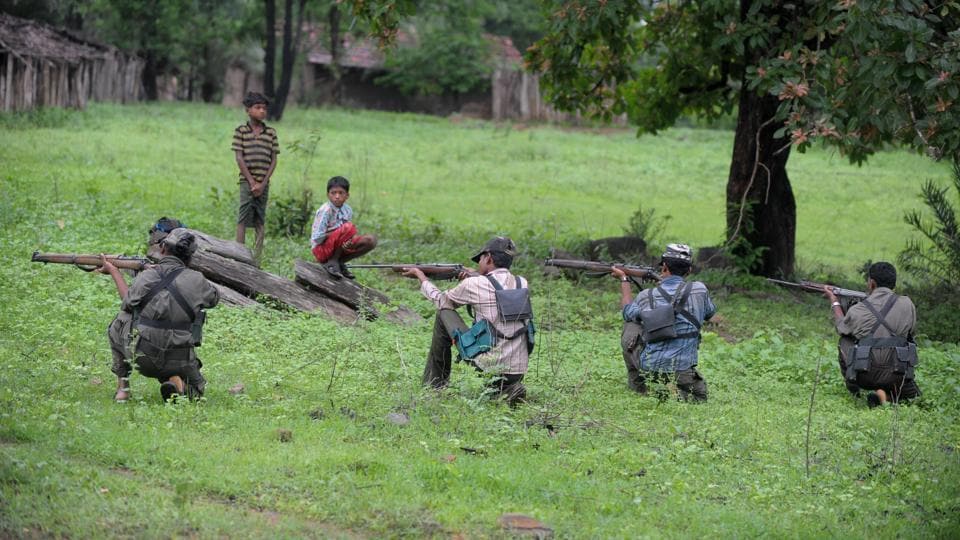
The court order, which sentenced the 10 surviving convicts to death, reconstructs the deadly assault using the NIA’s investigation and testimonies from survivors, injured personnel, and eyewitnesses.
According to the September 16 verdict, which was uploaded to its website on Friday, the conspiracy was hatched about three months before the May 25, 2013 attack, at a meeting of the South Regional Unified Command of the Communist Party of India (Maoist) held between February 16 and 25.
A special team comprising members of different Maoist military units and local cadres was formed for the operation that killed top state Congress politicians.
The Jhiram Valley area was under the Darbha Divisional Committee of the Maoists’ South Regional Unified Command, which operated under the Dandakaranya Special Zonal Committee (DKSZC).
Barse Sukka alias Deva, then a member of the Darbha Divisional Committee, was assigned responsibility for the operation, while cadres from different areas were directed to reach Darbha.
The attack was planned as part of the Maoists’ Tactical Counter Offensive Campaign (TCOC), NIA said.
Food, logistics arranged before attack
The investigation found that members of the Kanger Valley Local Committee, including Sonadhar, and convicted accused Sumitra, Mahadev Nag and Mukka Mandavi, along with Jan Militia members, Sangham members and others, held several meetings to prepare for the operation.
According to the order, about 25 sacks of rice, each weighing around 50 kg, were collected from Koleng village and stored at Mahadev Nag’s house in Kandanar.
At a meeting at Chandameta village on May 22, around 50 Jan Militia members were instructed to transport rice and cooking material to a designated location. The supplies were later taken to a temporary Maoist camp in the Jhiram Nala area.
On May 23, villagers who helped transport the material had to remain with the Maoists to prepare food, collect firewood and clean utensils, among other tasks.
The Maoists also conducted reconnaissance of the Sukma-Jagdalpur national highway and selected the Jhiram Valley location. A rehearsal was held in a forest near Ekkam-Chakpal six to seven days before the attack under the direction of Maoist leaders including Surender, Jaylal, Deva, Vinod, Hemla Masa and Sonadhar.
On the nights of May 22 and 23, an armed group of around 100 Maoists, accompanied by Jan Militia members from the Kanger Valley area, established temporary command centres on both sides of the road. The cadres were armed with AK-series rifles, self-loading rifles, light machine guns, .303 rifles, grenades and country-made firearms.
Convoy trapped after explosion
The Congress Parivartan Yatra was to hold a programme in Sukma on May 25, 2013. The meeting ended around 2.30pm and party leader Ajit Jogi left by helicopter. The other leaders had lunch at the circuit house before leaving Sukma around 3pm for Keshloor. The convoy reached the Jhiram Valley area between 3.30 pm and 4.20 pm.
A hill flanked the road on one side, and a deep gorge on the other. To stop the convoy, the Maoists cut trees and placed them across the road. They had also planted explosives, including PETN and TNT, weighing approximately 8-9 kg.
According to witnesses, a truck at the front of the convoy was hit by bullets and stopped, bringing the vehicles behind it to a halt. Maoists then opened indiscriminate fire from the surrounding area.
One witness estimated that around 150-200 Maoists, including women, were involved. Many wore black and green uniforms, while others wore civilian clothes. The attackers communicated in Gondi and Hindi and carried firearms as well as bows and arrows.
In all, investigators later counted about 206 bullet marks on the vehicles. The investigation also found that nine AK-47 rifles, seven INSAS rifles, four 9-mm pistols and two SLRs were looted during the attack.
‘Where is Karma?’
The testimonies provide a detailed account of the Maoists’ search for specific political leaders after the convoy was surrounded.
One witness said Maoists repeatedly asked, “Where is Karma?” After security personnel ran out of ammunition, around 60-70 Maoists came down from the hill and began searching the vehicles and people.
Mahendra Karma eventually surrendered.
Another eyewitness said Karma and Phoolo Devi Netam stood up when the firing resumed and asked the attackers to stop as they were surrendering. Karma identified himself and asked that the Maoists stop firing at innocent people.
The Maoists took Karma towards the hill along with a woman cadre and driver Bittu. He was shot, attacked with knives and struck on the head with a stone. A witness who was at some distance heard three-four shots being fired. The Maoists celebrated his death.
Karma had been a prominent leader of the Salwa Judum anti-Maoist campaign and, according to the NIA investigation, had been a longstanding target of the Maoist organisation.
Nand Kumar Patel, his son Dinesh Patel, Kawasi Lakhma, a personal security officer and driver Dasharam were also taken away by another group of 15-20 Maoists. Around 45 minutes later, commander Vinod turned up carrying an AK-47. When Patel started asking him questions, Vinod allegedly told the cadres to tie up Patel and his son.
Lakhma and the driver were eventually told to leave. They initially refused to go without Patel and his son but fell in line after being threatened. Lakhma later reached Darbha police station on a motorcycle.
NIA concluded that Deva and his group subsequently killed Nand Kumar Patel and Dinesh Patel as well.
Another witness, Rajiv Narang, who was travelling towards Darbha to welcome the Parivartan Yatra when the first explosion took place, was also at the police station. His vehicle came under fire, which led to injuries to him and another person. But they escaped, reached Darbha police station, and informed police about the attack.
Several survivors also escaped through the forest and reached Darbha police station.
Another witness, Malkeet Singh Gaindu, who was travelling in a vehicle with Karma and other Congress leaders, said Vinod communicated over a walkie-talkie and asked whether Nand Kumar Patel was present. The witness said Vinod subsequently stated that the “mission” concerning Karma had been completed.
The court order records that the firing continued for several hours, with different witnesses suggesting that it only ended sometime between 6 pm and 6.30 pm. The Maoists also searched vehicles after the firing, took away mobile phones, wallets and weapons.
According to the order, the spokesperson of the DKSZC allegedly sent an email and voice message to media organisations claiming responsibility and stating that the attack had been carried out to punish Mahendra Karma.
Investigation, chargesheets and trial
A case was registered at Darbha police station following the attack under provisions of the Indian Penal Code, Arms Act, Explosive Substances Act and Unlawful Activities (Prevention) Act.
NIA filed its charge sheet in 2014 and a supplementary chargesheet in 2015 against 32 absconding accused.
NIA arrested Joga Madkami in June 2016, while Sumitra alias Sumitra Punem alias Sumitra Tati alias Aayti Modiyam was arrested in November 2019 and subsequently included in the case.
The court rejected the defence argument that the accused were villagers who had assisted Maoists only out of fear. The defence had also cited their lack of previous criminal records, their nearly 12 years in judicial custody and the possibility of rehabilitation.
The prosecution argued that the case fell within the “rarest of rare” category and sought the maximum punishment.
After examining the evidence, the court held that the accused had actively participated in the conspiracy and in activities linked to the banned CPI (Maoist). It concluded that the aggravating circumstances outweighed the mitigating circumstances and awarded death sentences to all 10 surviving convicts.
The 10 convicts are Pramila Modiyam, Chaitu Lekam, Sumitra Punem alias Aayti Modiyam, Mukka Mandavi, Kavasi Kosa alias Kosaram, Aayata Madkam, Madkami Deva, Joga Madkami, Banjami Sanna and Mahadev Nag.
The order said Tippiri Tirupati alias Devji and Barse Sukka alias Deva were among the 27 accused who remain absconding in the case.
-kW0H-U20214218012MgB-250x250%40HT-Web.jpg)


