
 E-Paper



Maha Kumbh: Prayagraj river water fails bathing quality standards, CPCB finds high faecal coliform levels
According to the Mahakumbh mela administration, the number of devotees who have bathed in the Mahakumbh since January 13 has surpassed 54.31 crore.

 Prefer HTon Google


The Central Pollution Control Board (CPCB) informed the National Green Tribunal (NGT) in a report that faecal coliform levels in river water along various locations in Uttar Pradesh's Prayagraj during Maha Kumbh Mela were not meeting bathing quality standards.
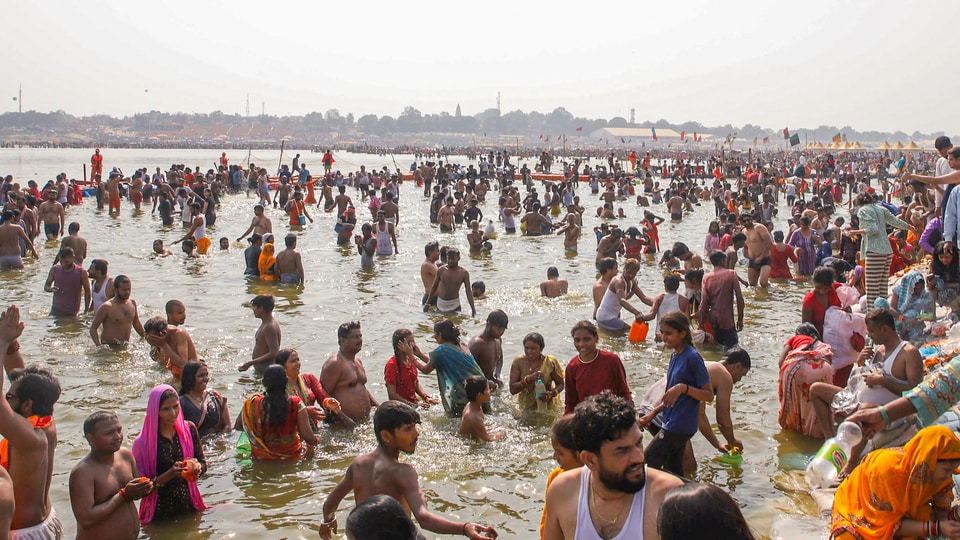
The submission assumes significance as crores of devotees continue to flock to the Triveni Sangam in Prayagraj during the ongoing Maha Kumbh Mela to take a holy dip in river waters.
According to the mela administration, the number of devotees who have bathed in the Maha Kumbh since January 13 has surpassed 54.31 crore. More than 1.35 crore devotees took a holy dip in the sacred waters of the Triveni Sangam by 8 pm on Monday.
Also read | Mahakumbh: ‘400 MT of trash being collected, disposed daily’
Faecal coliform is a marker of sewage contamination in water. CPCB standards have set a permissible limit of 2,500 units of faecal coliform per 100 ml of water.
The NGT bench comprising chairperson Justice Prakash Shrivastava, Judicial Member Justice Sudhir Agarwal and Expert Member A Senthil Vel was hearing a petition seeking to prevent sewage discharge into the Ganga and Yamuna rivers in Prayagraj.
In a report dated February 3, the CPCB informed the NGT bench about poor river water quality in Prayagraj during the ongoing Maha Kumbh Mela. The report has pointed out certain non-compliances or violations.
Also read | Akhilesh Yadav on Mahakumbh traffic jams: ‘People of Prayagraj in house arrest’
“The river water quality was not conforming to the primary water quality for bathing with respect to faecal coliform (FC) at all the monitored locations on various occasions. A large number of people bathe in the river at Prayagraj during the Maha Kumbh Mela, including on auspicious bathing days, which eventually leads to an increase in faecal concentration,” the CPCB said in its report.
The NGT bench noted that the Uttar Pradesh Pollution Control Board (UPPCB) failed to comply with its earlier direction to file a comprehensive action taken report. The tribunal noted that the board had only filed a cover letter with certain water test reports.
“Even upon reviewing the documents enclosed with the covering letter dated January 28, 2025, sent by the in-charge of the central laboratory, UPPCB, it is reflected that high levels of faecal and total coliform have been found at various locations,” the bench said.
Also read | Maha Kumbh: Fires break out at two camps in Prayagraj
The tribunal granted one day time for the counsel appearing for the state of Uttar Pradesh to examine the report and file a response.
“Member Secretary, UPPCB, and the concerned state authority responsible for maintaining the water quality in the river Ganga at Prayagraj are directed to appear virtually at the next hearing, scheduled for February 19,” the tribunal said.
(With PTI inputs)


