
Sign in

Maoists torch only bus connecting nearly 50 remote villages in Bastar

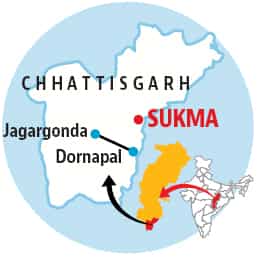
The only bus service between Dornapal town and Jagargonda village in Bastar region of Chhattisgarh was reintroduced in May 2017 after 12 years, and was run by a private operator.

Updated on: Jan 14, 2018, 20:11:47 IST
Hindustan Times, Raipur | By
Share
Share via
  • facebook
  • twitter
  • linkedin
  • whatsapp
Copy link
  • copy link

A group of Maoists torched the only bus connecting several remote locations in Sukma district of Chhattisgarh, cutting off the travel and trade lifeline of nearly 50 villages in south Bastar, police said on Sunday.
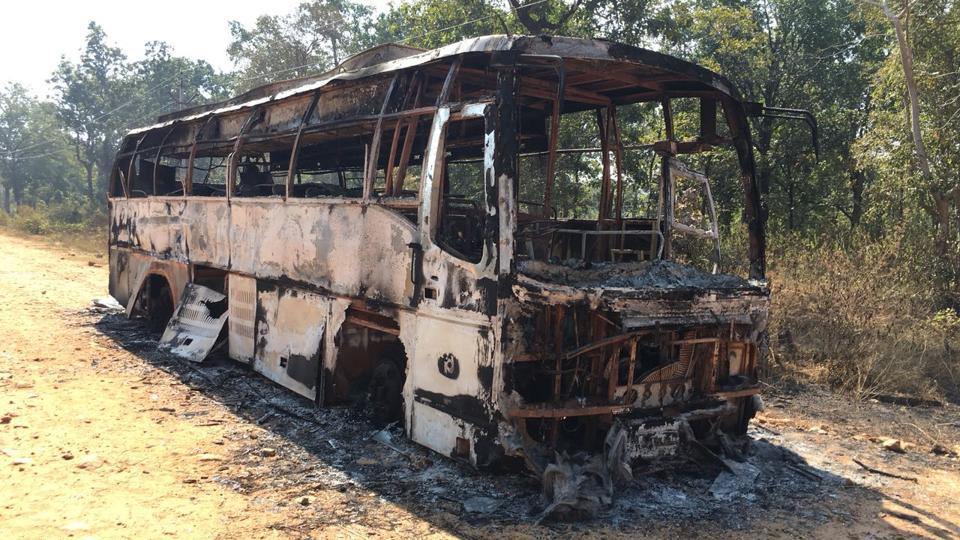
The bus that was torched by Maoists in Bastar region of Chhattisgarh. (HT Photo)

The bus service in the region affected by left-wing extremism was reintroduced in May last year after 12 years, much to the relief of hundreds of villagers.

A private bus operator provided the daily service between Dornapal town and Jagargonda village with state patronage.
Article image

“About a dozen Maoists stopped the bus between Chintagufa and Burkapal around 5.30pm on Friday, forced the passengers and the driver get out, and set it on fire,” said a Sukma police officer who did not want to be named. “There were 40 to 45 passengers on the bus.”
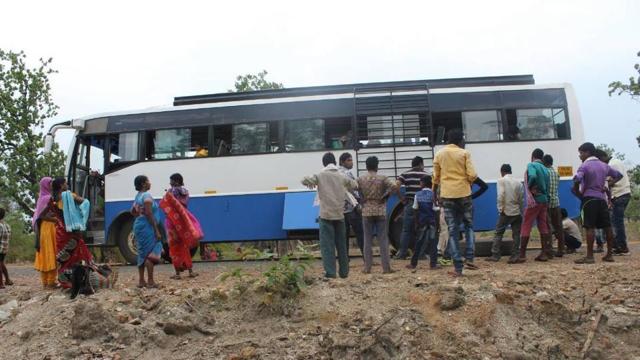
The bus service during its launch in May 2017. (HT file photo)

The bus route cuts through the Maoist heartland, where security forces have been battling the insurgents in an unending cycle of violence. In April last year, Maoists killed 25 CRPF troopers in an ambush at Burkapal, which is on the bus route.

Sukma’s superintendent of police Abhishek Meena said, “Security forces never used the bus, only locals did. There was no reason to target the bus”, adding that the Maoists were frustrated after suffering extensive losses in recent encounters with security forces.

  • Ritesh Mishra
    ABOUT THE AUTHOR
    Ritesh Mishra

    Ritesh Mishra is the State Correspondent for Chhattisgarh with Hindustan Times. He reports on Maoism, internal security, politics, mining, governance, and major developments shaping the state. Based in Raipur, he has covered Chhattisgarh since 2016, reporting extensively from the Bastar region and other conflict-affected areas. With nearly two decades of experience in journalism, Ritesh has built a reputation for ground reporting from some of India's most challenging terrains. His coverage spans Left-Wing Extremism, counter-insurgency operations, elections, tribal affairs, environmental issues, infrastructure, mining, and socio-economic developments. He has reported on major security operations, policy initiatives, wildlife crime, and the changing dynamics of conflict and development in Central India. Before moving to Chhattisgarh, Ritesh spent eight years reporting from Madhya Pradesh, covering politics, administration, crime, development, and social issues. Throughout his career, he has reported on various forms of extremism in Central India, combining field reporting with in-depth analysis to produce accurate, balanced, and impactful journalism. Prior to joining Hindustan Times, Ritesh worked with The Pioneer and The Free Press Journal, where he covered a wide range of beats and honed his skills in political, investigative, and field reporting. His reporting is marked by exclusive stories, extensive fieldwork, and a commitment to factual, on-the-ground journalism that brings complex issues to a wider audience.Read More

Get the latest India News, breaking headlines and real-time updates from across the country. Stay informed about politics, government policies, crime, weather and major national developments.