
 E-Paper



Modest defence budget hike may require tweaks in military’s shopping list
In the interim budget for 2019-20, announced on February 1, defence was allocated ₹319 trillion, a hike of 6.87% compared to the previous year. The budget will be presented on July 5.

 Prefer HTon Google


The defence budget, which is part of the Union Budget to be presented later this week will be adequate to acquire so-called stand-off weapons and fund essential capital acquisitions, defence ministry officials said. According to the officials, who spoke on condition of anonymity, stand-off weapons, such as the bombs used by the Indian Air Force to target the Jaish-e-Mohammed terror camp in Balakot inside Pakistan territory are being prioritised over nice-to-have futuristic platforms.
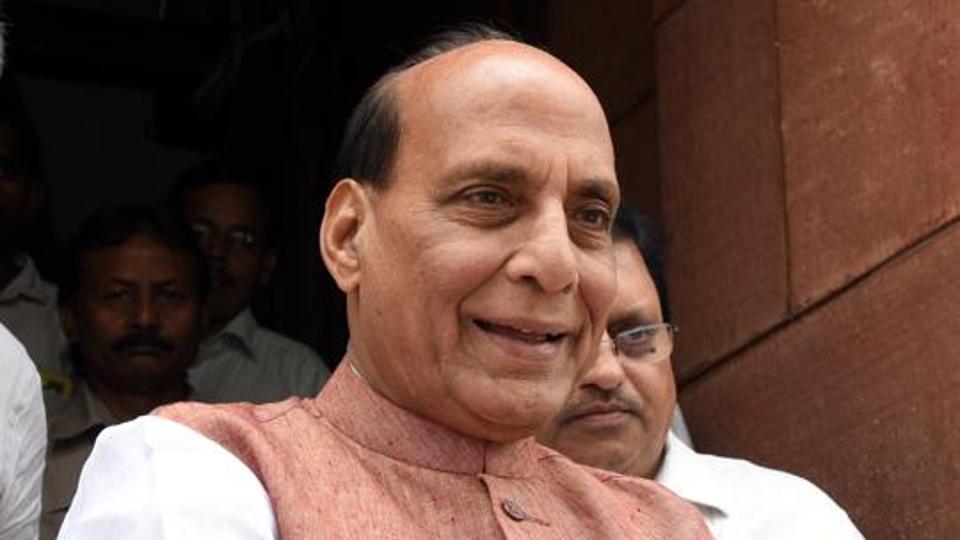
In the interim budget for 2019-20, announced on February 1, defence was allocated ₹319 trillion, a hike of 6.87% compared to the previous year. The budget will be presented on July 5.
Military experts termed the 6.87% inadequate (it is 1.52% of India’s GDP) but the fact is that defence capital expenditure (CAPEX) amounted to 31.28% of the country’s capital expenditure in 2018-19.
The defence ministry officials argued that with defence CAPEX already touching this level, the government cannot afford to hike it without crimping spends on crucial social sector schemes. The armed forces counter that defence capex has reduced from 45.3% 2009-10.
“The choice with the government is limited. We can buy weapons but with a commensurate cut in social sector spending,” said a senior defence ministry official.
This has meant prioritising what is needed.
And some of that has been driven by the events of February.
The Indian Air Force’s Balakot Strike on February 26, 2019 was retaliation for the February 14 suicide attack on a CRPF bus in Pulwama. Twelve Mirage 2000 fighters crossed the Line of Control (LoC) and fired five Spice guided bombs on the Balakot terror camp, killing an unspecified number of terrorists.
While the Mirage fighters managed three direct hits on the northern camp housing trained suicide bombers and terrorists, it is Pakistan’s retaliation the following day which has made the IAF relook at its beyond visual range air to air missile inventory. With Pakistani F-16 fighters firing longer range US made missiles at Indian fighters, the essential requirement is that IAF must upgrade its air to air missile range on its Su-30 MKIs apart from upgrading their data link and on board communication equipment.
“Rather than focusing on an ambitious plan of aerial surveillance of Indian Ocean, the immediate requirement is to effectively militarily block or repel any challenge from western or northern borders. The other challenge that India needs to be prepared for is insurgency in Jammu and Kashmir as well as parts of the North-East,” said a senior military commander.
To this end, the Narendra Modi government is committed to national security and will ensure that essential capital acquisition is not impeded by lack of funds, the defence ministry officials said.
Two squadrons of French Rafale with far superior air to air missiles will arrive in India by next May and the first of the 22 Apache attack helicopter to be delivered in India next month.
Funds are also required to ensure that Indian Navy has long legs to tackle the worst case scenario in Persian Gulf, just as Indian Army needs to restructure its forces for faster response in the event of any crisis like 2017 Doklam or 2016 Uri attack, the officials said, listing their other immediate priorities.


