
 E-Paper



‘Modi hain toh mumkin hain’: RSS chief Mohan Bhagwat praises PM for Article 370 move
The RSS boss also pointed out that the special status to Jammu and Kashmir under the article of 370 of the constitution could be revoked because the entire society showed determination.

 Prefer HTon Google


Rashtriya Swayamsevak Sangh chief Mohan Bhagwat on Thursday praised Prime Minister Narendra Modi for nullifying Article 370 that gave special status to Jammu and Kashmir and said the government had shown courage.
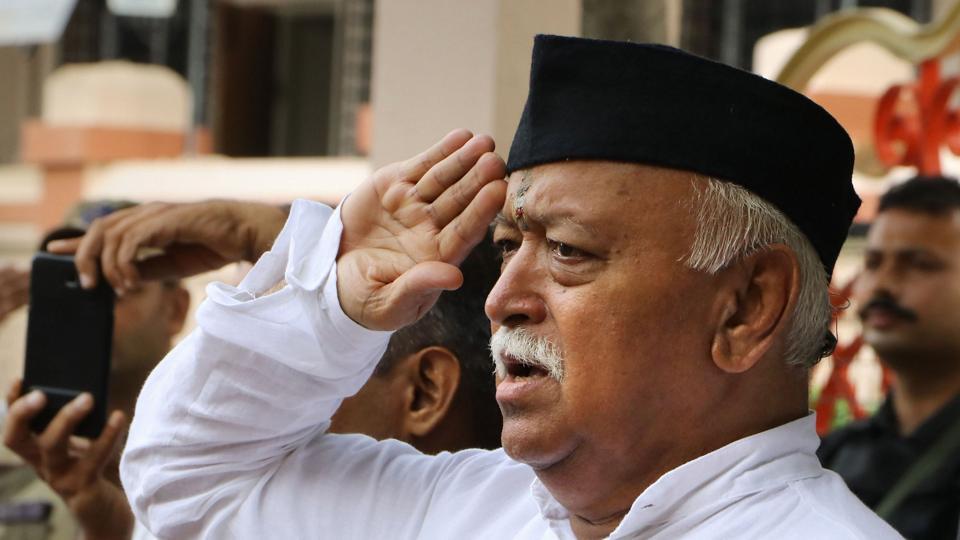
Speaking on the occasion of Independence Day at the RSS headquarters in Nagpur, Bhagwat, in his first such address to the nation, said “Modi hai to mumkin hai”.
The RSS boss also pointed out that the special status to Jammu and Kashmir under the article of 370 of the constitution could be revoked because the entire society showed determination. He said that it is the day to remember the sacrifices made for the country’s freedom. “The Article 370 could be removed because the entire society made a resolution, so on this day we renew that resolve again,” Bhagwat said.
Watch| PM Modi interacts with children after Independence day speech
He said now the people in Jammu and Kashmir can live peacefully like other citizens of the country. “The people in Jammu and Kashmir will now have the equal opportunities, like any other citizen in elsewhere. This has happened because of the strong will power and determination of Prime Minister Narendra Modi. This was a long pending demand and needs of the people not only from Jammu and Kashmir but from the entire country. The whole country has now experienced the will power of government in power and rejoicing,” he said.
Bhagwat said India will emerge as a super power in the days to come but will not terrorise other countries or use military power to suppress others.
This is probably the first time when an RSS chief greeted people on the occasion of Independence Day from its headquarters, Nagpur and addressed a gathering. In fact, the Sangh organisation didn’t even hoist national flag on the occasion of Independence Day or Republic Day. The RSS hoisted the national flag at its headquarters only twice, on 14 August 1947 and on 26 January 1950, but stopped doing so since then.
It initially did not recognise the Tricolour as the national flag of India and wanted the bhagwa dhwaj (saffron flag) be adopted as the National Flag of the country. This issue has always been a source of controversy. However, Sangh changed the practice in 2002 when Atal Bihari Vajpayee was Prime Minister.


