E-Paper



MP cops’ new initiative to find parents of hearing impaired woman repatriated from Pakistan
Police have short-listed Telangana, Chhattisgarh and Jharkhand as Geeta’s possible home but her responses so far have not given the police any concrete indication of her place of origin.

 Prefer HTon Google


Police in Indore are banking on experts to evaluate facial features, culture, favourite food and liking of regional songs of different states in their efforts to find the parents of speech and hearing impaired Geeta (29), who was repatriated in India from Pakistan in 2015.
“Former foreign affairs minister late Sushma Swaraj, who had played an important role in the repatriation of Geeta had admitted her in a shelter for speech hearing impaired people at Indore. For the past five years, a local NGO and district administration had been trying to find her parents but they didn’t succeed. Many couples claimed themselves as her parents but they failed to establish their parenthood due to DNA mismatch,” said Monica Purohit, whose NGO is taking care of Geeta for the past one month.
Purohit said, “In a conversation with Geeta, we tried to know about her childhood memories. With some important information regarding her childhood, we approached Indore police and they have taken a scientific approach to find her parents.”
Police have short-listed Telangana, Chhattisgarh and Jharkhand as Geeta’s possible home but her responses so far have not given the police any concrete indication of her place of origin.
Deputy inspector general (DIG) of police in Indore, Harinarayanchari Mishra said, “We are seeking help of food, culture and face features experts who can tell us about the area or state which she may belong to. As of now, we have zeroed in on three states- Telangana, Chhattisgarh and Jharkhand. This will help us in inquiring about missing children from these states at the time when Geeta went missing.”
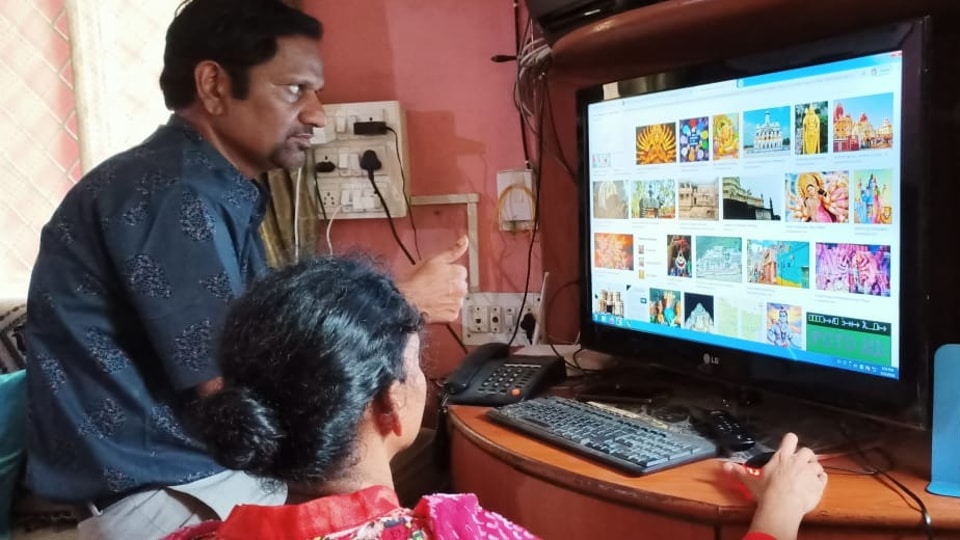
“After having an idea that she may belong to any of these states, we showed some pictures of these areas, local movies, regional songs, food and traditional dresses. She identified paddy fields, some south Indian superstars and also showed familiarity with Telugu and Chhattisgarhi music but her memories related to culture matched with that of Jharkhand,” said Mishra.
The Indore police will also seek data from these three states of hearing and speech impaired children who went missing in 2000.
“Now, we are going to write to all these states to share old data related to missing deaf and speech impaired kids. As she says that she boarded a wrong train in New Delhi and reached Pakistan we will also write to government railway police (GRP) in Delhi to check old data to see the complaints of missing kids related to these states,” he added.
Geeta had gone missing 20 years ago. According to documents provided by Edhi foundation of Pakistan which took care of her for 13 years, she was found sitting alone in Samjhauta Express in Lahore in 2000. She was then about 9 years old.