
 E-Paper



Navy seeks amendment to 30-year submarine plan, wants six nuclear boats
In the backdrop of rapidly expanding Chinese Navy, the Indian Navy wants six SSNs to replace diesel powered conventional attack submarines as Indo-Pacific has emerged as the new theatre.

 Prefer HTon Google


The Indian Navy has approached the Narendra Modi government for approval to make changes in the Cabinet Committee of Security (CCS) approved 30-year submarine building plan by replacing six conventional attack vessels with nuclear powered platforms in the context of changing strategic scenario in Indo-Pacific.
The 30-year submarine plan was approved by Atal Bihari Vajpayee government in July 1999 for induction of 24 diesel attack submarines. As of now, the Indian Navy has 12 ageing conventional attack submarines plus three new Kalvari class submarines, first of which was commissioned in December 2017 as part of the ₹23,652 crore project approved way back in 2005.
It is understood that the navy has sought the Cabinet approval to allow it new submarine force levels of 18 conventional diesel attack submarines including those with air independent propulsion and six nuclear attack submarines or SSNs. This change has been sought keeping in mind the rapid increase of nuclear submarine arsenal by People’s Liberation Army Navy (PLAN) and to protect the Indo-Pacific from future domination by the adversary.
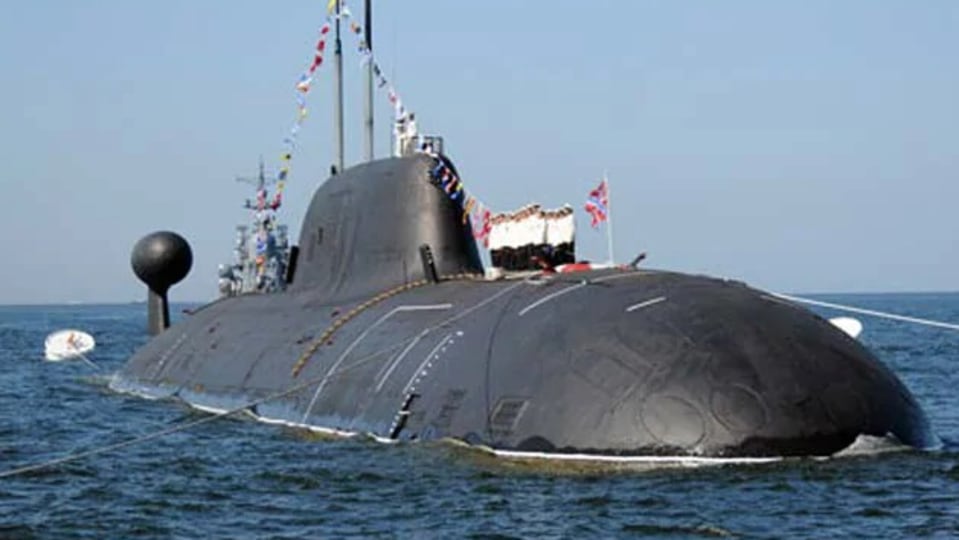
As of now, the India has one Akula class submarine INS Chakra on lease from Russian Federation and one ballistic missile firing submarine INS Arighat. The two are under the Strategic Forces Command. All the ballistic missile firing submarines also called SSBNs are outside the purview of Indian Navy and with Strategic Forces Command.
According to national security planners, once the Modi government approves the changes to the 30-year-old plan, the Indian Navy will move the Defence Ministry for acceptance of necessity (AON) before inviting request for proposals from the key allies for joint development and building of the six nuclear powered submarines under the Atmanirbhar Bharat route. The project will take a minimum of 10 years to complete as per Indian Navy estimates.
While the Indian Navy wanted six more AIP equipped diesel submarines to be added to complete the 30 year submarine force levels, the national security planners convinced the Admirals that nuclear attack submarine is a much more potent platform with the capacity to stay below surface for months and only surface for crew change and logistics. The equatorial waters of Indian Ocean make submarines a very potent weapon due to temperature differences on surface and below water. This causes total internal reflection due to changes in medium and makes submarines in equatorial waters the most difficult to detect. It is due to this phenomenon that the SSNs will act as a deterrent for both sea access and sea denial to the adversary.
With the Defence Research and Development Organization (DRDO) being able to indigenously develop the AIP technology, all the INS Kalvari class submarines will be retrofitted with the new technology during upgrades or mid-life refits. The Indian Navy too will be taking an orbital jump by moving from diesel submarines to nuclear powered and conventional cruise missile equipped platforms.


