
 E-Paper



Nepal’s access to Chinese ports will end India’s monopoly on trade routes
Nepal had sought access to Chinese ports to reduce dependence on India after a border blockade in 2015-16 left the country short of fuel and medicines.

 Prefer HTon Google


China and Nepal on Friday finalised a transit protocol that will give Kathmandu access to four Chinese ports, a move that will effectively end India’s monopoly on trade routes used by the landlocked Himalayan country.
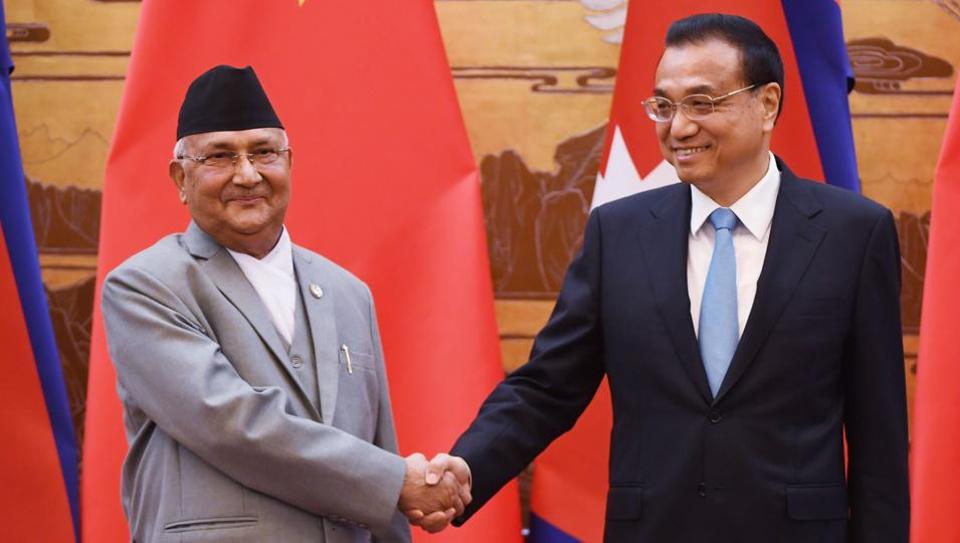
Nepal depends heavily on India for essential goods, including fuel, and the use of its ports for trade with other countries. Kathmandu has sought access to Chinese ports to reduce dependence on India after a border blockade in 2015-16 left the country short of fuel and medicines.
Officials from the two sides finalised the protocol of the Nepal-China Transit and Transportation Agreement that will allow Nepal to use the Chinese ports of Tianjin, Shenzhen, Lianyungang and Zhanjiang, said a statement from the industry and commerce ministry.
The statement said China also agreed to allow Nepal to use its land ports at Lanzhou, Lhasa and Xigatse. The arrangements will come into effect when the protocol is signed after the completion of internal procedures by both countries. It is expected that the signing will be done when Chinese President Xi Jinping visits Nepal in 2019.
Prime Minister KP Sharma Oli signed the transit agreement with China during his first stint in the post in March 2016. Once the protocol is signed, Nepal will no longer be dependent only on India for trade with other countries as it will be able to use Chinese sea and land ports.
The Nepalese side was led by joint secretary Rabi Shankar Sainju while Wang Shuiping, director general in department of transport services, led the Chinese delegation. “This is one of the milestones because we are getting access to four Chinese ports in addition to two ports in India,” Sainju told Reuters.
On Tuesday, teams from the two sides made a field visit to Kurintar, where the proposed Nepal-China rail link is expected to cross and a new north-south corridor is to be built. They examined the roads and geography of the area.


