
 E-Paper



Netaji’s resistance led to freedom in 1947: TN Guv
The governor said Netaji should have been credited for India’s freedom and that there has been a historical oversight

 Prefer HTon Google


Tamil Nadu governor RN Ravi said on Tuesday that the military resistance to the British by Netaji Subhas Chandra Bose with Indian soldiers helped India win freedom, claiming that the national freedom movement of the Indian National Congress led by Mahatma Gandhi was a “non-event” after 1942.
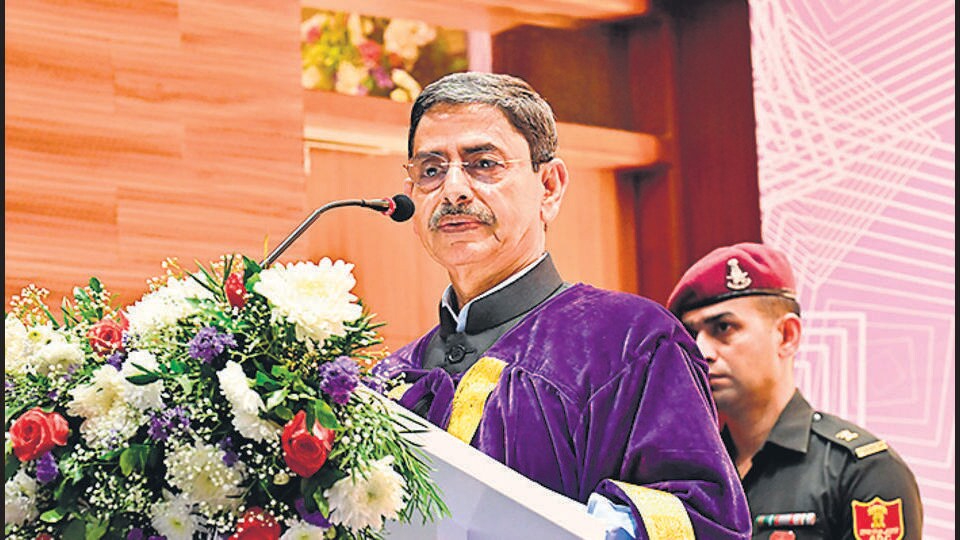
“If Netaji was not there, India would not have become free in 1947,” Ravi said, addressing a meeting on the 127th birth anniversary of Netaji.
“Because after the Second (World) War began, the non-cooperation movement by the Indian National Congress had fizzled out. If you look at the history of the national freedom movement led by Mahatma Gandhi after 1942, it was a non-event. Nothing was happening. We were all busy fighting (among) ourselves because Muslim League under Mohammed Jinnah was fighting for separation, a separate homeland. So we were divided. The British were enjoying it. There was no worthwhile resistance to British rule in India after 1942,” he said at the event organised at Chennai’s Anna University.
The governor said Netaji should have been credited for India’s freedom and that there has been a historical oversight.
Ravi said Netaji offered a military resistance with Indian soldiers which defeated the British in several of their strongholds, driving them to leave the country. “We kept saying we will not cooperate with you. But the fact is that on the ground, the British had no problem. They would have continued for many more years but for Netaji,” the governor said. “Out of fear, in March 1946, they said they were leaving India in the next 15 months. And inspiration for that came from Netaji and this aspect has not been researched or even talked about much.”
He said Netaji was a visionary to include a woman battalion in the Indian National Army, while it took seven decades for an independent India to do the same. He expressed displeasure that not much is known about people from Tamil Nadu who had served in Netaji’s army.
The context for the governor to speak on this relates to a conversation between the then Governor of Bengal and former British Prime Minister Clement Attlee in 1950 when the latter was asked what prompted the British to leave India when there was no problem on the ground after 1942.
Ravi, a former IPS officer and Nagaland interlocutor said that he was “amazed” to see the dispatches sent from India to Britain. “Having spent a considerable period in the Intelligence Bureau, a successor of British intelligence, I delved into archival data from February and March, 1946,” he said. “Every day brought a frightening report. The Central Intelligence, as it was called in those days, reported that anything could happen anytime. Besides the Indian military, they realised that even the Indian police could not be trusted. Within a month of this revolt, they decided they would make India free. It was the consequence of what Netaji did.”


