
 E-Paper



New PDS scam unearthed in Chhattisgarh; govt lost Rs 2,718 crore, say police
The scam took place between 2013 and 2016, said the police adding that bogus ration cards were used to distribute rice illegally.

 Prefer HTon Google


The Economic Offence Wing (EOW) of Chhattisgarh Police has registered a fresh case against unidentified civil servants in multi-crore Public Distribution System (PDS) scam and launched a probe.
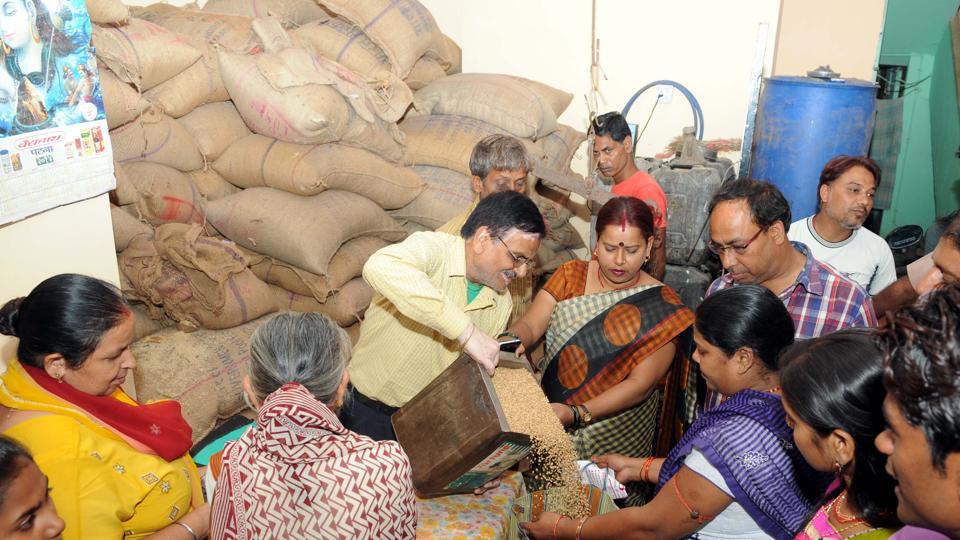
The EOW registered a case under Prevention of Corruption Act and Section 420, 467, 468, 471 and 120 (B) of Indian Penal Code (IPC) on Tuesday evening.
As per EOW, the investigation in the alleged scam revealed that through bogus ration cards, which were made in all 27 districts of state, around 1,108,515 tonne rice was distributed due to which state government suffered a loss of Rs 2,718 crore between 2013 to 2016.
It was found that about 10 lakh bogus ration cards were made between September 2013 and December 2013 and rice was distributed illegally through these cards. Similar modus operandi was followed till 2016, a note issued by EOW on Wednesday stated.
The probe further revealed that the officials who were then posted with Directorate of Food Department in the 27 districts allegedly ‘misused their positions’ and made bogus ration cards through forged documents.
Chhattisgarh Chief Minister Bhupesh Baghel had constituted a Special Investigation Team (SIT) in 2019 to investigate another PDS scam, popularly called as Nagarik Aapurti Nigam ghotala or NAN scam.
Nan scam came into light in 2014 when the Anti-Corruption Bureau (ACB) conducted raids in various parts of the state and seized cash and documents. The ACB also recovered coded diary entries of pay-offs to officials and politicians.
The Congress, which was in Opposition then, had claimed that the scam is about Rs 36,000 crore and further alleged that leaders of BJP are involved.
In 2015, a PIL was filed by Sudeep Shrivasatva in Chhattisgarh high court demanding an SIT investigation in the case. Shrivastava in his PIL alleged the investigating agency saved few officers who were involved in the scam.
The PIL said that 111 samples of rice out of 254, and 64 salt samples out of 185 were found to be sub-standard and unfit for human consumption but was cleared by officers.
-kW0H-U20214218012MgB-250x250%40HT-Web.jpg)


