E-Paper



New UGC rules to recognise foreign degrees in 15 days
The University Grants Commission (UGC) has introduced new regulations for granting equivalence to foreign academic qualifications, promising a 15-day processing timeline

 Prefer HTon Google


The University Grants Commission (UGC) has introduced new regulations for granting equivalence to foreign academic qualifications, promising a 15-day processing timeline that aims to end the months-long delays faced by returning students.
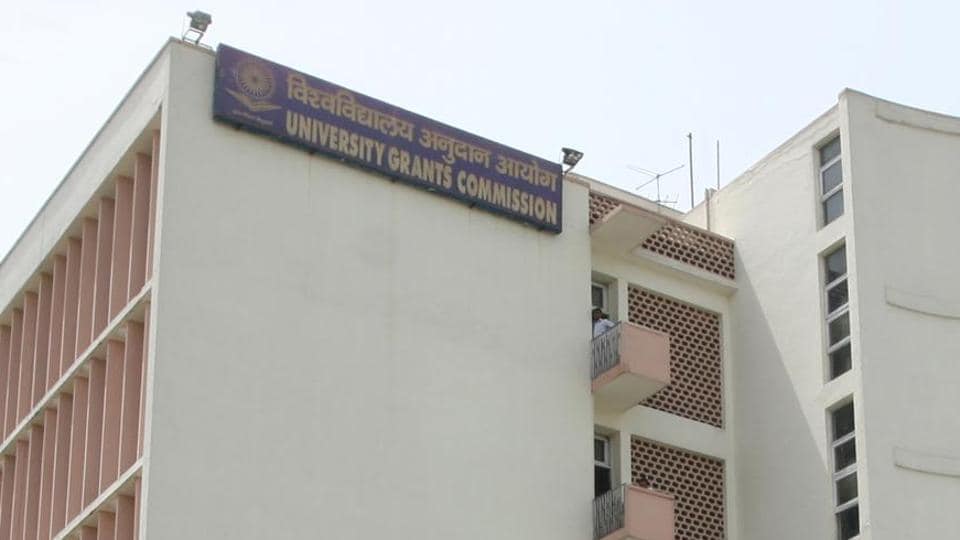
The “University Grants Commission (Recognition and Grant of Equivalence to Qualifications obtained from Foreign Educational Institutions) Regulations, 2025”, notified in the Gazette of India on Friday, establishes a standardised framework for recognising foreign degrees through an online portal.
The regulations apply to all foreign degrees except professional courses like medicine, law, and architecture, which remain under their respective regulatory bodies. Degrees obtained through franchising arrangements will also not be recognised.
The new system replaces the century-old process handled exclusively by the Association of Indian Universities (AIU) since its inception in 1925.
Over 1.33 million Indian students are pursuing higher education abroad as of August 2024, according to government data. While not all may come back and work in India, a sizable number does.
Data on the number of such students was not immediately available.
The AIU currently has 1,064 member universities, including 19 overseas universities. On average, it processes 2,000 equivalence certificate requests a year.
According to the regulations, applicants must submit their documents through UGC’s dedicated portal along with the required fee. A standing committee will review each case within 10 working days by assessing: course duration, credits (with 10% variation allowed), curriculum structure and learning components.
UGC chairperson M Jagadesh Kumar said the move addresses a “long-standing issue” of students with foreign degrees facing delays when integrating into India’s education system or workforce. “UGC has developed a transparent, technology-driven mechanism for recognizing foreign qualifications. If Indian institutions are to attract international students, we must ensure fair recognition of degrees earned abroad,” Kumar said in a statement.
When asked whether AIU will continue issuing equivalence certificates, UGC officials did not respond. A senior AIU official said, “It depends on government notification.”
Prof Furqan Qamar, former secretary-general of AIU, expressed concerns: “Two bodies cannot provide equivalence certificates. I don’t think UGC will be able to work better than AIU and might realize the difficulties later.”
Qamar added that independent bodies handle degree equivalence in other countries: “A private body, World Education Services, handles equivalence certificates in America and Canada, and similar networks operate in European countries.”
However, Sukhadeo Thorat, former UGC chairperson, supported the change: “Now, students will have more clarity while moving abroad for their studies because of these regulations.”.