E-Paper



Number Theory: Three charts which explain the state of the Indian economy
India’s nominal GDP growth in 2023-24 is expected to be just 8.9%, merely 1.6 percentage points more than the real GDP growth of 7.3%.
Updated on: Jan 9, 2024, 11:47:33 IST


Share via


Copy link

India’s economic growth in 2023-24, the last year of the second Narendra Modi government, is expected to be 7.3% as per the first advanced estimates released by the National Statistical Office (NSO) on January 5. To be sure, we only have actual GDP numbers until the September quarte
Three charts which explain the state of the Indian economy
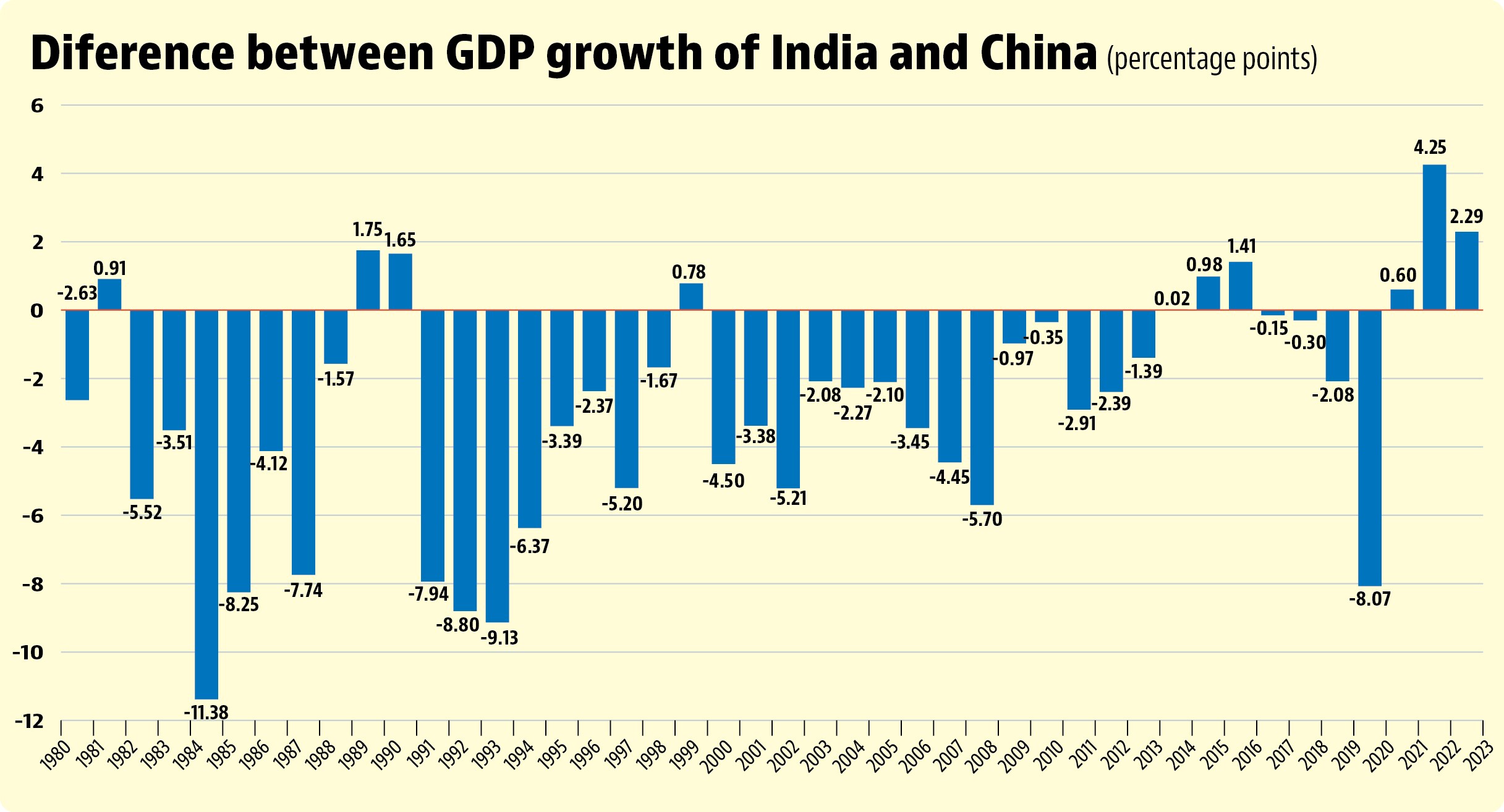
 World’s fastest growing economy by a distance...NSO’s forecast of 7.3% GDP growth in 2023-24 is a full percentage point more than the 6.3% projection in the October 2023 edition of IMF’s World Economic Outlook (WEO). India would have been the fastest growing major economy in the world even with a 6.3% GDP growth. The 7.3% number only adds to its lead vis-à-vis other economies. In fact, a long-term comparison of IMF data shows that India’s 2023 (2023-24 for India) is likely to be the year when the country’s lead in terms of GDP growth is the highest vis-à-vis China in a normal year. Sure, this number was 4.3 percentage points in 2022 ( compared to just 2.3 percentage points in 2023), but the Chinese economy’s performance in 2022 was not normal because of Beijing’s zero-Covid policy and the unnatural behaviour it created. It remains to be seen whether the Indian economy maintains this kind of a growth advantage vis-à-vis the Chinese economy going forward.
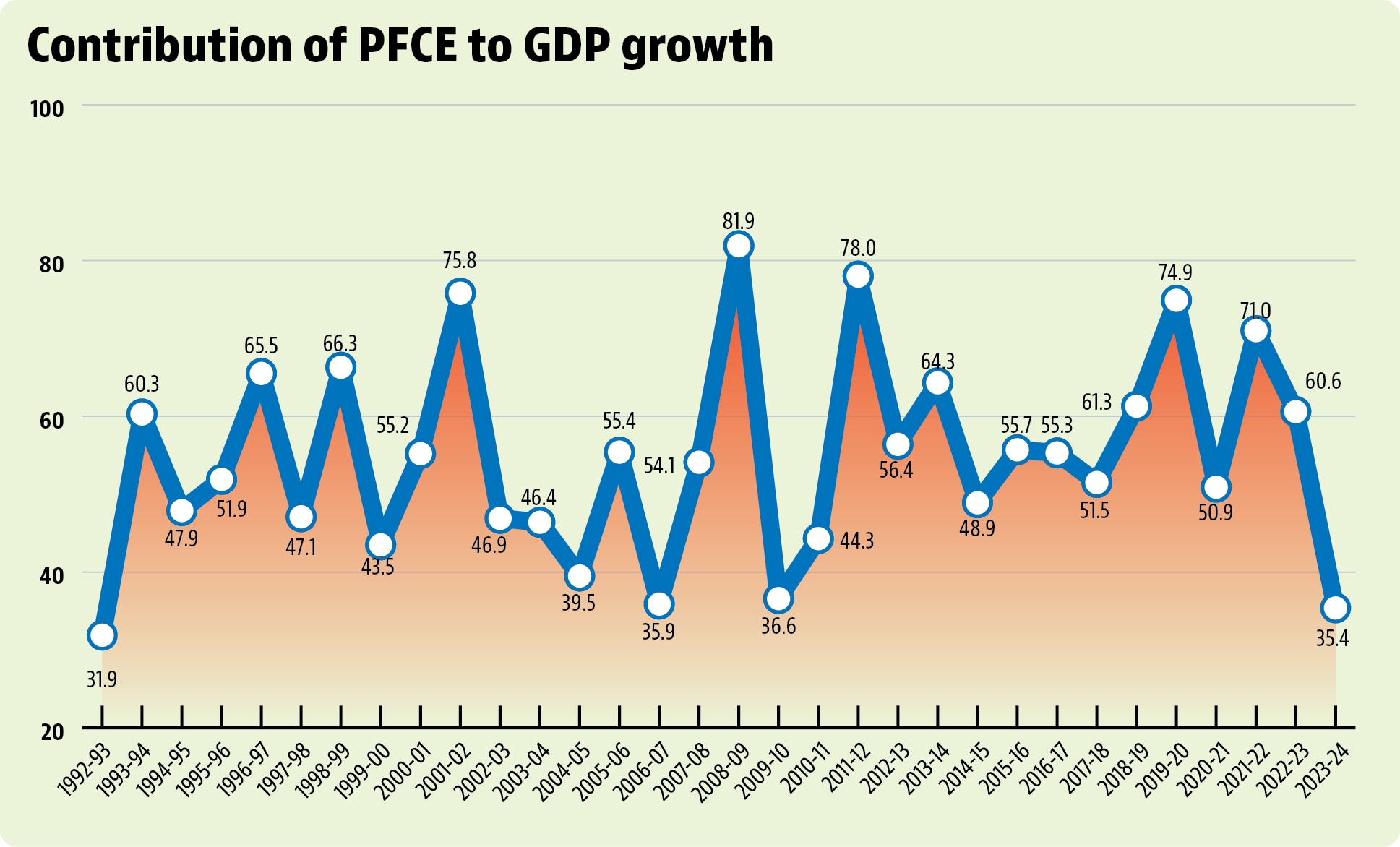
- ...but the contribution of private consumption to overall growth is the lowest in three decadesThis is among the most important aspects of the GDP numbers released last Friday. With an annual growth rate of just 4.4%, the Private Final Consumption Expenditure (PFCE) component of the GDP was a relative laggard in what is otherwise a booming economy. In terms of contribution to GDP growth, PFCE’s share in GDP growth between 2022-23 and 2023-24 was just 35.4%. According to GDP data, this is the lowest contribution of PFCE to GDP growth since 1992-93, when it was 31.9%.
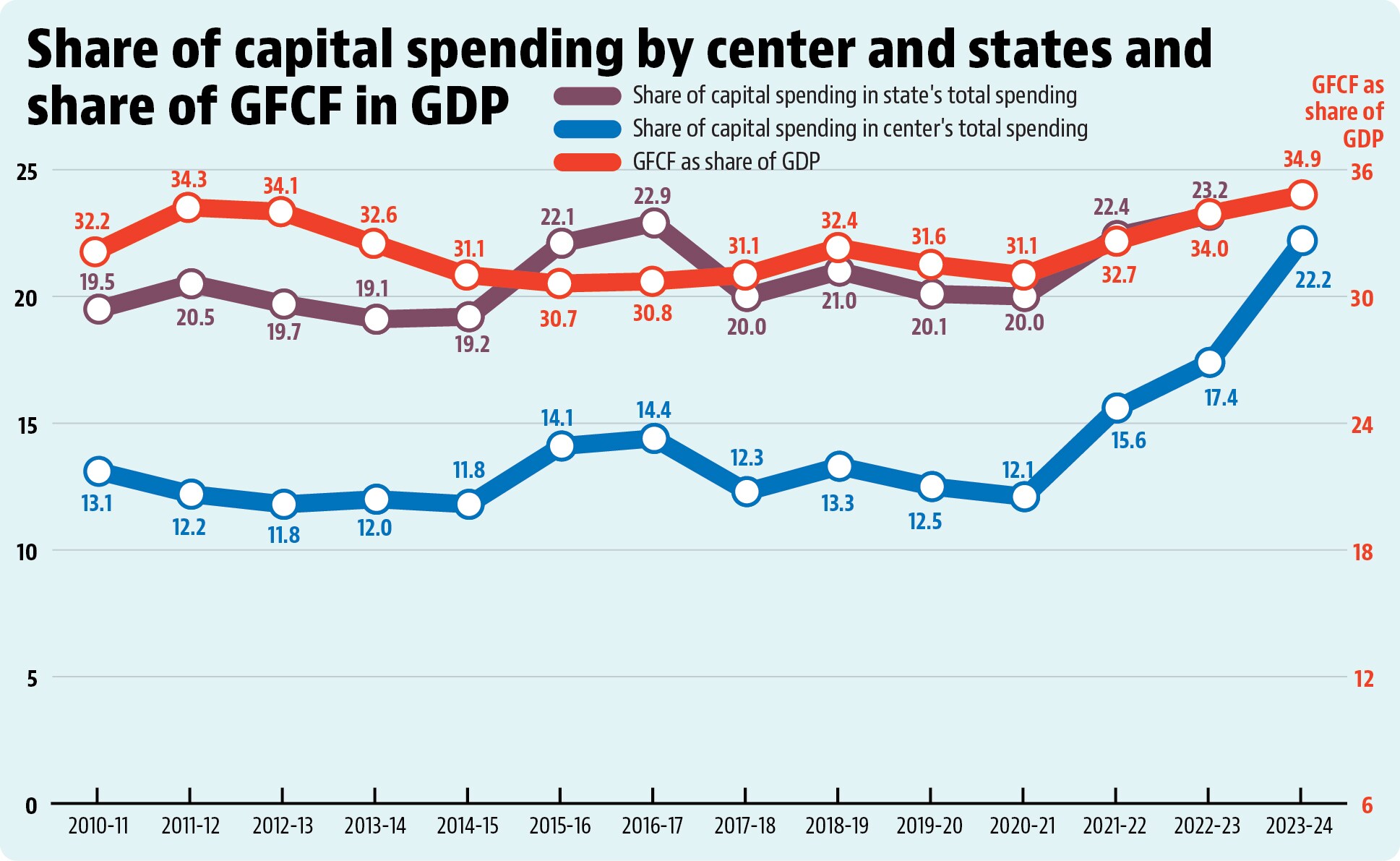
- Government’s capital spending has played a big role in pushing up overall investment spending and growthWhat explains the high GDP growth rate despite a tepid growth in personal consumption spending? A simple comparison of contribution to overall GDP growth shows that Gross Fixed Capital Formation (GFCF) — it measures investment spending — has made the biggest contribution of 47.8%. What explains high investment spending in the economy despite weak consumer demand? This question has to be answered by looking at the capex push by the government. RBI data shows that a rise in share of government’s capital spending, especially by the Centre in the last few years, could be a factor behind the rising share of GFCF in overall GDP. While the Centre has increased its share of capital spending in a big way, the aggregate share of capital expenditure of the states still exceeds that of the Centre.
- To be sure, some of boom seen in the GDP numbers could be just statisticalIndia’s nominal GDP growth in 2023-24 is expected to be just 8.9%, merely 1.6 percentage points more than the real GDP growth of 7.3%. In sectors such as manufacturing, the real GDP growth exceeds the nominal number. Part of this is a result of technical issues related to how GDP numbers are adjusted for inflation and experts have been arguing that this may have actually boosted GDP numbers. “Even though strong manufacturing data was heartening, there may have been an element of exaggeration in the growth print. The practice of single deflation instead of double deflation at a time when commodity prices have fallen is likely to have overstated manufacturing growth by 1.7ppt, and GDP growth by 0.3ppt,” HSBC Chief India Economist Pranjul Bhandari wrote in a note released on November 30, 2023 when the September quarter GDP numbers were released. More than anything else, this also means that an anticipated fall in the headline growth number next fiscal year could just be a reflection of these favourable statistical effects petering out rather than any actual loss in growth momentum.